Nikon ZR Review
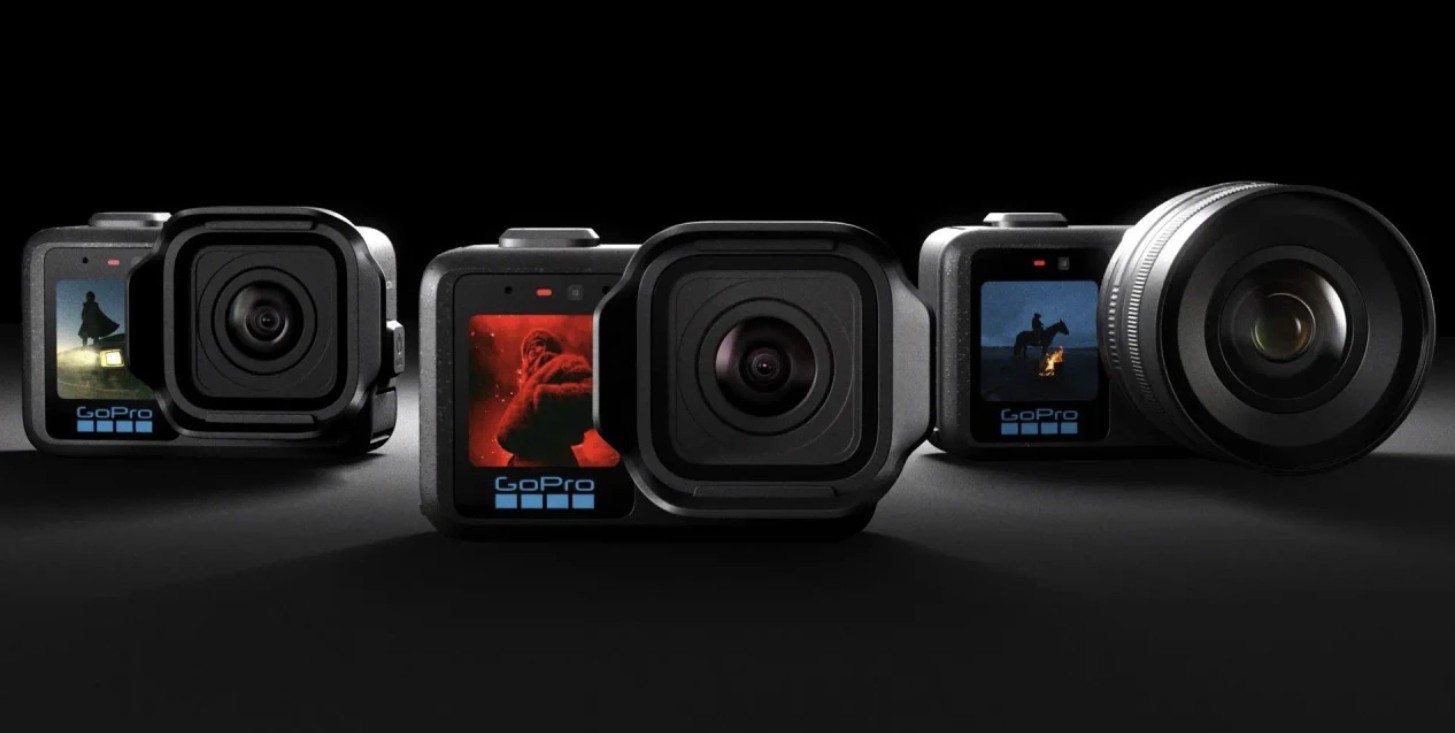
Have you ever wondered what would happen if RED and Nikon had a baby? Probably not—but the answer is the Nikon ZR, and it’s a genuinely pleasant surprise. This is Nikon’s first real step into the cinema camera world: a $2,200 body that delivers 6K video up to 60p, internal RED RAW recording, N-Log profiles, 8.5 stops of in-body image stabilization, and even respectable 24.5-megapixel stills capability.
On paper, the ZR looks almost too good to be true for the price. In practice, it feels like a purpose-built, value-focused cinema camera that happens to live inside a Nikon body. If your goal is to shoot professional-quality video without spending flagship-level money, the ZR immediately stands out as one of the most compelling options available in 2026.
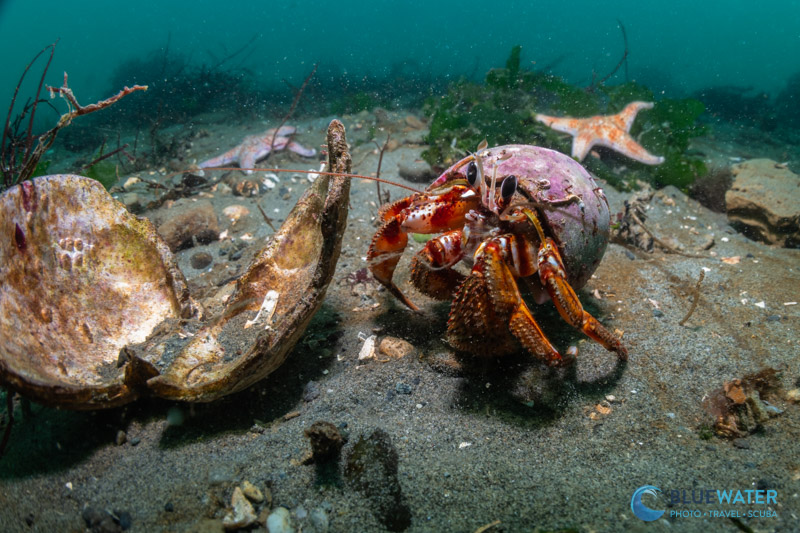
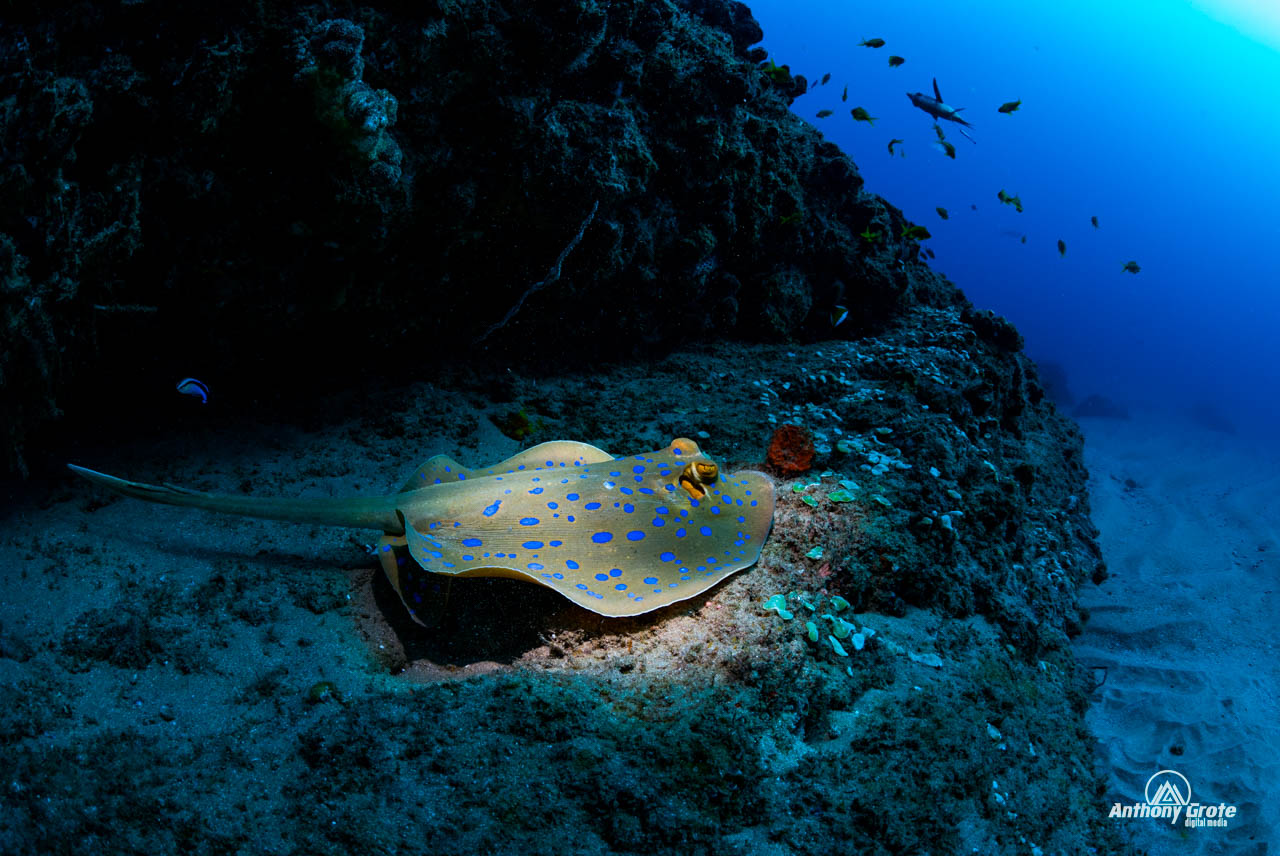
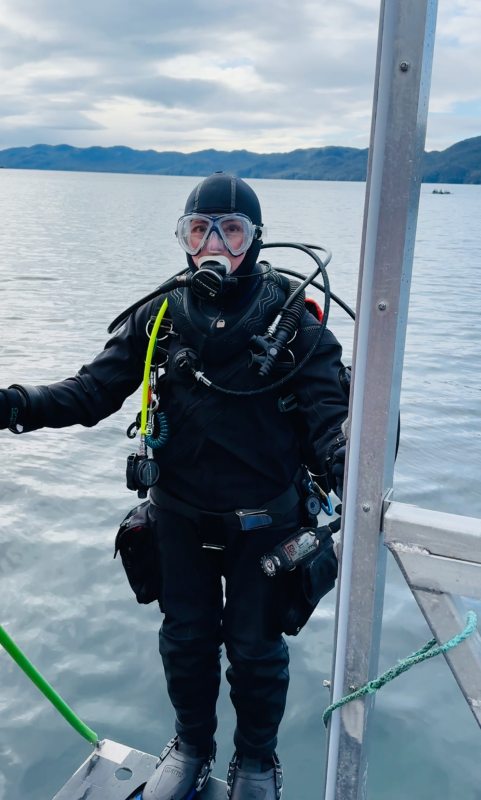
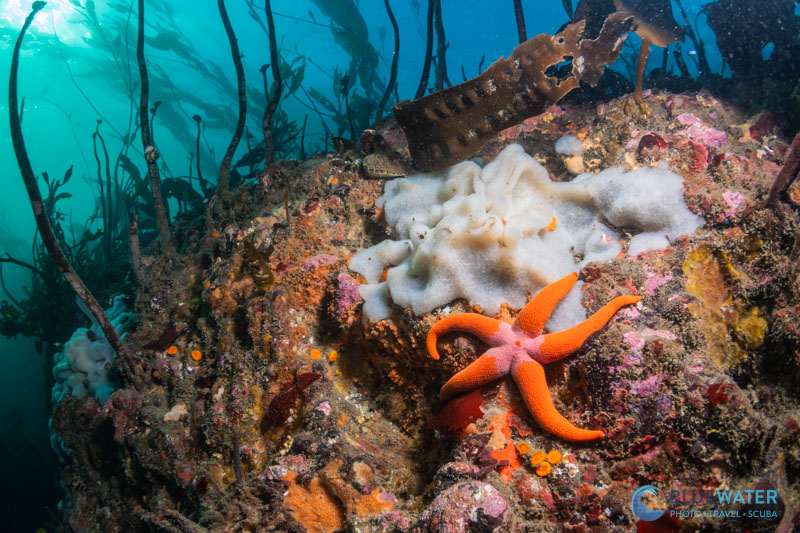
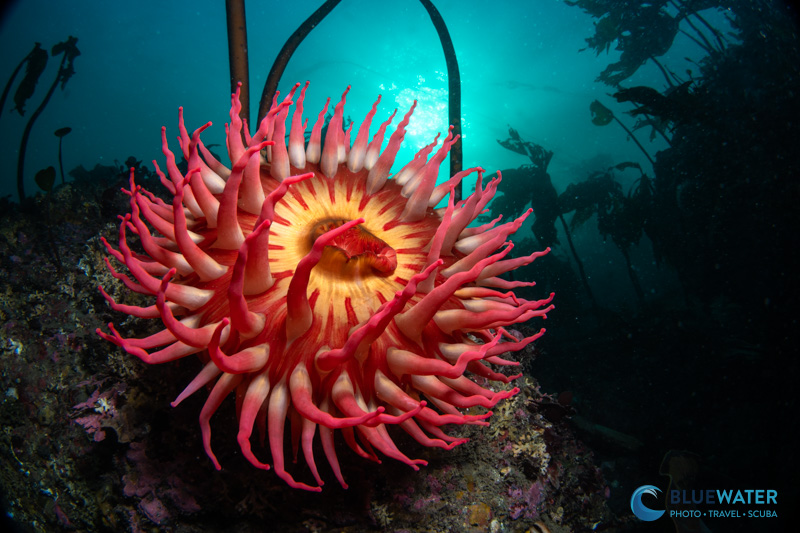
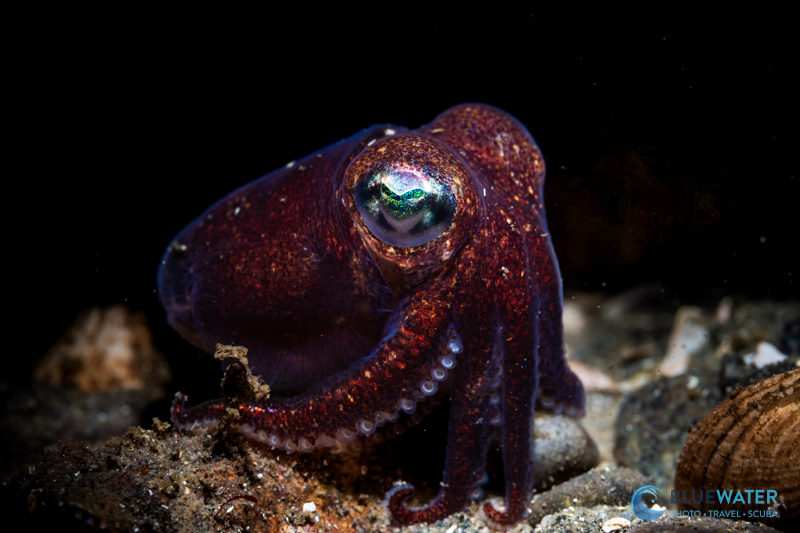
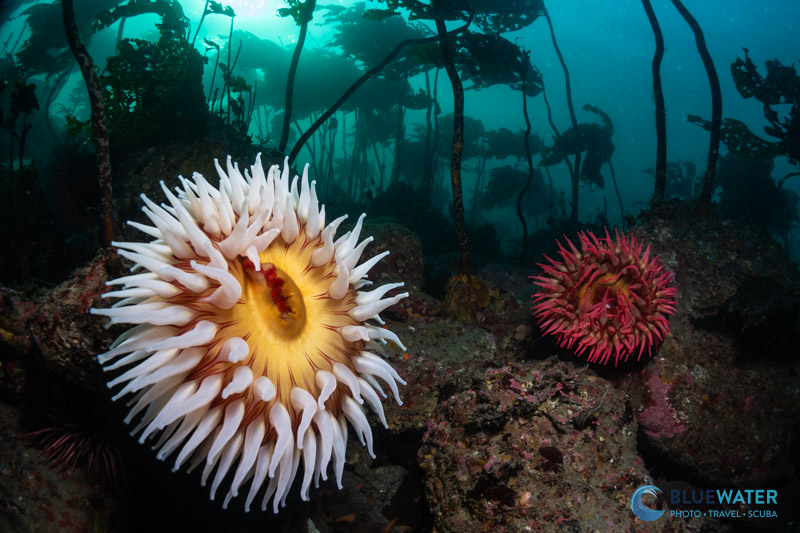
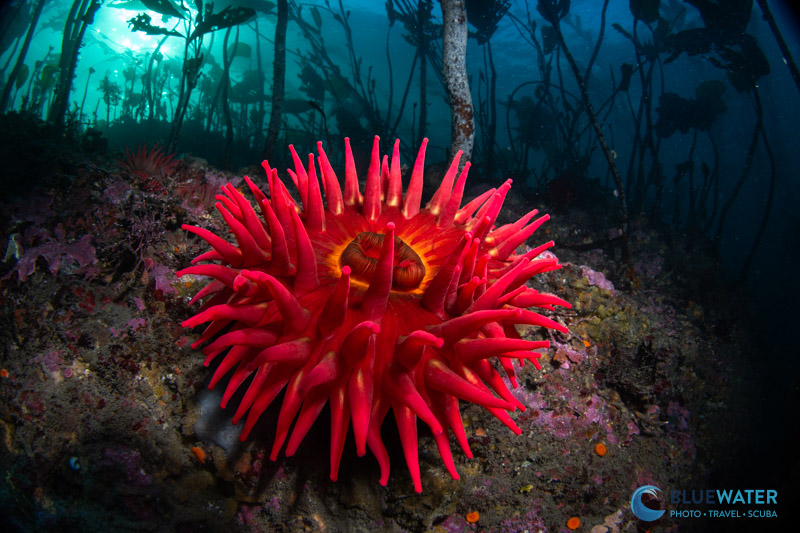
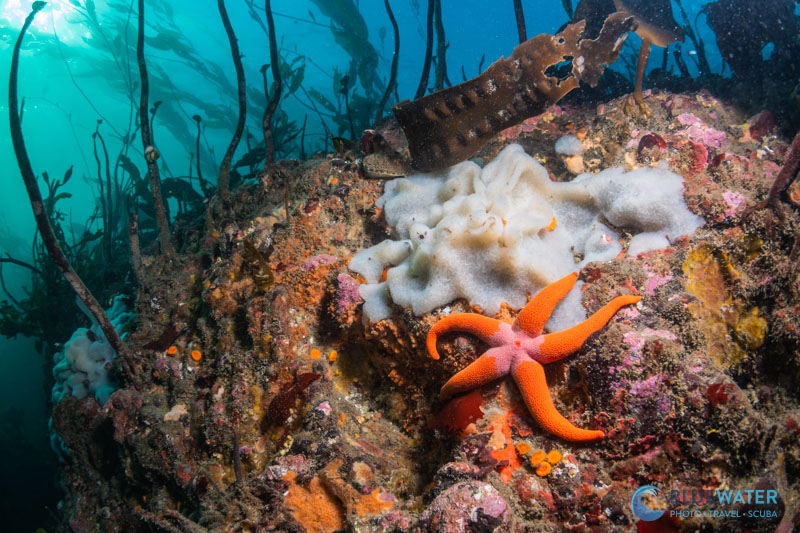
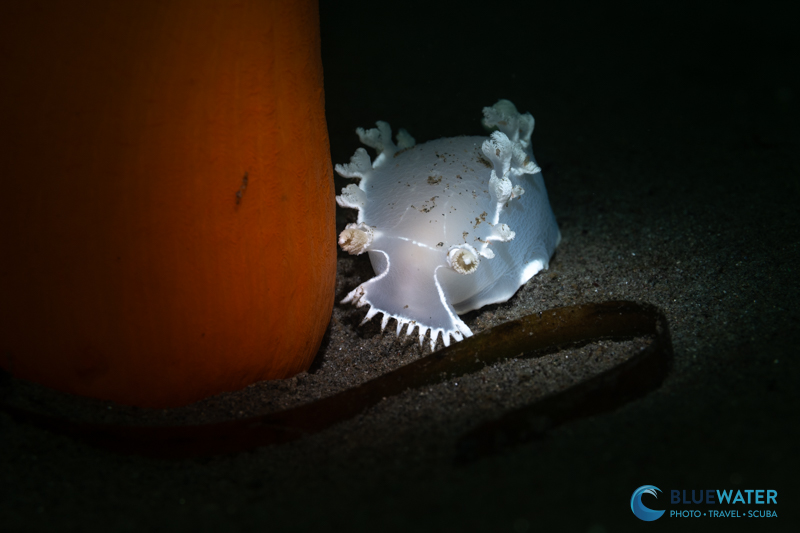
At the Underwater Photography Guide, we were fortunate to be among the first divers to take the Nikon ZR underwater. Our testing took place in the cold waters of the Pacific Northwest—diving near Seattle and the Strait of Juan de Fuca. A brief break in the winter storms gave us unusually clear, blue water in Sekiu, Washington, where we filmed lush kelp forests, massive fish-eating anemones, and everything from sea spiders to stubby squid.
After extensive underwater use, one thing became clear: if you’re looking for the best value-for-money cinema camera for underwater video—and you don’t require the extreme low-light specialization of the Sony A7S III—the Nikon ZR is likely the only camera you should be seriously considering.

Purchase a Nikon Z8 underwater housing at Bluewater Photo:
View All Nikon ZR Underwater Housings
Read Our Top Underwater Settings for the Nikon ZR
Nikon ZR Key Specifications
- 24.5 megapixel Full-frame CMOS sensor
- 6K video recording up to 60p
- RED RAW internal recording
- Dual-native ISO for video shooting
- Approx. 8.5 stops of 5-axis in-body image stabilization
- Hybrid phase-detect autofocus system with subject tracking
- Autofocus sensitivity down to approximately –7 EV
- Native ISO range optimized for video capture
- Flash sync speed up to 1/60 sec
- Nikon Z-mount compatibility
- N-Log picture profile support
- Internal ProRes and compressed RAW recording options
- CFexpress Type B memory card support
- High-resolution electronic viewfinder
- Compact, simplified body design focused on video operation
- Weight: approx. 820 g (body only)
- Dimensions: approx. 5.6 in × 4.6 in × 3.2 in
Nikon ZR Key Features
6K Video Recording Up to 60 Frames Per Second
With the ability to record 6K video up to 60 frames per second, the Nikon ZR fills an important gap in the prosumer cinema camera market. Until now, Sony largely dominated the full-frame video space with cameras like the FX3, A7S III, and ZV-E1. While those cameras offer excellent 4K recording up to 120p, the 4K resolution can feel limiting for macro videographers who want flexibility in framing.
Shooting in 6K gives macro shooters far more creative freedom. Footage can be captured in 6K, cropped for tighter compositions, and exported in 4K without sacrificing image quality. Because 6K recording is available up to 60p, footage can still be slowed to 50% for smoother motion and added stability. The ZR also supports 4K recording at up to 120p when higher frame rates are needed.
In practice, I found myself shooting primarily in 6K/60p. The extra resolution made it easy to capture wide b-roll and then create multiple compositions from a single take, effectively producing different “angles” without repositioning the camera—an especially valuable advantage when filming small, fast-moving subjects underwater.
Dual Native ISO
The Sony A7S III, FX3, and ZV-E1 still hold an edge over the Nikon ZR when it comes to extreme low-light performance. Their advantage comes largely from Sony’s 12-megapixel full-frame sensor, which uses larger individual pixels to gather more light. By comparison, the Nikon ZR’s higher-resolution 24.5-megapixel sensor packs more pixels into the same full-frame area, which naturally results in increased noise at very high ISOs.
Nikon has mitigated this tradeoff by implementing a true dual-gain sensor when recording in RED RAW, with base ISOs at 800 and 6400. Rather than gradually amplifying noise as ISO increases, the camera switches to a second, cleaner gain circuit at ISO 6400. In practical terms, footage shot at ISO 6400 is often noticeably cleaner than footage shot just below it—such as ISO 4000 or 5000.
Sony cameras exhibit dual-gain-like behavior, but it is not implemented as a true dual-gain system in the same way as the Nikon ZR’s RAW workflow. Underwater, this distinction matters. When filming in the darker, greener waters of southern Puget Sound, I frequently found myself working above ISO 6400 to maintain usable depth of field. In those conditions, the ZR’s high-base ISO proved especially valuable, producing cleaner RAW footage than expected given the sensor’s resolution.
RED RAW, N-LOG, and Pro Res Recording
One of the biggest benefits of Nikon’s acquisition of RED is the inclusion of RED RAW recording on the ZR. RED RAW gives video shooters maximum control in post-production, allowing precise adjustments to color, white balance, and ISO after the dive. This level of flexibility is especially valuable underwater, where lighting and color temperature can change dramatically within a single shot.
That said, RAW workflows come with tradeoffs. RED RAW files are large, require significant storage, and demand a modern computer with strong CPU, GPU, and memory performance. For many shooters, especially those traveling or producing frequent content, a full RAW workflow may be unnecessary or impractical.
For those not looking to commit to a professional RAW pipeline, the Nikon ZR also offers 10-bit N-Log recording. N-Log captures a flat image with expanded highlight and shadow detail, providing much more flexibility than standard picture profiles while keeping file sizes manageable. Footage can be color graded to restore contrast and color, resulting in excellent dynamic range and image quality.
The ZR supports LUTs (look-up tables), making it easy to preview a corrected image while filming so footage doesn’t appear flat or washed out on the LCD or EVF. In addition, the camera offers Apple ProRes recording options, giving shooters a high-quality, edit-friendly codec that balances image quality and workflow efficiency.
In practice, I filmed most of my dives using N-Log. It offers a fast, efficient workflow—apply a LUT, make a few minor adjustments, and move on. While I’m not a dedicated colorist, many underwater videographers will benefit from the immense flexibility of RED RAW, particularly when dealing with rapidly shifting white balance and complex lighting conditions underwater.
In-Body Image Stabilization
When paired with an optically stabilized lens, the Nikon ZR delivers up to 8.5 stops of image stabilization. The camera uses a sensor-based stabilization system that actively compensates for small movements and vibrations while filming. In practice, this is especially helpful underwater, where surge and minor body movement are unavoidable.
As waves or current push you slightly off position, the ZR smooths out these micro-movements, resulting in noticeably steadier footage. The difference is immediately apparent: video looks less jerky, more controlled, and far easier to watch—without the need for aggressive post-stabilization.
Auto Focus Tracking and Low Light Autofocus
The Nikon ZR is equipped with the same autofocus system that is found in modern Nikon cameras including the Nikon Z6 III and Nikon Z8. While I did notice that it was a bit less “snappy” than the Nikon Z8 for photography, the 3D autofocus tracking system was excellent.
For video, I opted to use the wide autofocus area setting with subject detection defaulted to “animal”. The camera does allow you to fine tune and speed up autofocus if you need to. I found that the default settings left me with a “cinematic” experience where autofocus transitioned between subjects smoothly and without much jerking back and forth.
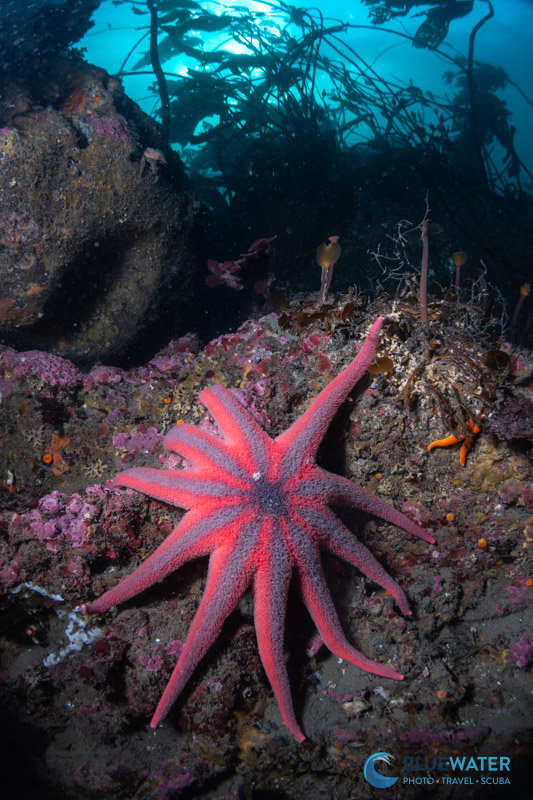
In low light, the camera is rated to an EV of -7 stops. During some of my filming, I was in a dark kelp forest with an overhead canopy, filming ambient light. Not once did the camera struggle to acquire autofocus – even with backlighting from the sun.
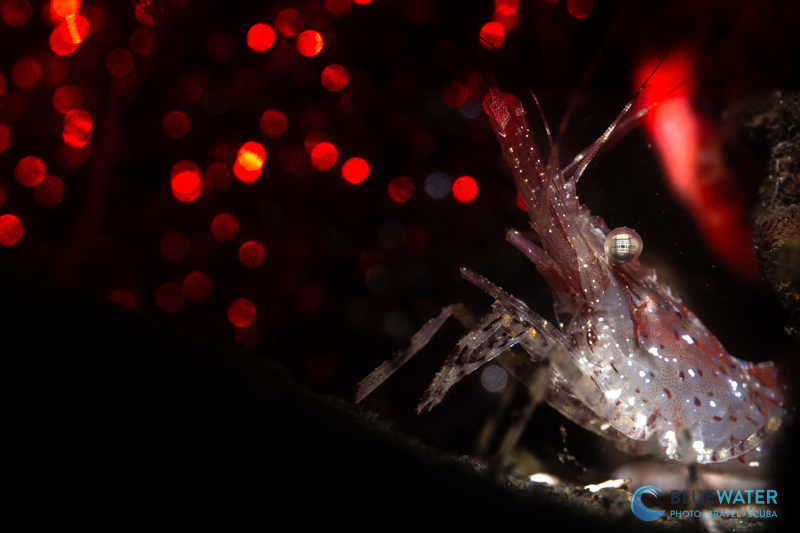
Nikon ZR for Underwater Photography
As I’ve alluded to already – the Nikon ZR can be a sold camera for underwater photography with one major flaw. The camera’s flash sync speed is limited to 1/60th of a second. In my opinion, this makes the ZR not a very practical choice for most underwater photographers. But I kept my hands steady and didn’t need a high shutter speed as I was capturing photos in dark water. I managed to get beautiful cold water reef scenes, and even some macro shots, but it was not my choice of camera for photography.
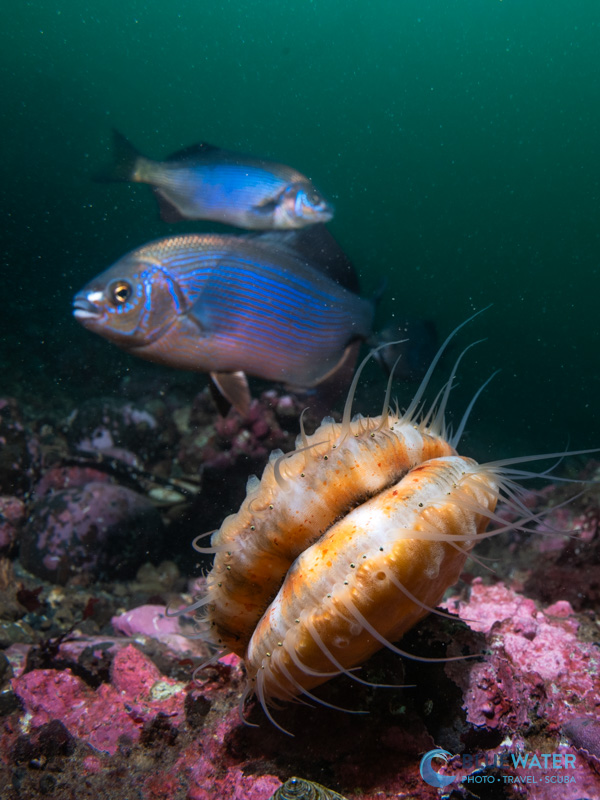
Battery Life & Overheating
Battery life is one area where the Nikon ZR falls short. In my experience, the camera consistently required a battery change after two dives with moderate amounts of filming on each. That was disappointing. Even accounting for the demands of 6K recording and RAW-capable workflows, battery efficiency across modern cameras has improved significantly over the past decade, so returning to frequent battery swaps feels like a step backward—especially for a camera positioned as a practical cinema tool.
That said, there is a useful workaround. Ikelite offers an accessory that allows the ZR to be charged between dives without removing it from the housing, which helps mitigate the issue on liveaboards or multi-dive days. Still, spare batteries should be considered essential gear for any serious underwater shoot with this camera.
Concerns about overheating during extended 6K/60p recording are understandable, but in real-world use, I never encountered overheating issues during an entire week of diving. The camera includes an option to allow higher operating temperatures before shutdown, which significantly extends runtime. As configured in our recommended settings, the ZR remained reliable and stable underwater—even during longer recording sessions.
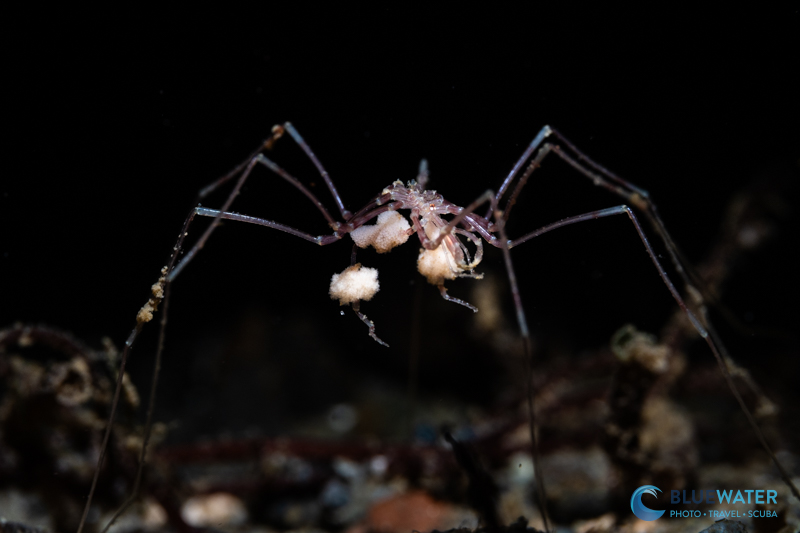
Nikon ZR Underwater Lenses
The Nikon ZR has the new Nikon Z mount. Z mount lenses are superior to F mount lenses because the shorter flange distance of the Z mount allows for sharper corners in an image with less diffraction and ghosting. However, when it comes to lens focal lengths available for underwater photography, there are more available F mount lenses with the FTZ adapter – particularly when it comes to fisheye lenses. We are excited to see many more Z mount lenses arrive in the near future.
Macro
- Nikon Z mount 105mm 2.8G VR Macro: Great for small and shy subjects, giving you more working room than the 60mm and essential for super macro. This lens is sharper and faster focusing than the Nikon F mount 105mm macro.
- Nikon F mount 60mm 2.8G Macro w/ FTZ adapter: Great all around lens and especially great for blackwater diving
- Nikon F mount 105mm 2.8G VR Macro w/ FTZ adapter: Great for small and shy subjects, giving you more working room than the 60mm and essential for super macro
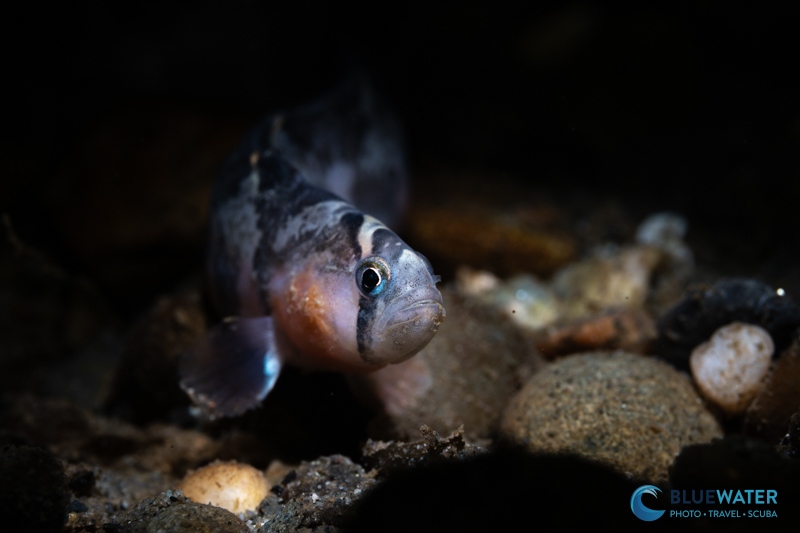
Wide Angle Fisheye
- Nikon F mount 8-15mm w/ FTZ adapter: Get creative with the full circular image, or zoom in for a more standard fisheye lens. Read the Nikon 8-15mm FX AF-S f/3.5-4.5E ED Zoom Fisheye Review by Mark B. Hatter.
- Nikon F mount 16mm 2.8 Fisheye w/ FTZ adapter: Also a great lens, and a popular choice for full-frame
Wide Angle Rectilinear
- Nikon Z mount 14-30mm f/4.0: Great for large animals and extremely sharp lens, but requires a larger dome to get sharp images
- Nikon F mount 16-35mm 4.0 w/ FTZ adapter: Great for large animals and extremely sharp lens, but requires a larger dome to get sharp images
- Nikon F mount 20mm 1.8G w/ FTZ adapter: Small, compact, sharp, doesn’t need as big a dome as the 16-35 mm
For further reading, check out Bluewater’s guide to the best Nikon lenses for underwater.
Nikon ZR Underwater Housings
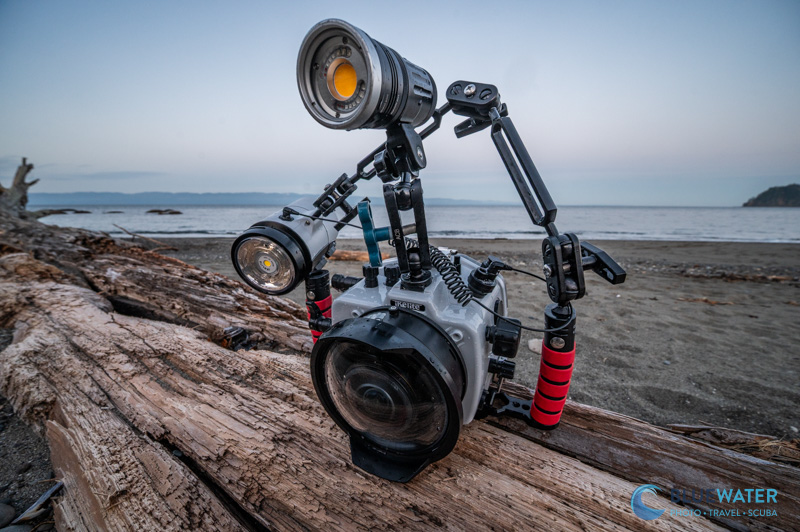
There are currently three excellent underwater housing options for the Nikon ZR available for purchase at Bluewater Photo. We hope to see more options soon from other brands, but for now there is a polycarbonate housing from Ikelite, an anodized aluminum ZR option from Aquatica, and a Nauticam Nikon ZR housing. For this review, I used the Ikelite Nikon ZR housing with Ikelite DS 232 strobes. I was quite impressed with some of the upgrades Ikelite made on their hosing for this simple camera. For one, the ZR housing is the first time Ikelite has introduced a joystick control on the back panel of the housing. It worked very well and I was easily able to navigate menus with it. Moreover, Ikelite introduced a new shade for the back of the camera which made it very easy to watch the screen in shallow water with a lot of haze from the sun rays.
The Aquatica Nikon ZR housing will appeal to shooters who prefer a more traditional, rugged aluminum design at a mid-range price point. Aquatica housings are known for their solid machining, straightforward control layouts, and reliability in demanding conditions. This housing is well-suited for divers who prioritize durability, glove-friendly controls, and a no-nonsense shooting experience, particularly in cold or technical diving environments.
The Nauticam Nikon ZR housing is a great option for underwater shooters looking to use Nauticam’s water contact optics with the ZR.
Each of these housings supports the Nikon ZR’s core video functionality and can produce excellent results underwater. The best choice ultimately comes down to budget, ergonomics, and how integrated you want your system to be within a larger underwater video setup.
Who Should Buy the Nikon ZR?
The Nikon ZR is an outstanding choice for videographers who want the best performance-to-price ratio in a modern cinema-oriented camera. At its price point, no other camera currently offers the same combination of 6K/60p recording, internal RED RAW, strong in-body stabilization, and a mature full-frame lens ecosystem.
For underwater videographers in particular, the ZR represents a compelling alternative to long-standing favorites like the Sony A7S III. With higher resolution capture, RAW recording flexibility, and excellent color science, the ZR offers meaningful advantages for shooters who value cropping flexibility, post-production control, and cinematic image quality. While Sony still holds a slight edge in extreme low-light performance, the ZR’s dual-gain RAW workflow and higher resolution sensor make it the more versatile tool for most underwater video applications.
The Nikon ZR is ideal for:
-
Underwater videographers focused on cinema-style footage
-
Macro shooters who benefit from 6K capture and the ability to reframe in post
-
Filmmakers who want RAW recording (for underwater color editing) without the cost of a high-end cinema body
-
Traveling shooters who need a compact, housing-friendly camera with professional codecs
-
Sony A7S III owners looking to upgrade for higher resolution and RAW capability
You may want to look elsewhere if:
-
You primarily shoot in extreme low-light conditions and rely heavily on very high ISOs
-
You want the smallest possible files with minimal post-production
-
Your workflow is focused almost entirely on still photography
Conclusion
If your priority is professional-quality video—especially underwater—the Nikon ZR delivers an exceptional balance of performance, flexibility, and value. For many shooters, it has the potential to become the new reference point in the prosumer cinema camera space, offering capabilities that were previously reserved for far more expensive systems.