What the GoPro Mission 1 Series Means for Underwater Video
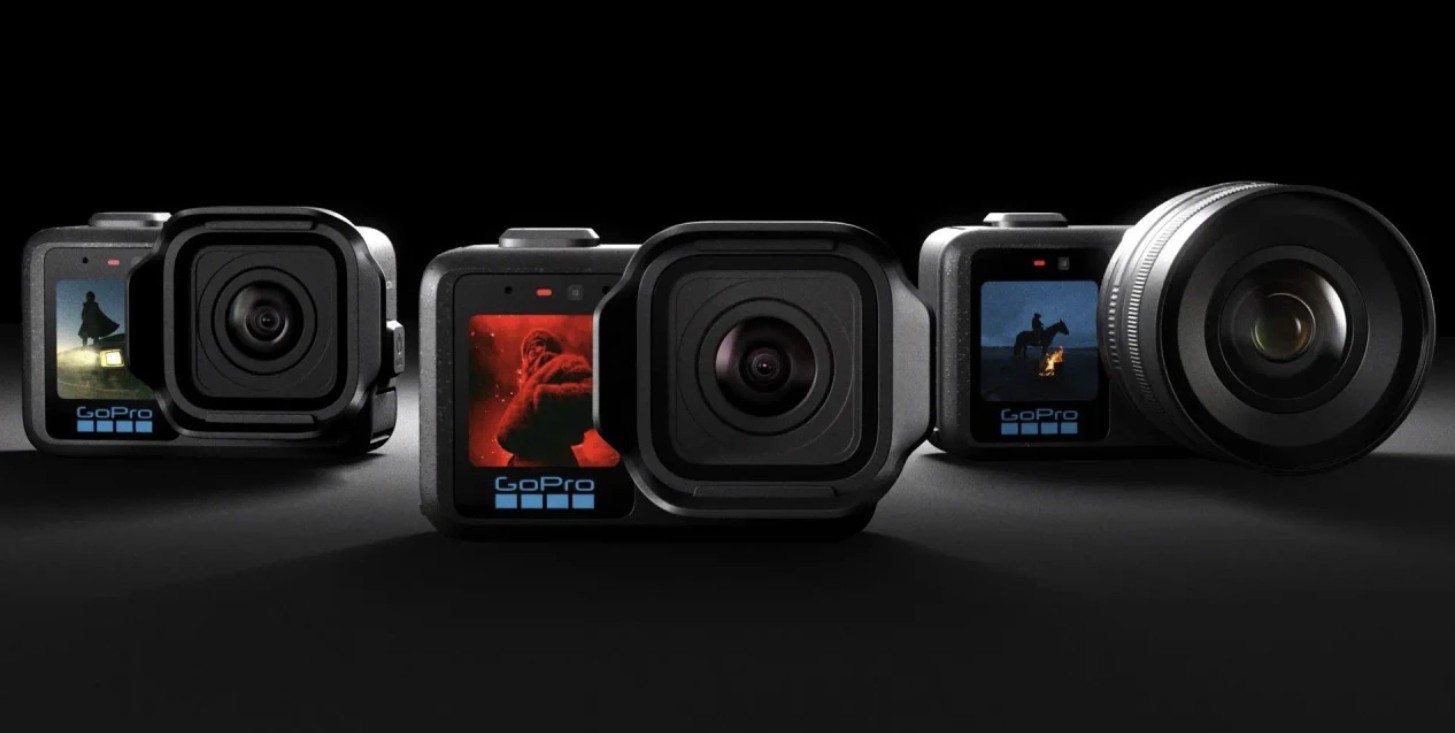
Is the GoPro Mission 1 Series the Next Best Thing from GoPro? We’re not too sure…
You may have noticed lately that each GoPro has been feeling similar to the one preceding it. As pressure grows from competitors like Insta360 and DJI, GoPro’s sales have been declining 40% year over year. Well, GoPro has answered…
This past month, GoPro has shaken up the underwater camera market with a fresh new lineup of THREE cameras – christened, the GoPro Mission 1 series. The most “basic” of the series is the GoPro Mission 1 with a 50 MP, 1″ sensor capable of filming 8K/30p & 4K/120p video. The GoPro Mission 1 Pro is the next in the line up featuring “open gate” 8K/30p recording, 8K/60p recording, and 4K/240p recording with the same sensor. Finally, the GoPro Mission Pro ILS is designed for pro filmmakers and allows them to attach micro four thirds lenses onto the same 1″ sensor. But is this going to be enough to propel GoPro back to the top? Honestly, probably not. There are a few aspects of this release we find perplexing that we’ll discuss below. But there is potential for some truly unique, high quality, compact underwater footage in the near future. And you can bet that I’ll be taking the GoPro Mission One for a test ride as soon as it’s released to the public and we’ll be coming out with a full underwater review, settings guide, and lots of exciting new footage.
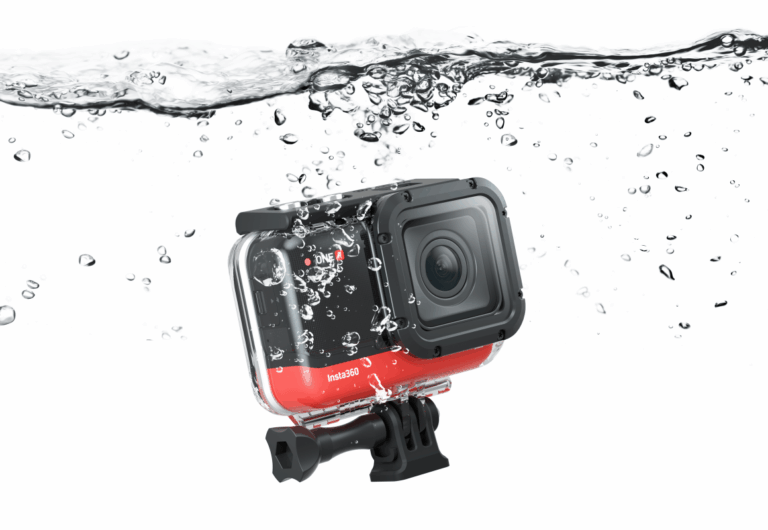
Now before we go into this review of the GoPro Mission 1 – it’s important to note that there is currently only a single underwater housing slotted for the GoPro Mission 1 Pro. We do not have information from GoPro that there will be a housing released for the other two cameras….but there could be! So stay tuned.
GoPro Mission 1 Pro/ILS MSRP: $599.99 for the Mission 1 and $699.99 for the Mission 1 Pro and Mission 1 ILS
Availability: Late May/Early June

Key GoPro Mission 1 Specs (What We Know So Far)
Shared Specs
- 50MP 1″ Sensor
- Processor: GP3 processor
- Photo: 50MP stills, RAW support
- Dynamic range: up to 14 stops at the sensor, per GoPro
- Audio: 32-bit float audio, 4 built-in microphones
- Color/profile: 10-bit, GP-Log2, HLG HDR
- Bitrate: up to 240 Mbps
- Battery: Enduro 2, 2150mAh
- Runtime: 5+ hours at 1080p30, 3+ hours at 4K30; GoPro also lists up to 1.5 hours at 8K30
- Rear screen: 2.59-inch touch OLED
- Wireless: Wi-Fi 6, Bluetooth 5.3
- Voice control: supported
- Operating temp: -20°C to 45°C
- GoPro Labs: compatible
- Mounting: integrated mounting fingers, 1/4-20 thread, magnetic latch accessory support
GoPro Mission 1
- Camera type: fixed lens
- Lens: GoPro standard 14mm lens on GoPro’s page; The Verge reports fixed 15mm equivalent f/2.8 lens
- Max video: 8K30
- 4K: up to 4K120
- 1080p: up to 1080p240
- Open Gate: 4K120 Open Gate only
- Front display: 1.4-inch color LCD
- Waterproof: 20m / 66 ft without housing
- Dimensions: 78.0 × 50.0 × 27.8 mm, body without buttons/lens
- Weight: 207g with camera, mounting, and batte
GoPro Mission 1 Pro
- Camera type: fixed lens
- Lens: GoPro standard 14mm lens on GoPro’s page; The Verge reports fixed 15mm equivalent f/2.8 lens
- Max video: 8K60
- 4K: up to 4K240
- 1080p: up to 1080p960 burst
- Open Gate: 8K30 and 4K120 Open Gate
- Front display: 1.4-inch color LCD
- Waterproof: 20m / 66 ft without housing
- Dimensions: 78.0 × 50.0 × 27.8 mm, body without buttons/lens
- Weight: 207g with camera, mounting, and battery
- Best difference vs MISSION 1: higher frame rates and full Open Gate support
GoPro Mission 1 ILS
- Camera type: interchangeable lens camera
- Lens mount: Micro Four Thirds / MFT
- Sensor: same 50MP 1-inch sensor as MISSION 1 PRO
- Processor: same GP3 processor as MISSION 1 PRO
- Max video: 8K60
- 4K: up to 4K240
- 1080p: up to 1080p960 burst
- Open Gate: 8K30 and 4K120 Open Gate
- Rear display: 2.59-inch touch OLED
- Front display: not listed / N/A in Park Cameras table
- Water resistance: weather-resistant, not 20m waterproof like the fixed-lens models
- Stabilization: HyperSmooth, lens dependent
- Lens behavior: The Verge says the MFT mount has no autofocus or electronic aperture contacts, and lenses have a 3x crop factor
- Dimensions/weight: lens dependent
Yes that’s a lot of specs! But hey, that’s a lot of new cameras! We’ll break it down for you.
An “Upgrade” in Resolution and Image Quality
The most striking aspect to the release of the GoPro Mission 1 is the introduction of a new 50 megapixel, 1″ sensor. Not only did GoPro increase the size of the sensor, as I’ve predicted that they would do incorrectly for years (it’s nice to finally be right!), but they drastically upped the resolution on the camera. Why? 50 megapixels is the resolution you need to film 8K video. But not all 8K is equal. By doing this, GoPro has perpetuated the number one limitation that separates GoPros from true cinema cameras… 50 megapixels crammed onto a 1″ sensor will introduce noise and lower video quality in low light. So if you are shooting in underwater conditions with a lot of like – having an 8K sensor is great. You will be able to crop macro video a lot more to get closer to subjects as we have found in our own 8K tests in the Pacific Northwest. The problem is that if there is low light, you will get a lot of noise, so we still recommend keeping your ISO maxed out around 500-800. Thus, it’s still worth considering the investment into an underwater video light!
It’s also important to remember that if you plan on shooting in 8K/60p or 4K/240p on the GoPro Mission 1 Pro or 8K/30P or 4K/120p on the GoPro Mission 1, it’s going to take up a lot of data. You’ll need a larger, faster SD card and more harddrive space. You may also want to consider upgrading your RAM and processing power on your laptop.
What is Open Gate Anyway?
You may have noticed one important spec floating around the video world that needs an explanation – open gate. As you can see, it’s one of the defining specifications that separates the Mission 1 Pro and Mission 1 ILS from the Mission 1. Open gate is a fairly simple buzzword. It means that when you are filming a video of a specific resolution, the camera will use the whole sensor. Is that useful for most video shooters? Well, you can crop a little more. But ultimately, most video shooters are going to stick with standards like vertical 9 x 16 for instagram or horizontal 16 x 9 for youtube. That said, open gate does benefit underwater macro videographers slightly more than the general population. You’ll be able to reframe, create b-roll and crop just a little more.
What About those Micro Four Thirds Lenses?
One of the most perplexing things about the GoPro Mission 1 launch is the pairing of micro four thirds lenses with a cropped 1″ inch sensor and calling it “pro cinema”. Though the Mission 1 ISL will likely not have an underwater housing made by GoPro, it’s possible that some of the other manufacturers carried by Bluewater Photo might.
I have to admit, I’m thoroughly confused why GoPro created this feature. The micro four thirds lens mount has not seen much innovation for the last decade and is often considered a “dying lens mount”. Moreover, there is a sensor mismatched so any lenses you use with the GoPro Mission 1 ILS will have a crop. It’s nice to have a wider range of perspectives, lens speeds, and fields of view. But ultimately, I think adding underwater wide wet lenses and wet macro lenses, as well as other GoPro accessories, will have more benefits to underwater shooters. The image quality will be better with wet lenses than any dry micro four thirds lenses behind a dome port.

Which GoPro Mission 1 Cameras Should Underwater Shooters Care About?
As I mentioned above, the GoPro Mission 1 ILS will likely not initially have an underwater housing and it is not waterproof by itself. So divers and snorkelers are really only going to look at the GoPro Mission 1 and Mission 1 Pro. These cameras are rated to 66 ft without a housing and 196 ft with a housing.
Personally, I think the GoPro Mission 1 is a better value between the two. I just don’t see myself trying to frequently edit 8K/60p or 4K/240p video. It’s a lot of data and I usually don’t need frame rates that high unless I’m filming a sardine run. So if you plan on going to Mag Bay or South Africa – consider the GoPro Mission 1 Pro. But I think most would be happy with the GoPro mission 1. The other caveat is that if you are a photo shooter that likes to take stills from video – I would consider the Mission Pro 1. A higher frame rate is always better for capturing still photos as the camera will use a higher shutter speed.
Is the GoPro Mission 1 Worth the Upgrade from the GoPro Hero 13?
This is the ultimate question. It’s a completely different camera. I think value for money and size – the GoPro Hero 13 is still an excellent choice for most people. It’s a smaller, more affordable option which is the whole purpose of GoPro. That said, the underwater compact camera market has shrunk a bit in the last few years. So there really aren’t that many great video options in the $800-1000 price point and compact camera size range. So if you’re a video shooter missing a good compact camera, the GoPro Mission 1 is probably right for you.