Return to Tiger Beach

Steve Rosenberg
ReefID's Steve Rosenberg shares amazing photos from his recent return trip to Tiger Beach in the northern Bahamas.

Return To Tiger Beach

A photo essay from the northern Bahamas featuring sharks, sharks and more sharks!

By Steve Rosenberg


SHARE THIS STORY

In January 2012, I made a return trip to Tiger Beach with Jim Abernethy’s Scuba Adventures for another one of their incredible week-long shark adventures to the northern Bahamas. It had just been too long since my last shark adventure on the MV Shearwater. As a bonus, Andy Sallmon, who is an outstanding professional underwater photographer from Southern California, was on the boat. Between Jim and Andy you can’t help get but pick up some useful tips on shooting sharks. During the trip, Captain Mike mounted a Go Pro Camera on a remote controlled boat speed boat and enticed a couple of tiger sharks to try their hand at boating. Fortunately, Mike recovered the GoPro and Andy got some incredible images of the event.


Just another tiger shark at the surface. The crew persuaded some of the passengers to dangle their toes in the water off the dive platform. It worked great to get the tigers to open their mouths for a few awesome close-ups. 


The Adventure

The week started off a bit rough and windy. Jim elected to visit two shallow reefs before heading out to Tiger Beach. After one day of bad weather, the winds eased and the seas calmed down, making the entries and exits a piece of cake and the surface intervals between dives very comfortable. We spent a day with amazing shark interactions at Hammertime reef and Ginormous reef. There were plenty of opportunities to set up unusual photographs at the end of swim-throughs and atop indentations in the coral reef with sharks continually making fly-bys and swim-overs. We took advantage of the opportunity to allow some of the Caribbean reef sharks to pose with splashes of colorful sponges and lionfish. Despite a persistent wind and somewhat spotty visibility we had awesome close-up encounters with Caribbean reef sharks, lemon sharks, a tiger shark and a friendly Goliath Grouper.


Duck!... and if it occurs to you, press the shutter. This was actually one of those opportunities where you have to anticipate...


Later when we parked at Tiger Beach and after the wind had died down a bit, we were treated to more incredible photographic opportunities. The various sections of Tiger beach are only about 20 feet deep, but feature swarming lemon sharks, intermixed with visits from tigers measuring up to 18 feet in length. It's always an exhilarating experience to grab your camera at the swim step, duck your mask into the water and roll forward with 20 or 30 lemon sharks milling about the dive platform. The lemon sharks, measuring up to 10 feet in length, sport a toothy sinister smile and their sleek ‘fighter jet’ profiles make for awe-inspiring portraits. However, the tigers are the real "super models," measuring up to an incredible 18 feet in length. The tiger sharks deserve, and require, your constant attention. On this trip we were underwater with as many as eight tigers at a time.

As an underwater photographer I have had the good fortune to work on assignments shooting sharks all over the globe. Jim Abernethy runs a very professional “stick to the rules” operation that allows photographers and videographers one-of-a-kind encounters with a variety of large predators that are available nowhere else in the world. Passengers on his live-aboard boat, the Shearwater, are treated to Jim’s hands-on expertise in dealing with sharks and his awesome knowledge of photographing large predators. I can’t wait to go again for another unique shark adventure, always looking for those one of a kind images.


For a lot of reasons, especially when you are diving with sharks, it is a good idea to be constantly looking around in all directions. When you have good visibility, look for situations where you can put subjects in the background, whether its the boat, sharks or other other divers. It's is a good way to add the the dimension of depth to your pictures.


Underwater Photo Tips

The photo opportunities on one of Jim’s shark trips are so plentiful that you don’t have to rush and just take snap shots. The best advice that I can give you is to listen to Jim Abernethy. He is the kind of person who is genuinely excited about helping his passengers get extraordinary shots. That said, when you get underwater, take your time and try to visualize what a shot will look like. Anticipate the angle of your subject and what is going on in the negative space around your subject. Try to isolate the subject(s) and get them swimming toward the lens at an angle.

Get as close as possible to your subjects and work on getting upward angle. You will discover that the first part isn’t that difficult.  Of course, you won’t have the luxury of burying your face in the viewfinder. You really need to keep track of where the sharks are at all times, especially the tigers. Learn to anticipate when a picture is about to happen, pre-positioning your camera in front of you. Look into the viewfinder at the last moment, take the shot and then get back to looking around you to keep track of the rest of your subjects. When you dive with tigers its pretty much a matter of teamwork and everyone has to do their part.


Sheer boredom. I'm pretty sure sure that this Caribbean Reef shark was only yawning from sheer boredom. The troublesome thing was that I could see he was pretty empty and probably somewhat hungry.


This picture of a close-up of a lemon shark was taken with the idea of adding another layer to the image by using a camera angle that would include a second shark higher in the water column.


Lionfish with Caribbean Reef Shark. Unfortunately, there were many volitans lionfish on the reefs. I persuaded this one to pose patiently just off the reef, while we waited for a Caribbean Reef shark to swim into the frame. The key to this type of picture is patience!


When we were swimming around the shallow reefs sometimes these types of images kind of just happened. You just have to be ready with the right exposure already dialed in and take the image. You have to learn to anticipate what the image will look like through the viewfinder, being sure to look around the subject for unwanted body parts in the picture. Of course, I am talking about shark tails, stray fishes, etc (not pieces of divers) that would detract from the image.


Rush hour. Jim dumped us on one of the shallow reefs during the commute hour, enabling us to sit in traffic and get all makes and models of Caribbean Reef Sharks.


Getting toothy displays and wide open mouths is pretty much luck. However, if you take an occasional test shot to check exposure, etc. you will be much more likely to be able to successfully shoot from the hip when  a cool behavioral shot unfolds.


Tiger portrait. This is the type of shot where you want to try to anticipate the angle of the subject and use a camera angle that will give you an empty negative space around your subject. By getting close and using upward angles, you can isolate your subject to obtain pretty dramatic shots against open water backgrounds


Sharks on the reef. One of the techniques we used on the shallow reefs was to set up a picture with sponges in the foreground and then wait (and wait) for the  sharks to swim into the picture.


This was just a case of aiming the camera to get a couple of lemon sharks oriented properly in the frame and be conscious of excluding the other 38 lemon sharks (and their various body parts) from the picture.


This Goliath grouper with it's mouth open was one of those instances where you have to be ready for a shot and just take advantage when it unfolds in front of you. Just be careful not to get sucked in when it opens its mouth. I wonder if Jonah was an underwater photographer.


Pair of reef sharks. Look for situations where you can get subjects interacting in the frame. This opportunity of getting a pair of Caribbean reef sharks lined up in a parallel configuration seemed like a good idea (even while I was taking the picture).


About the Author

Steve has been a professional underwater photographer and photojournalist since 1980. He has produced eight travel guides for dive destinations, including The Hawaiian Islands, Cozumel, The Turks & Caicos, The Galapagos Islands, The Bahamas and Northern California, and has written hundreds articles for various U.S. publications on dive destinations, underwater photography, and marine biology. He has also produced numerous coffee table books on various destinations. Thousands of his images have appeared in books, magazines, and posters, as well as on stamps, advertising, and art work worldwide. He has also won more than 250 awards for his photography in international competitions, including a First Place Award in the prestigious Han Hass Competition in Austria. He received the Scuba Schools International Platinum Pro Certification for 5000 dives in 1996 and has been diving since the late 1960’s. He is an active member of the Society of American Travel Writers (SATW). Steve is a senior board member and contributing editor for ReefID.org.  He can be contacted at sgr@pacbell.net.


Further reading


Support the Underwater Photography Guide

Please support the Underwater Photography Guide by purchasing your underwater photography gear through our sister site, Bluewater Photo and Video. Click, or call them at (310) 633-5052 for expert advice!


Jim Lyle's Underwater Photo Adventure in Cozumel

Jim Lyle
The adventures of an underwater photographer at Scuba Club Cozumel, with many, many pictures!

Jim Lyle's Underwater Photo Adventure in Cozumel

The adventures of an underwater photographer at Scuba Club Cozumel, with many, many pictures!

by Jim Lyle


SHARE THIS STORY


What follows is a Cozumel trip report. For more than twenty years, we have been returning to the island and staying at Scuba Club Cozumel, our home away from home. I’ve kept the narrative to a minimum and posted lots of pictures. I hope you enjoy looking at them as much as I did taking them. Buen provecho!

Our plane landed at the airport on Cozumel Island and we passed through Mexican immigration before patiently waiting by the carrousel for our luggage. The clothing bags came off first, followed by Deborah's scuba gear bag…hmmm, where's my gear bag? We waited and we waited. A young man, who was loading the bags on the belt, pointed at one bag and shrugged his shoulders. I shook my head. No, it isn't mine. How about this one, he indicated. No, not that one either. Bad news – there were no more bags to unload. Somewhere between LAX and CZM, my gear bag was in luggage limbo. I spoke to Continental's representative and we filled out a "delayed" luggage form. It seems to me a "lost" luggage form would have been more appropriate. The agent assured me that my bag would be on the next flight from Houston and delivered to my hotel.
 
We joined our friends on the Colectivo bus (by the way, rates have increased 25% since our last visit!) and, a short ride later, checked in to Scuba Club. Sofia greeted us with, "Welcome home!" and things didn't seem so bad. Deborah did a shore dive to check out her equipment while I moped in the room. Later that afternoon, when my bag failed to show up, I called the airport, only to learn everyone had gone home for the day. Drat!
 
What to do? I rented fins, BCD, and a regulator from the dive shop at SCC, but they only had "shortie" wetsuits. So I walked across the street and bought a 3 mm suit to cover my cheap Irish skin. The rental fins were full-foot and I was afraid of rubbing blisters, so I would wear a pair of socks to protect my feet. I then had enough equipment to get in the water. I assembled the camera and got everything ready for the next morning. Let's go diving!
 
Water temperature was 84 degrees F and visibility was approximately 100 feet.
 
Scuba Club Cozumel is our favorite resort. The hotel is semi-all-inclusive (room, diving, food. Drinks and tips are not included. We love the unlimited shore diving; being able to take a tank and go is a real plus. The staff is friendly and attentive. The food is wonderful. The accommodations are spacious, clean and full of ambience. They offer a "light" plan for people who would prefer to eat dinner in town. Free, wireless connection to the internet is available to those who need to check their email or the web. There are no telephones or televisions in the room (you can watch TV at home!). Eat, sleep, dive – it doesn't get any better than this.


Day One - Scuba II with Jesús, Deborah, Mel, Juanita, Chris and Walt


Dalila Reef

 
Very little current, sunny, warm, good visibility, great friends, lots of fish; it just doesn't get any better than this. On the other hand, I hated the rental fins – grumble, grumble. Jesús pointed out three turtles, we were buzzed by a pair of large permits, two nurse sharks were patient with the photographers, and our bottom time passed all too quickly.


"Salad." It's hard to show what the reef really looks like.


Hawksbill turtle (Eretmoschelys imbriocata) and friends.


Nurse shark (Ginglymostoma cirratum)


Jesús on surface


Paradise Reef

 
We dropped on the sand and headed towards the shallows to look for seahorses; there's one. Jesús found a second one before we moved back onto the shallow reef structure. I heard Jesús' rattle and swam over to see that he had found. Woo hoo, it was a baby frogfish! Drat, I was not set up for macro photography. The best I could do is a picture of Betsy taking a picture of the tiny fish – can you see it? It's very small!


Betsy with tiny frogfish


French angelfish, intermediate stage (Pomcanthus paru)


Spotted scorpionfish (Scopaena plumieri)


Seahorse (Hippocampus reidi)


Channel clinging crab (Mitrax spinosissimus) with eggs tucked under her tail


When we returned to SCC, I spied one of the staff carrying a bag towards our room. Hey, that's mine! The gear bag that once was lost now was found. I was a very, very happy camper. I had my fins, my BCD, my regulator, and my booties. Life just gets better and better!
 
[As Chris and Walt geared up for the first dive of the day, Walt seemed to be having a hard time with his wetsuit. Chris, on the other hand, had on a baggy, yellow wetsuit that looked several times too big for her. Yep, they had each put on each other's wetsuit. Hey, guys, get a room! I told Chris I would not mention this; I lied.]


Day Two. Scuba II with Jesús, Deborah, Mel, Juanita, Chris and Walt


Palancar Horseshoe

 
The horseshoe is the middle of the Palancar Reef system. A statue of Christ used to stand here, but fell over several years ago and was removed to Chankanaab Park. A large concrete block is all that remains. The further south you go in the marine park, the larger the reefs are. Huge buttresses of coral, covered in sponges and corals are the principal draw, with many swim throughs penetrating the wall. This is a great place to practice wide angle photography. Although there are fewer fish to be seen on the deeper dives, turtles are common. Plus, at the end of the dive, you can move up to the shallow part of the reef for a long, long safety stop. On top of the reef, we found a nurse shark asleep under a ledge.
 
Note: Walt is a farrier – diving the "horseshoe" was appropriate.


Barred hamlet (Hypoplectrus puella)


Nurse shark (Ginglymostoma cirratum)


Punta Tunich

 
About halfway up the island, a rocky point juts out into the current; this is called Rocky Point or Punta Tunich. Even when the current is tame on the reefs further south, it speeds up as it passes the point and PT can be an E-ticket ride. Luckily, the currents were only moderate and we were able to duck out of the flow to take pictures. Tunich is also a fishy place with many schools of grunts and larger fish. One cavern towards the end of the reef is usually filled with glassy sweepers and often a large, green moray eel or grouper is hiding inside the cavern. A couple of octopus, more turtles, black groupers, filefish, and pairs of angelfish were highlights of this dive.
 
PS - Diving is so much better when you have your own gear!


Great barracuda (Sphyraena). I've never heard of a "less barracuda!"


What is everyone looking at? "Is that a shark?"


Porkfish (Anisotremus virginicus).


Shore Dive

 
Betsy, Deborah, and I did a long, shore dive in front of the hotel. I found a cute, little bumblebee shrimp. Norbert Wu, a famous underwater photographer, once said, "Find a colorful background and wait for something to swim into the picture." Christmas tree worms don't swim, but this one was on a red encrusting sponge and I liked the contrast. Near the pyramid in front of Hotel Cozumel was a lone flying gurnard, walking across the bottom. We also found a sponge crab, a nice hermit crab, and two octopi before calling it a day.


Bumblebee shrimp (Gnathophyllum americanum). This shrimp is only 2 mm long! I shot this with my 50 mm Zuiko lens (100 mm film equivalent) and a SubSee 10X diopter). The image is a 50% crop. These shrimp are occasionally found on sea cumbers and quickly move out of sight. I way able to take only one image before the shrimp disappeared and as luck would have it, it was a keeper! Sometimes it is better to be lucky than good.


Christmas tree worm (Spirobranchus giganteus). The red encrusting sponge makes a nice background.


Flying gurnard (Dactylopterus volitans). This strange fish "walks" on the bottom.


You can see the gurnard’s fins trailing along the side of the fish. When startled, the gurnard spreads its wings and flys away displaying a beautiful blue pattern.


Redeye sponge crab (Dromia erythropus). The crab carries around a sponge hat to hide from predators.


White speckled hermitcrab (Paguristes punticeps).


Caribbean reef octopus (Octopus briareus).


Day Three. Scuba II with Jesús, Deborah, Mel, Juanita, Chris and Walt


San Francisco Reef

 
The San Francisco Reef is, in my opinion, an underrated dive site. The reef is about 60 feet deep at the drop off and lies north of the southernmost reefs. As such, it is often done as a second dive. The reef has very nice structure, although not as large as Palancar. There's a wall, but it's not particularly steep, and there are lots of fish to see. While everyone else was looking into the reef, I spotted a large hawksbill turtle feeding on a sponge to photograph. Large groupers cruised down the reef but they like to tease photographers and stay just out of strobe range. Jesús pointed out a couple of juvenile spotted drum.


Rainbow parrotfish (Scarus guacamaia).


Betsy with hawksbill turtle.


Tormentos Reef

 
There are two parts to Tormentos, separated by a single, large sand dune. Tormentos gets deeper towards the end, so this is a good dive for nitrox. There are nice windows in the coral heads and many, colorful fish.


Margates (Haemulon album).


Queen angelfish (Holocanthus ciliaris). Why do some fish display such vivid colors? Sexual attraction? In any case, this one is a real beauty.


Shore

 
Betsy and I went to see El Presidente, the big barracuda that hangs out under the pier. While I burned pixels, Betsy worked her way up the iron shore looking for jawfish. The barracuda was very patient but wouldn't let me get too close to it. There's an artificial reef offshore made up of the old pier that was destroyed by hurricane Wilma; the gate from the hotel makes a nice backdrop for a school of grunts.


"El Presidente" – Great barracuda (Sphyraena barracuda).


School of grunts & iron gate (Haemulon sp).


Day Four – Scuba II with Jesús, et al


Palancar Gardens

 
WOW! What a wonderful dive. The magnificence of Palancar Gardens defies verbal description. Huge coral heads, the size of apartment houses, are covered in colorful sponges. A large school of baitfish hugged the wall while being watched by black groupers ready for lunch. There was almost no current on this dive and visibility was off the chart.


Black grouper and bait (Mycteroperca bonaci). This is my favorite picture of the trip!


Lesser electric ray (Narcine brasiliensis). Don't touch! Shocking.


Yocab Reef

 
A shallow reef, Yocab is home to many colorful fish. A huge grouper hung under the reef and allowed me to get up close and personal. It rained while we were doing our safety stop, but the sun came out on the way back to SCC.


Black grouper (Mycteroperca bonaci).


Red hind (Epinephelus guttatus).


Shore

 
I put my 50mm macro lens on the camera and went out to play with the small stuff in front of the hotel.


"Yawn." Bluestriped grunt (Maemulon sciurus). Timing is everything.


Day Five – Scuba II with Jesús et al


Santa Rosa Wall

SR is always a crowd pleaser. The wall approaches vertical and there's structure on the top. At the end of the reef, you can cross the sand to another low lying reef with scattered coral heads and sponges. Large groupers were out in force on the wall and a very unconcerned turtle posed for the photographers at the end of the dive.


Yellowfin grouper (Mycteroperca venenosa).


Hawksbill (Eretmoshelys imbriocata). "Haven't I seen you here before?"


Villablanca (dive of the seven cables)

We only saw one of the seven cables on this dive. We spent a great deal of time looking for seahorses – found two, a yellow one and an orange one. As an added bonus, a large, green moray eel was hiding in a hole on the top of the reef.


Seahorse (peekaboo) (Hippocampus reidi).


Yellow seahorse.


Shore

We visited the artificial reef in front of the hotel to shoot fish faces and poke around looking for small stuff.


Roughhead blenny in worm shell (Acanthemblemaria aspera).


Day Six – Scuba II with Jesús et al. plus Dave and Mike


Colombia Deep 

Spectacular coral buttresses the size of apartment houses line the drop off. We started the dive on the southernmost pinnacle and traversed the sand gap to reach the rest of the reef. When we started to run out of bottom time, we moved up to the shallower reef to extend our time. A couple of southern stingrays were hunting in the sand along with a shadowing bar jack and a permit. A small turtle teased us on our safety stop, swimming slowly beneath us as we hung at fifteen feet.


Jesús with lionfish (Pterois volitans).


Colombia Shallows

Located inshore from Colombia Reef, the Shallows is a large, shallow area where large schools of snappers and grunts hang out between coral heads. Mike found a shark sleeping under the reef, but its head was inside the reef and I didn't go for a butt shot. A pair of turtles was feeding on the sand off the reef, as well as a pair of terminal male rainbow parrotfish (no, I wasn't able to get close enough to them for a photograph.) This was Chris and Walt's last dive of the week. I hope to see you next year!


School of Caesar grunts (Haemulon cabonarium) on Colombia. One fish just can't help but head the wrong way.


Mixed school of grunts on Colombia Shallows.


Another hawksbill. I never get tired of seeing turtles on the reef.


Shore

 
Betsy demonstrates technique and gets the shot. After seeing my "yawn" picture from before, she got a great image with three fish yawning at the same time. I'm green with envy.


Day Seven – Coral Diver with Ariel. Ed joined us after the departure of Chris/Walt


La Francesa

The northern end of Palancar Reef is called "the French lady" or La Francesa. Here, the reef is moderately high, but has no associated wall. On the open water side of the reef are great overhangs to search under for crabs, lobsters, groupers, etc. Ariel killed a couple of invasive lionfish and fed their carcasses to a splendid toadfish. A nice hawksbill turtle let me take its portrait. At one point I looked up and a free swimming green moray was up close and personal with Deborah. At that point the eel decided it liked my fins and smelled along the edges before swimming off, down the reef.


Green moray sniffing my fin. "Please don't bite me!"


El Paso de Cedral

The best place on the reef to see porkfish and often home to many groupers, Cedral is a short reef with a wonderful tunnel system under the reef that's fun to explore. After the end of the reef, we drifted over to Santa Rosa shallows.


Porkfish school (Anisotremus virginicus). Tastes like chicken?


Day Eight – Scuba II with Jesús, Mel, Juanita, Dave, Mike, George, Deborah and me


Bolones de Chankanaab

Bolones is offshore from Chankanaab Reef and consists of a sandy bottom interspersed with large coral heads. We were greeted by several large groupers that have learned that the dive guides will often kill lionfish and offer them to the large fish.


Deborah and grouper.


Splendid toadfish (Sanopus splendidus) and busy body fish. "What cha doing? Taking a picture of the toadfish? How about me? Won't you take my picture, too?"


Chankanaab Reef

There are lots of large lobsters, big crabs, and many colorful fish on this reef. The current usually runs to the south due to an eddy created by the shoreline. This is a great dive site to find the endemic, splendid toadfish.


Splendid toadfish (Sanopus splendidus).


Shore

Last August, John found a yellow frogfish on a shore dive. Common elsewhere, it's rare to see any frogfish in Cozumel. We were able to locate the yellow frogfish on subsequent dives, but it was gone when we returned to the island two months later. Yesterday, on this trip, Betsy reported that she had found the elusive fish and offered to take us back to the spot where it was last seen. Upon arriving, we discovered the fish had moved. After a couple of minutes, Betsy spotted the frogfish doing its best imitation of a sponge, flat up against the side of a rock. Returning to the artificial reef in front of the hotel, Deborah found a Spanish lobster.


Longlur frogfish (Antennarius multiocellatus).


Day Nine – Scuba II with Jesús et al


Palancar Caves

 
There aren't any "caves" at this dive site, instead there are large passages through the coral heads with many exits and openings. The structure along the edge of the wall is fantastic, huge and colorful. We saw a turtle feeding many feet below our maximum depth, so I didn't get to take its picture. After the main reef, we moved up and across the sand to a shallow reef area and poked around until the end of the dive. A large barracuda was being cleaned by a juvenile Spanish hogfish and allowed me to get within strobe range.


Jesús, sponge and baitfish. I really like this picture! I think it's the curve of the baitfish over the sponge that gives it punch.


Las Palmas

 
Near the Fiesta American hotel, the current splits, with one part going south towards Chankanaab and the other part heading north. We dropped in on the north current and were blown in that direction and had to swim to stay on the drop off. There were schools of small bar jacks, feeding in the current and other fish, but it was almost impossible to stop and take pictures, the current was so strong. We swam over a large sandy area to get to the inshore side of Paradise where we looked, unsuccessfully for seahorses.


Shore

 
Betsy had signed up for the twilight/night boat and Deborah was resting, so I did an afternoon dive with Margaret.


Goldentail moray (Gymnothorax miliaris).


Lionfish (Pterois volitans). An invasive species that is threatening the reef ecology in the Carribean.


Day Ten – Scuba II with Jesús. My sister, Jana, and brother-in-law, Mike, joined us today!


Paso de Cedral Drop Off

 
Offshore from Paso de Cedral Reef, the drop off is a wild, current ride on top of the drop off into the deep blue. This is a great place to see turtles, sharks, large parrotfish, and many colorful fish. Unfortunately, I had failed to notice a smudge on the inside of my lens port and most of my pictures from today's dives aren't worth sharing. Part way through the dive, we moved over to Paso de Cedral Reef and made two dives out of one.
 

Paso de Cedral  

 
We had so much fun on the first dive, we voted to repeat the reef!


Channel clinging crab (Mitrax spinosissimus).


Shore

 
Deborah, Betsy, George, and I went a long way along the ironshore in search of the frogfish. It had moved from its last position, but Betsy found it again after some close inspection of the wall. On the way back, I spotted a needlefish just under the surface.


Houndfish (Tylosurus crocodilus).


Curved trumpet fish, ready to strike.


Day Eleven – Scuba II with Jesús et al


La Francesa

 
Today was Mike and Dave's last day, so we opted for a couple of shallower dives. This was our second visit to the "French Lady" on this vacation. On the first part of the reef is a tunnel that runs much of the length of the coral head. While there isn't much to see in the swim through, sunlight penetrating the reef gives the tunnel a religious aspect that's hard to describe and hard to photograph! We saw the big three, turtle, green moray, and nurse shark.


Green moray.


Nurse shark (Gingliomostoma cirratum) & shark sucker (Echeneis naucrates).


Paradise Reef

 
A good selection for Dave/Mike's last dive, Paradise offered a long, slow drift with lots of time to poke around and look for small stuff.


Patterns on a coral head.


Day twelve – Scuba II with Jesús, Jana, Mike, Deborah, Mel, Juanita, Betsy, George


Colombia Bricks

 
Another fabulous dive on the Colombia/Palancar reef system. A slow drift through the huge coral structures at the top of the drop off before moving up to the top of the reef to extend our bottom time. We saw only one turtle on this dive, very unusual for this dive site. I played with wide angle photography and my favorite yellow sponges.


Bluestriped grunt (Haemulon sciurus) eating a brittle star – Predation on the reef is hard to capture with a camera; either the action is too fast or too infrequent. This snapper had just grabbed a brittle star and was having a hard time getting it down!


Yocab

 
This dive was a repeat of one we did the previous week. The huge grouper was still under the overhang about half way down the reef.


Black grouper (Myctoperca bonaci) showing off one of its color changes.


Shore

 
I put my macro lens on the camera and went to look for small stuff. There's a lot to see on a shore dive if you look closely.


Orangeclaw hermit crab (Calcinus tibicen).


Juvenile smooth trunkfish (Lactophrys triqueter) (50 mm Zuiko lens with SubSee 10X diopter).


Day Thirteen – Scuba II with Jesús


Bolones de Chankanaab

 
This was Mel and Juanita's last day of diving and they requested a return to Bolones. There were fewer groupers on this dive than there were last week, but lots of other colorful fish to keep everyone happy. There's a brown looking sponge on Bolones that turns a bright red-orange under strobe light, making for some nice wide angle shots that attempt to show what the reef looks like.


Erect ropesponge (Amphimedon compressa).


Chankanaab Reef

 
After a short surface interval, we dove on the normal Chankanaab Reef. A barracuda was being cleaned by some neon gobies and was not going to back away from the photographers. Too soon, we had to end our dive and ascend for a safety stop.


Great barracuda (Sphyraena barracuda).


Shore

 
After a nap, I did a shore dive in front of the hotel. Highlights of this dive were an arrow shrimp pretending to be a twig and a juvenile butterflyfish.


Arrow shrimp (Tozeuma carolinense). It is head down. You can see the white eye near the bottom of the critter.


Juvenile spotfin butterflyfish (Chaetodon ocellatus).


Day Fourteen – Scuba II with Jana, Mike, Betsy, George, Deborah, Mark and Lu


Palancar Gardens

 
We returned to Palancar Gardens. I had hoped to find the school of baitfish that had been on the wall the previous week, but they were gone. A hogfish shadowed us as we slowly drifted down the reef. The school of jack that's been at the end of this dive for many years was still there. Several turtles delighted the divers and photographers.


Spanish hogfish (Lachnolaimus maximus).


School of horse-eye jacks (Caranx latus).


Betsy and turtle.


Tormentos


Jesús in the window. That sounds like a religious statement – "I have Jesus in my window."


Shore

Deborah and I spent a couple of hours in front of the hotel looking for small stuff.


File clam (Lima scabra). This file clam was at the same depth as the previous image where the tentacles are red. The theory is proven false.


Web burrfish (Chilomycterus antillarium).


Day Fifteen – Scuba II with Jesús et al


Santa Roda Wall

 
Santa Rosa is Jayne's "happy place." This dive was dedicated to her for her birthday next week. We were sorry she couldn't join us this August. After a huge group of divers passed us on the wall, we enjoyed a leisurely drift in and out of the coral formations before moving across the sand to the shallow, upper reef to extend our bottom time.


Jesús demonstrates perfect buoyancy inside the cave. "¿Donde están los otros?"


Villablanca

 
While Jesús paused to look for the yellow seahorse that we saw here the first week, I drifted further up the reef looking for the hole where the green moray eel was. Found it. A little turtle decided it needed to go to the surface and get some air just as we got to where it was feeding on sponges.


Diving hawksbill.


I took the afternoon off to work on this trip report and off-gas a little.


Day Sixteen – Scuba II with Jesús, Deborah, Betsy, George, Jana, Mike, Roger and Judy


Palancar Caves

 
We had a mild current and drifted along the wall for a while before moving up onto the shallower reef system. Only one turtle was seen and a single free swimming nurse shark was spotted in the distance. Still, a nice first dive for Roger and Judy.


Pair of balloonfish (Diodon holocanthus).


Yucab

 
At this point, there aren’t many reefs that we haven't visited, some more than once. The big grouper wasn't in his usual place when we got to the cut out. Instead, a large grouper was lying on the sand and let us get close. After taking a few pictures, I move over to the reef to shoot some fish schooling images. It was then that the big grouper showed up and poised with his mouth open to be cleaned by a Spanish hogfish. We were treated to a turtle encounter – can't have too many of them – at the end of the dive.


Juvenile queen angelfish (Holacanthus ciliaris).


"What kind of camera are you using?" 


Day Seventeen - Jesús was sent to the mainland to take a class in Scubapro equipment repair. Scuba II with Ariel et al


San Franciso

 
This was a good choice for Mike's introduction to Cozumel. The drop off isn't that deep, there's some vertical structure at the top of the wall, and shallower reef at the end to extend the bottom time. We saw a nurse shark, out for a morning swim, at the beginning of the dive. Unfortunately, the one turtle on this dive was out of sight before Mike got to see it.
 

Paradise Reef

 
Ariel chose to start the dive on the flats to look for seahorses. He didn't have to look for long, he pointed out four of them! My brother-in-law discovered a juvenile seahorse, black in color. There were some very tame permits riding the current on top of the reef, but I was sticking close to my son and didn't swim up to take any pictures; call me "Dad."


Day Eighteen – Scuba II with Ariel et al


Dalila

 
The current was strong enough on this dive that I could not swim directly into it! We flew along, occasionally dropping behind the coral or an overhang to stop and wait for everyone. There was a green moray under a ledge and a couple of green turtles to take images of.


Lobster hotel.


Green turtle (Chelonia mydas). Green turtles are not common in Cozumel waters and are endangered by overfishing.


Ariel's Chankanaab

 
Ariel asked if it would be OK to dive a portion of Chankanaab that isn't normally dived. The first part of the dive consisted of a series of big coral heads that were closely spaced. This is a place to find Atlantic spadefish, but none were seen. Instead, a school of ceros tantalized this photographer by staying out of range. A large school of horseeye jacks was also too shy to get close to.


WA sponges and family.


Shore

 
While Deborah and Mike explored around the pier, I concentrated on some macro photography. There's a lot to see on a shore dive and a great place to play with your camera.


Odd couple. This image is strangely appealing. I think Norman Rockwell would approve.


A spotted moray being groomed by a banded coral shrimp. "A little off the top, please."


Day Nineteen – Scuba II with Jesús et al


Colombia Deep

 
What more can I say about Colombia Deep? Fantastic!


Colorful sponges on Colombia reef.


Colombia Shallows

 
Another slow drift over the shallow coral heads. Mike and I were given the close up by a small turtle.


School of grunts.


Turtle.


Shore

 
Night dive in front of the hotel with Mike. There was only one octopus out hunting, lots of sleeping parrotfish, and the odd eel or two.


Sleeping stoplight parrotfish (Sparisoma viride). What Larry, the cable guy, would look like if he were a fish.


Day Twenty – Scuba II with Jesús et al


Paso de Cedral

 
I remembered where the green moray eel was hiding a couple of weeks ago and was able to locate it for a couple of pictures before the rest of the photographers showed up. I took lots of pork fish pictures to short through later. Mike and Deborah went through the tunnel under the reef and played with a big lobster at the exit.


Porkfish. A school of porkfish has been in residence on Paso de Cedral for as long as I can remember.


Caribbean spiny lobster (Panuliris argus).


Paradise "Grass"

 
"Grass" is inshore of the reef at Paradise and consists of a sandy bottom with low vegetation. This is a great place to find seahorses – we saw six of the reclusive critters.


Slender filefish (Monacanthus tuckeri).


Seahorse. "Hey there, big boy, come here often?"


Too soon our vacation came to an end and we had to leave the gates of Scuba Club to head for the airport. Adios, Cozumel, regresaremos.


These are my favorite images from the trip. Which one do you think is the best? Are there any others that you like better?


Image 1 - Grouper and sliver sides.


Image 2 - Pair of squat anemone shrimp.


Image 3 - Turtle on Colombia?


Camera: Olympus E-330 in an Ikelite housing with dual Ikelite DS-125 strobes. Most images were shot with a Zuiko 14-54mm lens or a 50mm lens for macro. All images are copyrighted and may not be used without permission.


Further Reading:


Support the Underwater Photography Guide

Please support the Underwater Photography Guide by purchasing your underwater photography gear through our sister site, Bluewater Photo and Video. Click, or call them at (310) 633-5052 for expert advice!


Photo Essay: Port Hardy, British Columbia

Rand McMeins
Rand McMeins shares his underwater photos & tips from a recent trip to Port Hardy in British Columbia, Canada.

Port Hardy, British Columbia Underwater Photo Essay

By Rand McMeins


SHARE THIS STORY

Port Hardy is located at the north end of Vancouver Island, and is an underwater photography paradise.  The waters off northern Vancouver Island feature amazing invertebrate life, wolf eels, and octopus. The dives also include walls covered with colorful anemones, a variety of sponges and starfish, and loads of fish including black rockfish, seals, and sea lions. Also, it is not uncommon to see killer whales on the surface.


Lions mane sea jelly & diver. Tokina 10-17mm FE lens, F4 @ 1/200th, ISO 200.


Dive sites visited

We did two dives at Race Rocks. This was on a day-boat out of Victoria, B.C. with Ogden Point Diver Centre. After diving there, we headed up to Port Hardy and did the balance of the diving there. The most well known site is Browning Wall. Without a doubt, the most beautiful wall I've ever dove anywhere. Wall-to-wall color, critters, and growth.


Underwater temps and visibility

The dives at Race Rocks out of Victoria were my first at that location. The boat Captain said that the vis was just about as good as it gets the day we dove. I'd put it around 30-40'.  Perhaps to 60' or more in Port Hardy. Water temps for both locations were in the mid 50's, but his can change quickly with an upwelling which we had on a few dives in Port Hardy.


Kelp greenling, anemones and orange peel nudibranch. Tokina 10-17mm FE lens, F6.3 @  1/125th, ISO 200.


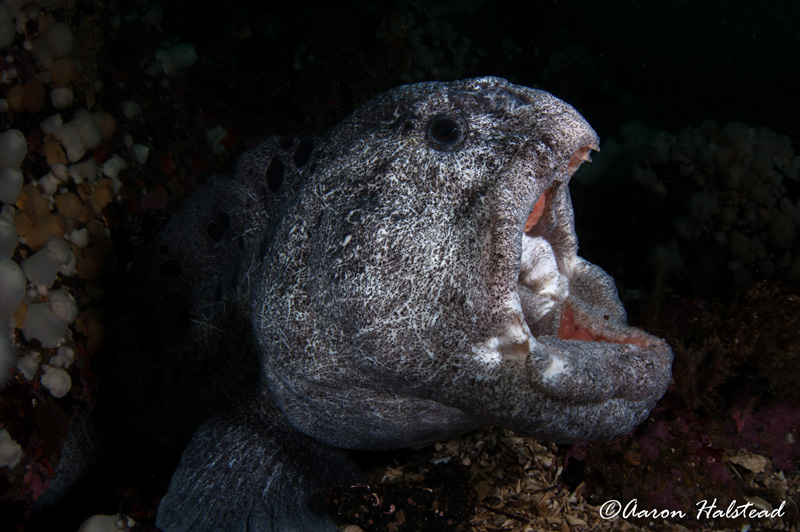
Wolf eel. Nikon 105mm macro lens, F9 @ 1/200th, ISO 200.


Underwater photography opportunities

Race Rocks was a wide-angle dive for me. The Stellar sea lions are the main attraction and they have some big ones. Some were well over 2,000 lbs. I was first in on the first dive and was surrounded by about 100 of them for the first few minutes. They like to come from behind and bump your head. A high pucker-factor for sure.  The topography underwater is sparse. It featured some big boulders, but not much to see for growth so, other than some Seastars and Puget Sound king crab, not much. Both dives were with the sea lions, so no real opportunity to go explore.
    Port Hardy is great for both macro and wide-angle. A bounty of macro subjects. Shrimp, Nudis, Dorids, Skeleton shrimp, Gunnels, free swimming snails, and sea fleas. And of course the high dollar targets, Warbonetts, both decorated and Mosshead.
    And of course wide-angle. The walls are so beautiful. Every color imaginable, and so dense that there's no open space to place a finger to steady yourself. Subjects include wolf eels, Great Pacific Octopus, Lions' mane jellyfish, anemones as big as a dinner plate, sponges, and soft corals. There are huge Orange peel nudibranchs, some close to 2 feet long. Read about how to photograph nudibranchs. But be careful if you see a giant pacific octopus, the octopus may steal your camera rig.

    There are also kelp beds that serve as cover for Black Rockfish. The kelp is very photogenic on a sunny day.
    The fish life is a bit less as compared to the Caribbean for instance. But what's there makes for great photo ops. Small sculpins have the ability to change color to match their surroundings. Making for an endless variety of coloration on this single subject.
    A favorite of photographers is the Red Irish Lord. A very co-operative subject apparently having high confidence in its ability to blend in. Their eyes are a special treat when lit properly, since they are flecked with gold-colored bits.
    The very odd-shaped Grunt sculpin with a head that resembles a barnacle and a tail that looks like the feeding arm, as well as Ling Cod and Cabezon are favorites.


Orange peel nudibranch. Tokina 10-17mm FE lens, F4 @ 1/125th, ISO 200.


Gunnel. Nikon 105mm macro lens, F8 @ 1/200th, ISO 200.


Overall impressions of underwater photography at Port Hardy

The diving in Port Hardy I'd rate as world class. If you haven't dove there yet, it's got to be on anyone's bucket list that does temperate diving.  The kelp beds in California offer some beautiful scenery and would be my second choice, but even then, it's not even close to the diversity of color and critters in Port Hardy.
    Plus, the topside opportunities are ample. Whales, dolphins, sea lions, orcas, otters, deer, bears, and the grand bald eagles. We saw eagles in the trees on almost every dive.


Accomodations at Port Hardy

We dove with Dan Ferris in Port Hardy on the Mamro. We did three dives a day. It doesn't sound like that would fill a day but somehow, it usually did and the cold water takes its toll as well.

And yes, the timing of the dives is crucial, especially for underwater photographers. One of the reasons we've continued to dive with Dan Ferris on the Mamro. He's excellent at giving us that slack window. 

The currents in the area can be very strong, ranging from 1 knot all the way to 15+ knots.  Some of the best diving in the Port Hardy area can only be done at precise slack tide, and some are only for expert divers.  These strong currents are due to the large tidal swings, and a narrow channel between Vancouver Island and the Lower Mainland. ~Editor


Nudibranch amongst the plumose anemones. Tokina 10-17mm FE lens, F3.5 @ 1/125th, ISO 200.


B&W sea flea. Nikon 105mm macro lens & SubSee +10 diopter, F13 @ 1/200th, ISO 200.


Underwater photography equipment

For this adventure, Rand used a Nikon D2x camera in a Subal D2 underwater housing, and 2 Inon Z220 strobes. All the wide-angle, except for the sea lions and topside shots (15mm for those) were with a Tokina 10-17 FE zoom behind the Zen mini dome. Macro shots were captured with the Nikon 105mm macro lens, the supermacro shots were taken utilizing the Nikon 105mm macro lens along with the Subsee +10 diopter.


Nudibranch confronts hermit crab.  F20 @ 1/200th, ISO 200.


Orca pod. 15mm Fisheye lens, F8 @ 1/200th, ISO 200


Anemones. Tokina 10-17mm FE lens, F3.5 @ 1/125th, ISO 200.


Underwater photography tips

The biggest challenge shooting wide-angle in cold water is the extra gear and weight you must wear. Turning over on your back to shoot up into the water column is no easy feat. Sometimes I feel like a cockroach trying to flip over, and I'm sure seeing my legs flailing and arms wind milling is not pretty.

The other issues are lack of ambient light at depth, and the amount of crud in the water. The light issue sometimes requires bumping up the ISO. Cameras that can do that and maintain low noise are a real asset.

My D2x is not one of them, so I kept my max ISO at 200.  The backscatter is an issue that can cause the best image of your life to hit the trash bin.

Two of the techniques that I've found pretty effective:

  • Shoot more reef than you normally would. Concentrate on lighting on a small area then allowing the light to fall off with just a touch of open water at the top of the frame can keep scatter to a minimum. Shooting with strobes into open water invites a really horrible result. By keeping your strobes tight or even just using one strobe will help as well. Try lighting the foreground subject from over the top of the dome port or off to one side, as this will help eliminate backscatter. You might also end up with a more pleasing result with using just a single strobe.
  • Get as close as possible to the subject and light only the subject.  I really enjoy using the Tokina 10-17mm fisheye lens with a Zen mini dome. This set-up allows me to get right on top of the subject and keep my strobes tight.


Black rockfish and Bull kelp. Tokina 10-17mm FE lens with ambient light, F5.6 @ 1/15th, ISO 200.


Sea flea on orange seapen. Nikon 105mm with Subsee +10 diopter, F16 @ 1/200th, ISO 200.


Stellar sea lion.  F2.8 @ 1/250th, ISO 200.


About the author

Rand McMeins is, at present, a PADI Dive master. Certified to dive in September of 2001, he bought his first digital camera in 2002; an Olympus C4040z 4 MP digital camera, housed in Light & Motion's Tetra housing with a single Sea & Sea YS90dx strobe. As of Spring of 2005, he's shooting with a Nikon D2X in a Subal underwater housing.

Rand lives and dives in the Northwest, which has provided him with ample opportunity to practice and improve his underwater photography skills. Although he enjoys a nice dive in warm water whenever the opportunity presents itself, the cold, green waters of the Pacific present some of the most beautiful and weird creatures one could ever hope to capture on digital media! 

Please visit Rand's website at Greenwater Images.


Further reading


Support the Underwater Photography Guide

Please support the Underwater Photography Guide by purchasing your underwater photography gear through our sister site, Bluewater Photo & Video. Click, or call them at (310) 633-5052 for expert advice!


Underwater Photo Essay: Ambon, Indonesia

Bill Van Antwerp
Underwater photographer Bill Van Antwerp shares his photos from the Maluku archipelago, Indonesia.

Photo Essay: Diving Ambon

Underwater photographer Bill Van Antwerp shares his photos from the Maluku archipelago

Text and Photos by Bill Van Antwerp


SHARE THIS STORY

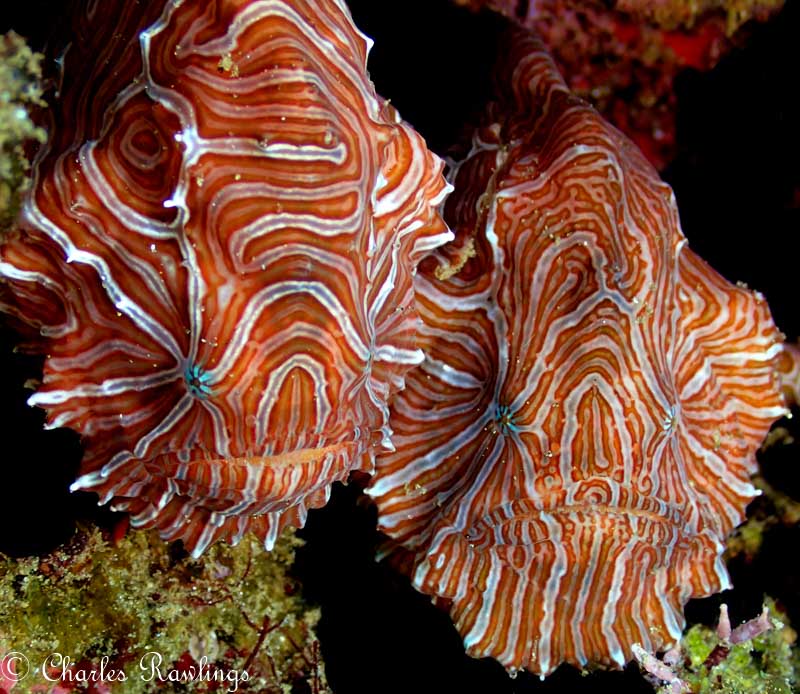
In late September and early October, Nannette and I spent 10 days in Ambon at Maluku Divers. We were there to dive the famous muck sites in the Ambon harbor and look for the psychedelic frogfish that was first found there a couple of years ago and has never been seen anywhere else. We were diving with Graham Abbott of Diving 4 Images.  Graham is one of the best-known dive guides in the world with credits on many BBC productions. One goal of this trip was to count nudibranchs and before our first dive Graham estimated the group would find 125 different species. Our final tally was 132 different species--not bad for an area that is only a mile and a half long.


So, how was the diving? If you like muck diving it was remarkable, if a bit on the grungy side. Ambon is one of the largest cities in eastern Indonesia with a population of 300,000.  The harbor where we did most of our diving is across the bay from the city itself, but no stranger to the trash and plastic refuse from the city. Maybe that’s why the creatures are so unusual. Sightings included lots of nudibranchs, harlequin shrimps, boxer crabs, flamboyant cuttlefish, mototi octopus, wonderpus, bobbit worms, stargazers, a variety of frogfish, and rhinopias in both purple and deep red colors.

On our first checkout dive we saw several stargazers, ready for Halloween.


The Pictures

All of the following shots were taken with a Canon 7D in a Nauticam housing, using a Subal macro port.


Ambon Stargazer

Stargazer.  Canon 60mm macro lens with an Athena ringflash.


We saw lots of nudibranchs including:

Ambon toasted marshmellow nudibranch

Risbecia tryoni nudibranch.  Canon 60mm macro lens, the Canon 12mm extension tube, a 1.4x Tokina teleconverter, and a single S2000 flash.


Ambon Nembrotha nudibranch

Nembrotha nudibranch.  Canon 60mm macro lens, the Canon 12mm extension tube, a 1.4x Tokina teleconverter, and a single S2000 flash.


Ambon lumpy

Chromodoris geometrica nudibranch.  Canon 60mm macro lens, the Canon 12mm extension tube, a 1.4x Tokina teleconverter, and a single S2000 flash.


We saw lots of tiny boxfish and loads of shrimps and crabs.

Ambon Boxfish

Boxfish.  Canon 60mm macro lens, Athena ringflash, and an Inon S2000 flash.


Ambon Boxfish

Boxfish.  Canon 60mm macro lens, Athena ringflash, and an Inon S2000 flash.


Ambon porcelain crab

Porcelain Crab.  Canon 100mm macro lens, a SubSee +10 add-on lens, and 2 S2000 strobes.


Ambon emperor shrimp

Emperor Shrimp.  Canon 100mm macro lens and a Marumi +7 wet diopter.


Ambon emperor shrimp

Emperor Shrimp.  Canon 100mm macro lens and a Marumi +7 wet diopter.


Ambon Xeno crab

Butt Crab.  Canon 100mm macro lens, a SubSee +10 add-on lens, and 2 S2000 strobes.


Ambon fairy crab

Xeno Crab


Ambon butt crab

Fairy Crab.  Canon 100mm macro lens, +5 SubSee adapter and two Inon S2000 flashes


We also saw lots of interesting fish, cuttlefish and squid including this banded pipefish carrying his wife’s eggs around on his belly.


Ambon with eggs

Pipefish with eggs.  Canon 60mm macro lens with an Athena ringflash.


Ambon frogfish

Frogfish.  Canon 60mm macro lens and an Athena ringflash.


Ambon rhinopias

Rhinopias.  Canon 60mm macro lens, one S2000, and one Inon Z240 strobe.


Getting There


Getting to Ambon was not terribly difficult. We flew from LA to Bali via Taipei on the excellent EVA Airways. After an overnight in a hotel near the airport, we continued on to Ambon on Lion Air, with a 4-hour stop in Makassar.  The good news is that, at least for our trip, Lion Air allowed sporting equipment to fly for free, so no overweight charges!  Arriving in Ambon we were driven to the new home of Maluku divers on the shore of Ambon Bay. The resort accommodations were quite lovely. Each couple had their own cabin/bungalow with air-conditioning, bath and shower facilities and in our case, a very nice king-size bed. The air-conditioning in our cabin was not working for three days but fortunately with the breeze from the ceiling fan we were able to sleep fine.


Ambon Cabins

The Cabins


The Resort

The food at the resort was served family style and was acceptable if occasionally too spicy for my Western palate. Breakfast was ordered the night before and ranged from noodles to pancakes.  Lunch and dinner were always local Indonesian meals with chicken, beef or fish plus rice and vegetables. Desserts were either fruit or unremarkable cakes.  The dive area is spacious and well set up, with a large covered area to hang and rinse gear, a bank of freshwater showers and a row of large camera rinse tanks. They also have a very nice camera room with work table space and power outlets for each guest. The dive resort was set up for three boat dives per day, typically two before lunch and a night dive. The boats are roomy and have roofs for shade. Entry is via backroll after a crew member helps you on with your gear. Afternoon diving was from the shore and the local house reef was always a nice place to visit.  Nitrox is coming but not yet available and there is not yet an internet connection available or any large TV or display for folks to show their photos/videos.

Should you visit and would we go back?  It is still a relatively young resort and the dive operation sometimes felt a bit disorganized. Also, during our stay there was a lack of “Lembeh-quality” guides, though they say they are working to hire more and to better train the ones they have Maluku advertises “critters without the crowds” and if the quality of the guides improves, Maluku has the potential to be every bit THE muck destination as Lembeh. The resort should only get better as they add Nitrox facilities and continue to make other improvements. As for us, we can’t wait to go back--even though the psychedelic froggy was nowhere to be found on this trip.  Maybe next time we will be the ones to find him!


About the Author

Bill is the technical guru for the Underwater Photography Guide, and a frequent member of our weekly dive outings.

Bill shoots underwater as well as topside photos. He is currently shooting a Canon 7D in a Nauticam housing. He uses a variety of strobes with his favorite being the Athena ring flash for macro photography.

He lives in Southern California with his lovely wife who also dives regularly, and works as a Distinguished Scientist during his day job.


Further Reading

Anilao Photo Essay

Mike Bartick
Amazing underwater photography from Anilao.

Anilao, Philippines Underwater Photo Essay

Underwater Photography and Text by Mike Bartick. Video by Walter Marti.


SHARE THIS STORY

It’s no secret that Anilao is amongst the top three destinations in the world for underwater photography of macro critters. Kimbe bay, Lembeh and Anilao seem to rule the leader board in terms of new animal life, consistent critter finds and certainly some of the most unique animal behavior and mimicry found to date.


Mimicry prevents detection while masking predation.

Nikon D300s, 60mm macro, ISO 200, f/11 at 1/250 sec.


Roughsnout Ghost Pipefish mimics algae and seagrass

60mm macro, ISO 200, f/11 at 1/250 sec

Diamond Filefish blends in with the seagrass and Halimeda algae

Nikon 60mm macro, ISO 200, f/18 at 1/200 sec


Bizarre and hideous, the deadly Reef Stonefish seems to mimic sponge and stone. They are a perfect example of a lie and wait predator. This particular specimen was at least 10lbs and the largest I'd seen. The Bobbit worm on the other hand is an ambush predator. Equipped with chemical sensors, tentacles and sharks tooth like appendages to ambulate beneath the substrate, the Bobbit Worm has a calcified jawbone that will snap shut, like a bear trap on its unwitting prey. Frogfish are a highly evolved lie and wait predator that uses mimicry to lure its prey close enough to apply its lightning fast strike speeds, sometimes inhaling fish that are nearly the same size as itself.


Reef Stonefish. A "lie and wait" predator

Sigma 28-80mm at 56mm, ISO 400m f/13 at 1/100 sec

Bobbit Worm. An "ambush" predator

Sigma 28-80mm at 80mm, ISO 200, f/14 at 1/80 sec 


 Amazing video of a Bobbit Worm attempting to snare a fish. Here's a great Bobbit worm article.


Warty Frogfish with lure extended. Another "lie and wait" predator

Nikon 60mm macro, ISO 250, f16 at 1/320 sec.


 Video of a Frogfish showing off it's lightning fast strike. Now you see it. Now you don't.


But the best examples of mimicry are the Nudibranchs. The Ceratasoma alleni and the soft coral feeder like the Marionia are amongst some of my favorites.
These ornate little gems are tough to find and some naturalists may spend a lifetime searching them out.


Marionia sp.

Nikon 60mm macro, ISO 250, f/18 at 1/160 sec

Ceratasoma alleni

 Nikon 60mm macro, ISO 320, f/22 at 1/250 sec.


Finding a knowledgeable and experienced guide to show you these hard to find creatures is crucial to making your trip productive. It’s important to hire and use the same guide once a good working relationship has been formed.


Soft Coral Crab

Nikon 60mm, ISO 200, f/29 at 1/125 sec.


Soft coral crabs can be found on their symbiotic host trapping tidbits of food passing by on the current. They aren’t on every piece of soft coral, but can live an entire lifetime on the same small coral animal.


Some of my favorite finds from my recent trips have to be the egg carriers and brooding Cardinalfish. Patience prevails when stalking your subject. Longer lenses can prove helpful but you must provide with more light and higher f-stops to increase the color.


Yellow eggs indicate newer, undeveloped eggs.

Sigma 28-80mm at 80mm, ISO 320, f/16 at 1/125 sec.


Silver eggs indicate more developed eggs.

Sigma 28-80mm, ISO 320, f/11 at 1/250 sec. 


The Peacock Mantis and Mosaic Boxer Crab both clutch their eggs under the carapace for safety. Always under the watchful eye of a concerned parent these eggs are safeguarded until they begin to hatch.


Mosaic Boxer Crab carrying eggs

Sigma 28-80mm at 80mm, ISO 250, f/25 at 1/125 sec. The Sigma 28-80mm macro does 2:1 magnification at 80mm, not bad. This is a cropped photo.


Peacock Mantis Shrimp carrying a clutch of eggs.

Nikon 60mm macro, ISO 200, f/20 at 1/200 sec.


The more common male banded pipefish carries the eggs attached to his abdomen whereas the ornate ghost pipefish male carries the eggs in a small satchel attached under the abdomen, between the two pectoral fins.


Common Banded Pipefish with eggs.

Sigma 28-80mm at 52mm, ISO 250, f/16 at 1/125 sec.


Ornate Ghost Pipefish with eggs.

Sigma 28-80mm at 44mm, ISO 250, f/16 at 1/125 sec.


Mating is another unique behavior that can be observed almost anywhere but on this full moon in Anilao romance was in the air. These two beautiful bobtailed squid didn’t seem to mind me watching and shooting photos of them. The act only lasted a very few seconds and I am sure someone was a little disappointed at the end.


Mating Bobtail Squid or Dumpling Squid.

Sigma 28-80mm at 80mm, ISO 250, f/16 at 1/160 sec.

Manny, Moe and Jacqueline

Nikon 60mm macro, ISO 320, f/11 at 1/125 sec.


The two giant male frogfish (black and tan) jostle for positioning next to the pregnant female (red). The males take turns pushing down on the females distended abdomen trying to coax her into releasing her eggs. However natures design is perfect. She is waiting for the fullness of the moon and the current to release her eggs. Frogfish are broadcast spawners and the males will swim to the surface with the females and release the sperm simultaneously, fertilizing the 50,000 plus eggs. The eggs will drift with the current, riding along for safety, away from the reef and certain consumption. After a period of time as the eggs develop they will slowly drop to the substrate and newly formed frogfish will emerge.


Frogfish hatchling next to my thumb.

Nikon 60mm macro, ISO 250, f/16 at 1/160 sec.


Mother Nature is simply amazing. She will provide the key for each creature to survive and just as temperate, cull the weak. Survival takes on many forms for function and for me there is no other place to observe this occurrence than in Anilao.


Where to Stay In Anilao:


Further Reading:

Maldives Liveaboard Photo Essay

Lea Moser

Maldives Liveaboard Underwater Photo Essay

Photos by Lea Moser

 
SHARE THIS STORY

After Lea Moser visited the Maldives and came back with some great photos of schooling fish, I asked her some questions about her trip. Here's what she had to say.


Exactly which areas did you visit?

My two weeks Maldive liveaboard trip started from North-Male Atoll to North-Ari, South-Ari, Felidhoo, and ended at South-Male.

How was the visibility?

I was there at the end of December and the start of January. The visibility was not great.
Just two or three places had clear visibility.

How was the macro, soft coral, pelagic, and fish photography at each place?

Most of time I used a wide-angle lens, because I wanted to take shots of Manta rays, Whale sharks and other big fish.

It was great for wide angle photography, because the corals are really colorful and intact. For example, the soft corals at "Fotteyo" at Felidhoo Atoll were just fabulous. Normally you can see many manta rays getting cleaned at Boduhiti Thila, North Male and huge manta rays dancing at Rangali Manta Point, South Ari.

There were thousands of bluestriped snappers at Madivaru. Thousands of Redtooth triggerfishes were everywhere, bignose unicornfishes were always curious about divers' bubbles. We saw sweetlips, many soldierfishes, school of bannerfishes, and also whalesharks at Maamigili Beru.


What about underwater macro photography?

Vilivaru Giri at South Male is nice for macros. You can find many blennies, frogfish, nudibranchs, and many coral crabs.

Were the dive sites crowded?

Most of diving sites we dove weren't crowded. We were all alone. However, the famous diving places such as "Fotteyo" or "Naaga Thila" were crowded.

How do they compare to other places you've been too?

The diving at Maldives was full of surprises for me. Beautiful and intact corals and thousands of fishes. It has very strong current at every dive, so better prepare to be fit and don't forget a reef hook.


Which boat were you on?

I was on the M/V Marina, it was a New Year's cruise.


Editors note: I've also heard great things about the Manthiri liveaboard from our Diving Editor Randy Harwood.

Lea Moser Photography
http://www.lea-moser.com


Please enjoy Lea Moser's underwater photography from the Maldives. All photos taken with a Canon EOS 400D, Hugyfot housing, Dual INON Z240 Type3 strobes, and a Tokina 10-17mm fisheye lens

maldives underwater photography by lea moser

Big school of bluestriped snappers at Madivaru. It was an unforgettable moment to be surrounded by thousands of them.


maldives underwater photography by lea moser

The beautiful enounter in the Maldives with a Manta ray You could just watch them dancing around until your tank was empty.


maldives underwater photography by lea moser

This big Jellyfish was swimming around early in the morning at Brocken Thila (South-Ari). Unfortunately it was little damaged but still beautiful. I was very near from it till it touched the domeport, and it looks much bigger than it is. That's what I love about the fisheye lens.


maldives underwater photography by lea moser

Beautiful pink anemone coral at Dega Thila, Eboodhoo. There was a strong current, so it wasn't easy to get a right composition and lighting.


maldives underwater photography by lea moser

Beautiful giant sea fans at Brocken Thila, South Ari Atoll


maldives underwater photography by lea moser

Table coral garden at Panettone, south-Ari Atoll It was in the morning, there was nice weather and the sun came down perfectly. A good chance to get a nice sunrays. F9, 1/125th, ISO 100, strobes on full power


maldives underwater photography by lea moser

One of the most beautiful and popular dive site at Maldives, Fotteyo at Felidhoo Atoll. There are so many colorful soft corals blossoming thanks to the strong current.


Further Reading

Manta Rays and Whale sharks in Hanifaru Bay

Learning wide-angle underwater photography

Tips on photographing schooling fish

Story Behind the Shot: "Manta Madness"


Raja Ampat Dive Report

Kevin Lee
Beautiful Photoessay on the Macro and Fish life of Raja Ampat, Indonesia

Scuba Diving in Raja Ampat, Indonesia

Text and Photos by Kevin Lee


SHARE THIS STORY


Indonesia, the world's fourth most populous country, is a vast archipelago of over 17,500 islands. Toward the eastern side, on Papua New Guinea, is a region called Raja Ampat, meaning "Four Kings". Here, among hundreds of islands, warm waters offer some of the world's most spectacular scuba diving. Being so remote, reaching Raja Ampat is no easy task, as it requires three or more flights. Major international hubs are Jakarta and Singapore, with intermediate connections via Manado, Makassar or Denpasar, before arriving in Sorong, from where numerous liveaboards operate. The author, along with seventeen other scuba divers, enjoyed an eight-day diving cruise aboard the Archipelago Adventurer II.


raja ampat underwater photography

Wide Angle perspective, from below a wooden pier


Raja Ampat's great marine life

Raja Ampat is considered a major epicenter of marine biodiversity, with over 537 corals (three fourths of all known), more than 700 kinds of mollusks and well over 1,000 species of fish inhabiting these waters. In fact, one famed ichthyologist, Dr. Gerald Allen, counted over 280 fish species on a single dive! It's no wonder this region is reputed to have the greatest diversity of marine life on earth and the abundance of underwater animals is truly staggering.


raja ampat underwater photography

Tiny juvenile frogfish. Underwater macro photos were taken with a Nikon D300, 60mm macro lens and a 1.4x teleconverter.


raja ampat underwater photography

Beautiful pregnant male pygmy seahorse, which carries the eggs


Other amazing animals that populate Raja Ampat are pea-sized frogfish and even smaller seahorses, which will challenge the skills of macro-photographers. Nudiphiles will not be disappointed as a myriad of opisthobranchs can be found on virtually every dive. The fortunate diver may encounter the remarkable golf-ball sized Blue Ring octopus. Five were seen on the author's trip. These highly venomous cephalopods rank as one of the most deadly animals on earth. A single bite from this diminutive octopus means quick and almost certain death. However, these creatures are rarely aggressive and present no danger to divers as long as a respectful distance is observed.


raja ampat underwater photography

Macro photographers in Raja often find the fabled and highly venomous Blue Ring Octopus, which were not uncommon in Raja Ampat


Getting there and conditions

Raja ampat can be a challenge to reach, which normally requires transfers through Singapore, Thailand or Jakarta, then Manado, Denpasar or Makassar, before arriving in Sorong, West Papua.


October to April is considered the best diving season. Water temperatures are a consistent 80F~86F degrees year round and visibility generally ranges between 30 to well over 70 feet. Depending on tide movements, a few dives can involve strong currents, where reef hooks may be needed to tether in place. Otherwise, an open water ascent may be required. In such cases, boating tenders need to be vigilant to ensure safe retrieval of every diver. A safety sausage is highly recommended, so surface staff can easily identify distant, drifting divers. Most dive site conditions are generally calm, allowing maximum enjoyment of mantas, whales, dolphins, black-tip sharks, barracudas, sea turtles, corals and massive schools of fish. There is no lack of great subjects for the wide-angle underwater photographer.

Land excursions


raja ampat underwater photography

View from atop a steep hill, showing the beauty and grandeur of Raja Ampat


When visiting the Four Kings, a land excursion may be offered i.e. hiking to the top of a small island. Take it. The trek can be sweaty and steep, but once on top, the stunning panorama of sweeping ocean, dotted with picturesque islets, will make you forget your burning legs and lungs! This analogy is apt for the entire trip. Although the journey to Raja Ampat can be somewhat arduous, you will be amply rewarded with fantastic underwater encounters and great experiences. A simple web search of Indonesia scuba diving liveaboards will yield a useful list of operators. 

Wishing you safe and pleasant diving.

Kevin Lee

www.diverkevin.smugmug.com


Raja Ampat Liveaboards - Editor's note

The are several choices for diving Raja Ampat via a liveaboard, which allows you to a wide variety of dive sites and maximize your number of dives.

The Arenui and Dive Damai both offer a luxury botique liveaboard experience for the most discerning travelers and photographers. The SMY Ondina and Kararu dive voyages both offer slightly more modestly priced trips, but both have a good reputation with photographers.

More Raja Ampat Underwater photos by Kevin Lee


raja ampat underwater photography

Raja Ampat is home to many unique and unusual opisthobranchs


raja ampat underwater photography

Once found, crypticbranchs reveal stunning beauty


raja ampat underwater photography

Magnificent colors adorn aposomatic nudibranchs, warning predators "beware"!


raja ampat underwater photography

A pair of fish settled in for the long night


raja ampat underwater photography

Nemo's cousins, stay close to the protection provided by a stinging anemone


raja ampat underwater photography

Blenny with a big personality makes a colorful fashion statement


raja ampat underwater photography

Exquisite solar-powered nudibranch Phyllodesmium longicirrum can produce its own food


raja ampat underwater photography

Stunning Cowrie image


raja ampat underwater photography

Ever moving and elusive juvenile angel fish


raja ampat underwater photography

 Small fish abound in many shapes, colors and with big eyes!


raja ampat underwater photography

Tiny fish hiding among soft coral polyps


raja ampat underwater photography

This quick & constantly moving juvenile wrasse sports colorful attire


raja ampat underwater photography

This rare seahorse is difficult to find and even more difficult to photograph in the surge!


Further Reading

For more detailed information on diving Raja Ampat, visit our Guide to the Best Dive Destinations

Syndicate content