• warning: Cannot modify header information - headers already sent by (output started at /home/uwphotog/public_html/includes/database.mysql.inc:135) in /home/uwphotog/public_html/includes/common.inc on line 153.
  • warning: Cannot modify header information - headers already sent by (output started at /home/uwphotog/public_html/includes/database.mysql.inc:135) in /home/uwphotog/public_html/forums/includes/session.php on line 1007.
  • warning: Cannot modify header information - headers already sent by (output started at /home/uwphotog/public_html/includes/database.mysql.inc:135) in /home/uwphotog/public_html/forums/includes/session.php on line 1007.
  • warning: Cannot modify header information - headers already sent by (output started at /home/uwphotog/public_html/includes/database.mysql.inc:135) in /home/uwphotog/public_html/forums/includes/session.php on line 1007.

Indo-Pacific Critter Guide Gets Updated

Scott Gietler
The Ultimate Indo-Pacific critter list and online field guide just got better, with dozens of new entries.

Indo-Pacific Critter Field Guide Gets an Update

The Ultimate Indo-Pacific critter list and online field guide just got better, with dozens of new entries.

By Scott Gietler


SHARE THIS STORY

The underwater critter list and field guide has always been one of my favorite book pages in the Underwater Photography Guide. 

Since we saw so many fabulous macro and reef creatures during our Anilao underwater photography workshop, I decided to fill in some holes on the critter list.


indo-pacific underwater field guide update

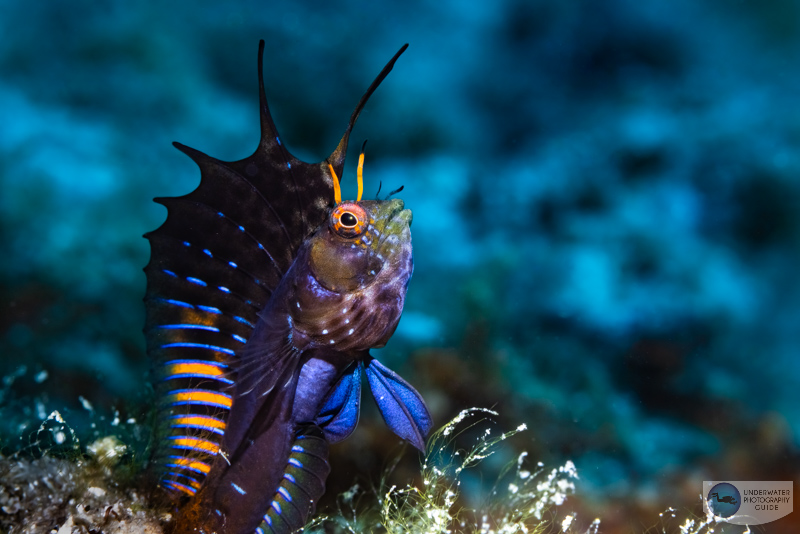
Your friendly neighborhood Stargazer


About 25 new underwater photos were added, bringing the total to over 130 species.  New critters added include stargazer, napolean snake eel, pipehorse, crocodile flathead, boxer crab, and many others.

These species can be found throughout the indo-pacific region, especially the areas in our muck diving guide such as Anilao, Lembeh, Bali, Ambon, and others.

Updated Underwater Critter List


ReefID: Share your Underwater Photography

Michael Zeigler

ReefID: Share your Underwater Photography and Identify your Subjects

A great new tool to enhance your diving experience


SHARE THIS STORY

Tired of scouring the internet and books in search of that subject in your photograph?  Want contribute your underwater photographs in a way that will benefit your fellow divers and underwater photographers around the globe?  Then you must check out ReefID.


What is ReefID?


A year ago, ReefID began collecting digital images from both professional and amateur underwater photographers in an effort to create the largest online, user friendly database of our ocean inhabitants available to date.

With these images, ReefID is creating a fun and easy way for its users to access and use this database to identify the inhabitants they encounter throughout their ocean adventures

By doing this, ReefID plans to move aquatic identification into the digital age by replacing the need to work through countless pages in multiple ID books and web sites to figure out what you saw.  Now, curious adventurers will be able to quickly identify their sightings from a computer or web enabled cell phone.  The main tool is called the ReefID Identifier.

It is ReefID's hope that by providing this tool along with a unique social environment, it will enhance everyone's ocean experiences and promote an increased awareness of our most treasured resource.


Get Involved by Submitting your Underwater Photography


By utilizing the power of the public, ReefID is in the process of building a fantastic online resource.  The photographs displayed are from all levels of expertise.  By doing so, everyone from the first time snorkeler wanting to know what they saw to the professional underwater photographer working to get a little more exposure can play a role in creating this resource for all to share.  Once you create an account, you can customize your profile, and start uploading your photos to your gallery. 

Just getting started with your underwater photography? Here's a great Guide for Beginners


Site Features

  • Identifier

  • News and Events
  • Travel Interviews
  • ReefSources
  • Member Adventures


Further Reading


Mouthbrooding Cardinalfish

Vijay Raman

Mouthbrooding Cardinalfish

How to photograph mouthbrooding behavior

Text and Photos by Vijay Raman

SHARE THIS STORY
Underwater photography of mouthbrooding Cardinalfish can be challenging and rewarding. On a recent visit to the Sabang Wrecks in Puerto Galera, Philippines, we found that a little patience can reward you with some interesting images of this unique marine life behavior.

Ringtailed Cardinalfish with eggs. 

Nikon D90, Nikon 105mmVR macro lens, ISO 200, 1/100th sec at f/16.


Understanding Behavior of Mouthbrooders

Like other Cardinalfish and several other types of fish, such as the Jawfish and many freshwater Cichlids, the Ringtailed Cardinalfish, Apogon aureus, is a mouthbrooder. Mouthbrooding occurs in several types of animals to include some frogs, but is most prevalent with fish. Infrequently it is the female or both sexes sharing the task of carrying the eggs during the incubation period, but usually, as is with Cardinalfish, it is the male alone who carries out these duties. Generally the female will release an egg mass close to the chosen male and after the male fertilizes the eggs, he will take them into his mouth to carry them during the incubation period, until the fry are ready to hatch. The male will generally be unable to eat during this incubation period. However, research in certain Cardinalfish species has shown that some males may show partial brood cannibalism, by eating up to 30% of it’s brood, during this period.

Male Cardinalfish rotating the egg mass


During this time the male Cardinalfish will open it’s mouth to rotate the egg mass on occasion, to keep the eggs clean and aerated. At times it will partially expel the eggs, during this process. It is this behavior, which is interesting to photograph. The egg mass starts out as a white bundle then turns a silvery color with the eyes of the fry becoming evident through the egg casing, towards the end of their development. To capture this behavior, it is best to use a longer macro lens, such as the 100mm or 105mm macro lens, to allow sufficient working distance for the fish to exhibit it’s natural behavior, without spooking it, yet still fill the frame. Every two to three minutes the pregnant male will open its jaw and rotate the egg mass before sucking it back into it’s mouth. You can spot the pregnant male by the extended pouch below its jaw.

Male Cardinalfish with extended throat pouch


Opening its mouth and showing eggs


Underwater Photography Tips for Mouthbrooders with Eggs

  • During breeding season, the males have a pronounced buccal cavity or pouch below the jaw to hold the egg mass. Once you have spotted the males, look closely to find one that is carrying eggs. The larger the pouch, the more likely it is to be carrying eggs.
  • When shooting with an SLR, use a longer focal length macro lens, such as a 100mm or 105mm macro lens, to allow more working distance. (See lens basics for more information)
  • Find your subject and lock on to its location within the school. They usually do not move about too much, so it can be easy to focus on one subject for an extended period.
  • Determine the proper settings to get the best exposure, prior to slowly moving in towards your subject, to prevent spooking them with too much movement. Use faster shutter speeds to capture the fast action.
  • Keep your eye to the viewfinder and frequently refocus on your subject, when necessary and use the focus lock, to lock focus, to be able to take the shot quickly when the moment presents.
  • Using a focus light can help to achieve faster focus.
  • You may want to use burst or continuous release mode to get multiple exposures in rapid succession.
  • Then it’s just a matter of waiting for that second or two when the moment presents and the fish releases the eggs from its mouth, to rotate and aerate the eggs, to capture the image.
  • Remember… the moment only presents itself every 2 to 3 minutes, so it is important to have patience to be able to wait to get the shot.


Further Reading:

Mouthbrooder wikepedia article

Filial Cannibalism in the Paternal Mouthbrooding Cardinalfish

Sexual Difference in Buccal Morphology of the Paternal Mouthbrooding Cardinalfish

Guide to Anilao Diving for Underwater Photography

Ultimate underwater Critter List


Where and How to Photograph Basking Sharks

Kirk Mottershead

Basking Shark Photography

Text and Underwater Photography by Kirk Mottershead


SHARE THIS STORY

It is not possible to free dive with basking sharks'. That is what I had been told. I was about to find out differently.


Where to dive with basking sharks

The encounter I had in June 2010 at Porthcurno in Cornwall, England definitely broke this rule. The shark circled, feeding for over two and half hours and didn’t seem in the least bit interested in me nor the fact that it was in shallow water.

basking shark underwater photo Basking shark feeding underwater

Basking Shark Behaviour

After the shark had passed me several times I decided to chance my luck and free dive alongside it to get a different viewpoint. The shark remained completely unflustered and swam so close to me whilst it passed, its tail brushed past my mask.

It continued to circle the bay and I shot the shark from the bottom perhaps a dozen times. The sharks are so intent on feeding that as they swim through the plankton bloom they will pass within 1 meter of you, only changing direction at the very last moment. To see such a huge creature swimming towards you with its mouth open feeding is a truly awesome spectacle!

basking shark underwater photography


I have been photographing basking sharks for several years around the UK (particularly around the Isle of Man and Cornwall) where their numbers have been slowly increasing due to a fishing ban 40 years ago, when their numbers were decimated. The issue is their slow reproductive rate like so many other shark species and subsequently a slow recovery time.

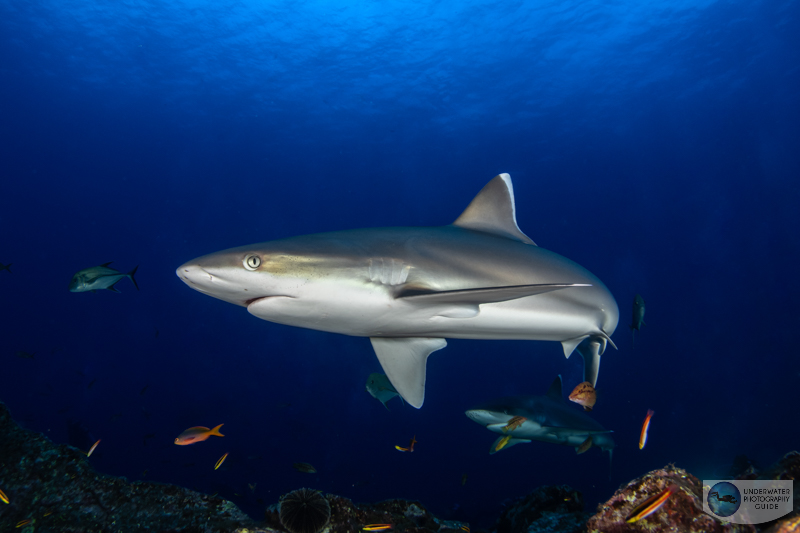
Basking sharks live in temperate and arctic waters throughout the world’s oceans. They are the second largest fish dwarfed only by its warm water relative the whale shark. The basking shark is a gentle giant growing easily up to 10m and at that size the dorsal fin will be an impressive 2m tall. They filter feed on the explosion of plankton at the surface during the summer months. Although the migration pattern of basking sharks is not fully understood, in the UK they appear first in the SW of England in May. The majority then head north before dispersing from the west coast of Scotland into deeper water in August.

basking shark3


How to photograph basking sharks

Getting the best angles

Plankton blooms do not have the greatest visibility which stands to reason! So it is a matter of spending time photographing basking sharks to capture them feeding with good visibility and great light. The best way to photograph basking sharks is whilst snorkelling; scuba equipment is too slow and noisy. The water temperature got up to 17 degrees Celsius in June in the UK so a good wet suit is the way forward. I use a 5mm suit and free diving fins which allow easy movement in the water. I weight myself to enable me to free dive should the opportunity arise.

basking shark4


Basking sharks feed in an apparently random fashion, although when you understand them it is determined by the size and shape of the plankton bloom. You have to predict which direction they are heading in order go to get close enough, then keep very still as they pass by.

Occasionally the shark will swim in circles whilst feeding and therefore keep swimming past you, allowing for a truly fantastic experience and photographic opportunity. Having a knowledgeable skipper to find the sharks and then to put you into the water in the correct place is without question invaluable.


Underwater Camera settings and care

My camera of choice is the Canon 5D MKII with a 17-40mm 4 L lens in a Hugyfot housing with a super wide port. I kept my lens set to 17mm for the entire series of the images which gives you an idea of how close I was to the basking sharks. I used a minimum aperture of f10 to improve the saturation of colours in the water and for rays of light to appear defined.

I shot on manual mode and used a shutter speed of 1/125 varying my ISO levels to expose the images correctly.

basking shark8


basking shark6

Looking after underwater photographic equipment always requires a lot of effort, working from an inflatable boat for the day it becomes more of a task. It is worth taking plenty of fresh water to rinse your equipment throughout the day to prevent salt deposits building up on your port and around the controls. Here you can read more about underwater camera maintenance.

A simple plastic box with padding to protect your camera whilst moving is useful and a towel to shade it from the sun helps to keep the camera temperature down.


Snorkelling with basking sharks is an awesome experience. Being in the water so close to such a huge animal, it commands 100% respect from the diver. If the numbers continue to increase around the UK then basking sharks will become synonymous with our coastline. This would give us a great opportunity to enjoy a harmonious relationship with an incredible ocean giant. Perhaps by sharing our appreciation of this creature and indeed its economic value to tourism we can start to change the perception of sharks throughout the world.

basking shark9

 basking shark7


Kirk Mottershead is a Zoologist, professional photographer and PADI Master Scuba Diver Trainer based in Manchester, England. He is the director of a professional portrait studio,
Benchmark Photography and leads diving and wildlife photography tours throughout the world.

If you would like to see more of Kirk’s work or are interested in having an encounter with basking sharks, please visit kirkmottershead.com


Further Reading:

Dive Site Research and Planning for Photography

Wide Angle Underwater Photography

Fisheye or Wide Angle?

Tips and Techniques for Photographing Sharks

Shark Angels: Changing the Future for Sharks


Jellyfish Encounters

Mike Bartick

Jellyfish Encounters in California

By Mike Bartick


SHARE THIS STORY

Jellyfish are found in every ocean in the world. Also called a medusa in its adult stage, they can vary in colour and size, from transculent to opaque black or patterned like the Purple Striped jellyfish and from minuscule to a massive 450 pounds


 purple striped jellyfish

Giant purple-striped jellyfish seen on a blue-water dive


Jellyfish fish are free swimming cnidarians, believed to have existed for 650 million years; before the first dinosaurs even hatched. Although their bodies look simple and unsophisticated, jellyfish structures are probably much more complex. With no life-sustaining organs as the heart, brain and blood, these drifters have survived some of the harshest conditions that Mother Nature has dished up. Without eyes, and with only chemosensory pits, their vision is limited to discerning light from dark. Nevertheless these beautiful creatures are frighteningly delicate - their bodies are comprised mainly of water and if removed from their aquatic home, they will undoubtedly collapse and die.


The body of these amazing invertebrates is made up of three major body
components:


1) The muscular bell or the umbrella-shaped top that is sometimes very
colorful as is the case with the Purple Striped Jellyfish.


2) The tentacles, which can extend and contract. The tentacles float out into the water column and possess spring-loaded nematocysts proteins that sting anything that may come into contact with them


3) Oral arms that enable the creature to begin the digestive process and supply food energy by consuming its prey. The digestive process is simple and each jelly has a hidden mouth under the bell called the gastrovascular cavity where prey is eventually consumed.


white jellyfish under the boat

Jellyfish are totally symmetrical with no left or right side, which puts them
into a unique class all to themselves. All animals on earth have sides - birds, turtles, fish and even reptiles, but not jellyfish.

Jellies belong to the phylum cnidarian. Again, this group of animals are all radially symmetrical and they include corals, hydras, sea anemones and jellyfish.

There are approximately 200 true jellies that have been documented so far, including the Sea Nettle, Moon Jelly, Lion's Mane, Purple Striped and many
more. They ambulate through the water by pulsing and jetting water with its muscular bell. When disturbed they may hyper-activate and propel themselves away or just stop all movement.


There's an interesting article, photos and labelled graphics on jellyfish here.
 

Over the past few years I have had several opportunities to photograph a variety of different jellyfish. Most recently in California, Sea Nettles have been seen in the upper Channel Islands as well as the Point Loma kelp beds. Fried Egg Jellies have also been seen in both inshore areas and pelagic settings as we saw while blue water diving.


fried egg jellyfish underwater photo

Fried Egg Jellyfish


In any case jellyfish make for some spectacular and dramatic subjects to
photograph. With a few simple techniques striking photos can be captured with
compact cameras and dSLRs alike. Lighting is essential with any photo and lighting jellies just right can really make them pop with rich color and dimension.

First let's discuss equipment: external strobes are important but handheld
flashlights can also help you achieve to capture the shots you want. Keep in
mind that many of the best jellyfish photos out there are shot in midwater with
wide-angle lenses. That means the potential for backscatter is increased.


Jellyfish Strobe Techniques

Sidelighting - Sidelighting your jelly will help it to glow from within. The
jelly’s tissue will radiate the light and colors. To achieve this lower your
strobes to an 8 and 4 o’clock position pointed slightly outward. Move into your
subject as close as possible and compose your shot. Check your LCD and continue.

Change your camera position from landscape to portrait to capture different
effects. You will see nice definition and detail, dramatic contrast and deep
shadows using this method.

Backlighting - I like to use backlighting the most but it isn’t always possible.
The sun or a buddy’s flashlight is best for this method. Again the glow is what
you look for, except here it can be brightened with ambient light. Best near or
at the surface, split photos with interesting backdrops and some very creative
compositions can be achieved with this technique.

At depth, a cooperative dive buddy with a strong light can make a so-so photo
into a showstopper. Combining sidelighting with ambient backlighting is a great way to really bring out the true colors, textures and details of these magnificent creatures.

Toplighting - I prefer to use the top lighting technique with only a single
strobe. I mount my strobe on my long arms, or, I’ll turn one off. I position the
strobe above the subject and compose my photo. This is a great method for
shooting in the blizzard-like conditions we often see on blue water dives.
Toplighting your subject as in an interrogation is a strong way to bring the
light from the top down. This method allows the tentacles to fade out naturally
with the loss of light and can simulate sunshine.

Macro photography and shooting life on a jelly can be extremely rewarding too. These drifting orbs can become ecosystems unto themselves, attracting commensal riders such as crabs, shrimp, larvae stage flatfish and much more. When shooting macro on jellies I prefer to use my 60mm lens as it is more forgiving than my 105mm. The lighting is very much the same either backlit, sidelit, toplit or even snooted. The goal is to highlight the critter on your jelly and to bring out its subtle texture.

jellyfish wiith amphipod underwater

Jellyfish with amphipod going for a ride.


Modelling - again having a cooperative dive buddy is essential here. Photographing a creature like a jellyfish with a human model will give your shot a whole new perspective. Discussing the shot prior to the dive always helps.


Jellyfish encounters at Anacapa Island


Recently while diving the upper Channel Islands, I had a bloom of jellies come by. As we approached our first dive site, about a good two hundred yards offshore when the deckhand says to me, wow look at the jellyfish. I glanced over and saw a beautiful Sea Nettle. I had set my mind that morning to try and find jellyfish but this was more than I could have wished for. The jellies were drifting into the open water channel at a good clip as I quickly geared up. I stepped onto the platform just in time to see a straggling Sea Nettle drift past just before me.

I asked the deckhand Nate to keep an eye on me and slipped into the current just in time behind the chain of jellies. With a few fin kicks I was in position among the bloom, but struggled to find the right buoyancy. With the current whipping these beautiful jellies by me, I quickly began shooting just below the surface, adjusting my strobes, shooting at different angles and using anything I could to gain perspective. All this in the precious few minutes I had, while also spyhopping on the boat. Too soon, I realized I was drifting beyond the comfort range and so reluctantly decided that I had to leave the encounter behind and get back to the boat.

sea nettle underwater photo


A few days later while diving in Point Loma, my buddy and I were graced with
seeing more Sea Nettles except these ones were black - a different variety than
that of the ones I saw in the upper channel. This time I had a buddy with me and quickly my buddy became my model. Fortunately we had discussed this scenario prior to getting in the water and he was very cooperative. The greener waters of Point Loma are rich with marine life and a good variety of jellies can be seen here seasonally.

sea nettle jellyfish underwater with diver

It is amazing to me to see such a prehistoric animal just drifting along as if in a world of its own, seemingly removed from the progress of evolution. Few things in life are perfect and everything is continually changing. So how is it that a creature that is brainless, bloodless, heartless and blind can remain static for so long and still be stronger then ever?

The ocean and her inhabitants are fascinating and jellyfish are at the top of the list for me. From miniscule to monstrous, encounters with these surreal creatures are always interesting and whenever possible, ample time given to experience their presence and to capture their beauty in your photos will undoubtedly be truly rewarding.

Further Reading

Diving the Channel Islands, California

Giant Purple-striped jellyfish encounter

Lighting techniques with strobes


Harlequin Shrimp

Mark Strickland
Mark shares his experience photographing these gorgeous crustaceans

Harlequin Shrimp

The slow-motion samuri of the tropical reefs

By Mark Strickland

 
SHARE THIS STORY

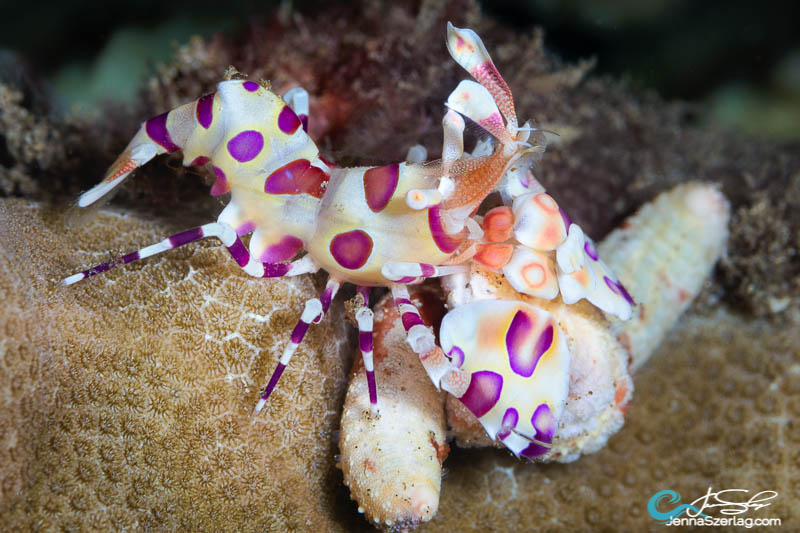
Remember the scene in the original Karate Kid movie where the old sensei instructs his young protégé in the finer points of car polishing…. “wax on, wax off!”? Watching a pair of Harlequin Shrimp waving their flat, paddle-like claws in slow, concentric circles, I can’t get that scene out of my mind. These gentle-looking, inch-long crustaceans are hardly as agile as even a beginning Karate student, yet are fierce predators nonetheless. Found throughout the tropical Indo-Pacific, they feed exclusively on sea stars, attacking and eventually subduing animals that may be 100 times their own weight and size. Even the huge, voracious Crown-of-Thorns, which have almost no natural enemies, are not safe around these guys.


harlequin shrimp underwater photography

 A pair of Harlequin Shrimp, Hymenocera elegans, keep a tight grip of a sea star arm. These shrimp feed exclusively on sea stars, and are normally found in pairs, working as a team to overcome their prey, which is often much larger than the shrimp. Richelieu Rock, Thailand, Andaman Sea


If you’ve ever tried to lift a large sea star from a rocky substrate, you know about their strong grip… it takes considerable effort even for a human. It’s hard to imagine how these little shrimp could prevail over such forces, but they take it in stride. Working as a team, one shrimp methodically snips suction-tube feet from each arm of its prey. Meanwhile, its partner grabs an arm-tip and backs up like a tractor, gradually pulling the sea star over onto its back. Once that’s accomplished, the pair drag their hapless victim off to a preferred dining spot, typically under a rocky ledge or coral head.

harlequin shrimp underwater photo

 Among the few natural enemies of the destructive Crown-Of-thorns sea star, Acanthaster planci, these Harlequin Shrimp will subdue their prey, then keep it as a live captive for 2 weeks or more while slowly devouring it. Three Islets, Mergui Archipelago, Burma/Myanmar, Andaman Sea


Subduing such large prey must be a real challenge, but eating it all in one sitting would be a physical impossibility. However, nothing goes to waste, as the shrimp devour the sea star one arm at a time, keeping the increasingly disfigured animal as a live captive until every bit is eaten. Depending on the size of the sea star, this process may take up to two weeks… pretty horrific, huh? Maybe Karate Kid isn’t the best movie reference for these remorseless killers after all; Hannibal Lecter in Silence of the Lambs suddenly seems more appropriate!


About the Author

Mark Strickland is a professional underwater photographer, whose work can be seen at http://markstrickland.photoshelter.com


Editor's Notes

Best Dive Sites for Harlequin Shrimp

Most photos of Harlequin Shrimp that you see have been taken in Lembeh, Seraya Bali, or Hawaii. Sightings are not guaranteed, although sometimes the same shrimp will be seen at one location for several months.

I've also seen photos of Harlequin shrimp taken in Anilao, Cebu, Puerto Galera, Mabul, Walindi Papua New Guinea, Ambon, Thailand (Andaman Sea), Costa Rica (pacific coast) and Kumami Japan. A good guide will know the dive sites where they may be found. They can be difficult subjects to find.


Harlequin Shrimp Underwater Photography advice

It's important as a photographer to respect underwater marine life, and not to overly harass these shrimp just to get the perfect shot. I've heard stories of dive guides keeping them in a bag, and putting them out when it's time for a diver to get a shot. This is terrible and behavior like this should be actively discouraged by all divers. The best thing to do, is to enjoy whatever marine life you find underwater, and not to pressure dive guides to find any one particular species.

When you do photograph Harlequin shrimp, be very careful not to overexpose them, and use manual strobe power if necessary.

harlequin shrimp

Harlequin shrimp in Anilao, photo by Scott Gietler. 60mm lens + 1.4x tele, F25, 1/250th


Diet:             Blue linkia starfish, Fromnia sp., other starfish
Range:        Hymenocera Elegans - Indo-pacific; Hymenocera Picta - Hawaii
Dangers:    Aquarium trade. Do not disclose exact locations online.
Behaviour: Comes out at dusk and dawn, usually in pairs - the female is larger.


Further Reading

Underwater Critter List for Macro photographers

Best Muck Diving locations


Syndicate content