Diving Grand Bahama Island

Matthew Meier
X-Ray Mag editor and underwater photographer Matthew Meier shares an excerpt from his recent article about diving Grand Bahama Island.

Grand Bahama Island: Dive Diversity

An excerpt from the original from X-Ray Mag

By Matthew Meier

 
SHARE THIS STORY

Well known for it’s crystal clear water, the island of Grand Bahama offers underwater photographers a wide variety of subjects and adventures to explore. Whether you like to spend your time patiently investigating the reef with your macro lens or prefer to break out your dome port and wide-angle lens for sharks, dolphins or shipwrecks, Grand Bahama has all that and more.


Scuba diver at large coral bommie as a Caribbean reef shark swims past.


Easy to access from the US mainland, with daily flights from Miami or Ft. Lauderdale, Grand Bahama is situated just 55 miles east of Florida out into the Atlantic Ocean. Divers can expect 300+ days of sunshine a year with air temperatures ranging from 65-77 F in the winter and 75-91 F in the summer. Water temperatures range from 75-88 F and visibility is typically 60-100 ft.


Shark professional Cristina Zenato hand feeding Caribbean Reef Sharks.


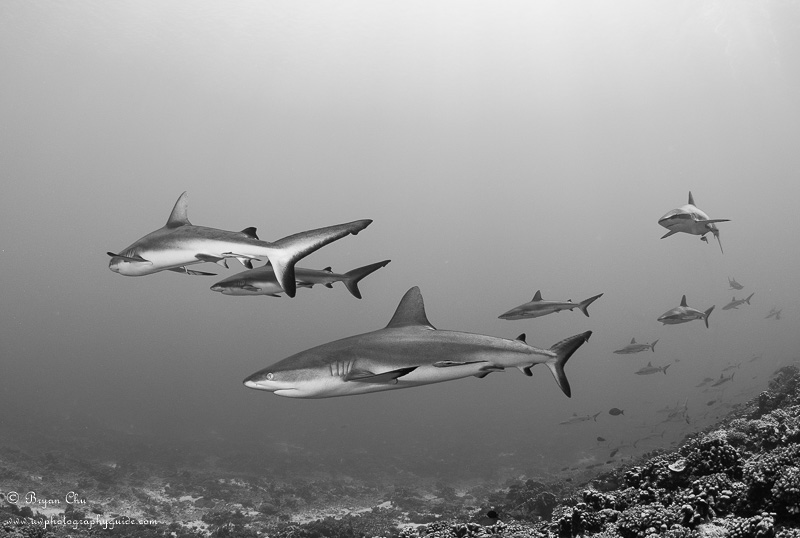
Caribbean reef sharks swim circles over the sandy bottom.


Caribbean Reef Sharks were a common sight on the majority of my reef dives and there is a fantastic shark feeding dive available if you would like to get up close and personal. Here you will experience the exhilaration of sharks swimming slow circles right in front of you, while being hand fed by a diver in chain mail. If you are really lucky, the shark feeder will find a cooperative shark to demonstrate the state of tonic immobility. This is a natural paralysis in animals, induced in these sharks by placing one’s hands on its snout. While in tonic, the feeder can actually lift up the shark and bring it over to the divers so that they might touch its tail. Photographically, I would recommend a wide-angle zoom lens and to position yourself at one of the ends of the line of divers. This gives you the chance to photograph individual sharks as they come in to feed and also to shoot down the line of divers while incorporating the feeding activity.


Snorkeling with a common Bottlenose dolphin.


Grand Bahama is one of the only places in the world where you can interact, swim and dive with trained, captive dolphins in the open ocean. The Dolphin Experience is run by UNEXSO and offers several dolphin encounters for every level of comfort. I would suggest the snorkel or dive experience if you are keen to capture images of dolphins interacting with people and swimming in open water. Again a wide-angle zoom is a great tool for these types of photos, but don’t forget your topside camera to capture images of the dolphins leaping out of the water on the way to the dive site.


Shipwrecks litter the waters off Grand Bahama and create some amazing artificial reefs. A great number of the vessels were purposefully sunk, but others ran aground on the shallow reefs or sank in storms. The clear water allows for graphic shots of large wrecks and there are plenty of opportunities to penetrate inside if that is your thing. Bring an underwater model with you for scale and don’t forget a flashlight.


Scuba diver hovers over the bow of this 50-foot, triple-decker tugboat called La Rose Wreck.


Grand Bahama has the second largest underwater cave system in the world, with over 32,000 feet of mapped tunnels. For the fully certified cave diver, this is a must see destination. For the rest of us, there are several large caverns at the entrance to these caves in which we are still able to dive. Bring a strong flashlight and a sense of adventure. Fresh water diving in a cave in the middle of a pine tree forest is an experience not to be missed.


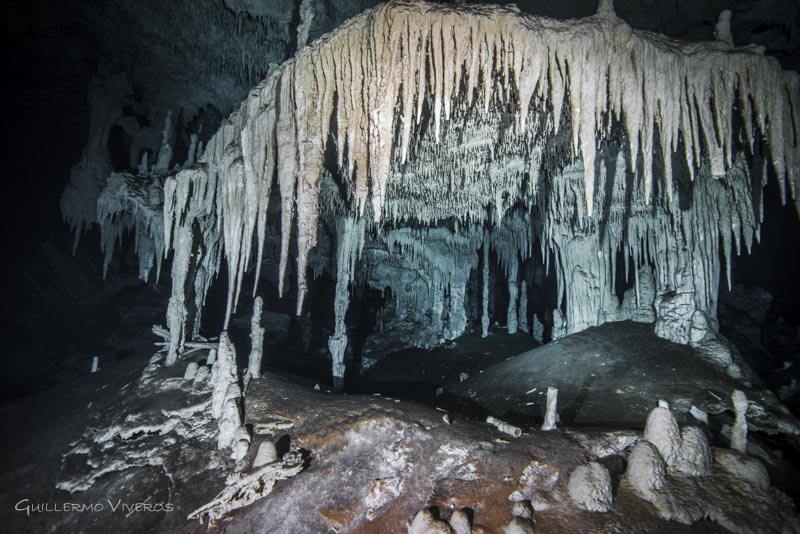
Scuba diver in the main cavern of Ben's Cave.


To read the complete story on Grand Bahama and see all of my photos, please use this link to X-ray Magazine: http://www.xray-mag.com/content/grand-bahama
From there you may download a PDF of the entire article.


About the author

Matthew Meier is a professional underwater photographer and travel writer based in San Diego, California. To see more of his work and to order prints, please visit:
http://www.matthewmeierphoto.com


Further reading


Support the Underwater Photography Guide

Please support the Underwater Photography Guide by purchasing your underwater photography gear through our sister site, Bluewater Photo & Video. Click, or call them at (310) 633-5052 for expert advice!


Dive Adventure: Arenui Liveaboard

Matthew Tworkowski
2010 Ocean Art winner, Matthew Tworkowski, shares his underwater photos and his wonderful experience aboard the Arenui in Indonesia.

Dive Adventure: Arenui - Grand Komodo

Great experiences and underwater photography via “The Boutique Liveaboard”

By Matthew Tworkowski


SHARE THIS STORY

The Arenui Liveaboard is a traditional Phinisi, a classic Indonesian wooden sailing vessel which raised its anchors in June 2009 and began its exploration of the Indonesian archipelago.
On this particular route, “Grand Komodo,” we set sail from Bali, exploring the underwater wonders of Islands such as Lawuan, Sumbawa and Bima before reaching the halfway point. The halfway point included a visit to Komodo Marine Park and traversing back to Bali. Along the way we stopped to dive Sangeang Volcano, Sotonda, and the Moyo islands. 


Underwater photography on the Arenui

For the underwater photographers there were two Macs with large screens, Adobe Photoshop CS5, card readers and the most meticulous care your camera housing will ever receive, never once was my housing in a rinse bath with another housing and they are blow dried with a special connection on a dive tank so you can remove those memory cards with the utmost confidence that no drops of water will enter your housing when opened. On each dive housings had their own container on the way to and from dive sites and the crew very conscientious as to whose gear was whose, and particular needs of individuals. My underwater housing and camera are like children to me and I had the utmost confidence that they would be treated equal to or better than I could offer by the crew.

As for the wide-angle diving I would rate it good to very good with a couple of exceptional fishy dives at Castle Rock which had everyone at a loss for words. The macro diving was world class, which came as a surprise to me as I have visited Komodo area before and never realized how many rare and unique critters could be found on some of the muck dives on the journey. As one of the guests remarked, “right up there with Lembeh.” It’s a real testament to the guides who has an intricate knowledge of the critters and where they would be found.
 

All my images were taken with a Nikon D700, Nexus Housing, Inon Z 240 strobes and SubSee diopters (for macro). The lenses I used were a Nikon 105mm VR for macro work and a Nikon 16-35mm for wide-angle.


Hawksbill Turtle. F13, 1/180th, ISO 560


The diving

“Briefing, briefing,” a catch cry we were all to become familiar with over the ensuing 11 days as Jerry rounded everyone up for a dive brief sharing his intricate knowledge of the dive sites and to all the underwater critters we were likely to see. Detailed maps displayed on two large LCD monitors gave everyone an idea of the structure and depths of all the dive sites.


I chose to hire my gear given the airlines exorbitant excess luggage fees which were exceeded by my camera and housing equipment alone, happily they had 5mm wetsuits available as well as 15L (~80cf) tanks for those in the high air consumption category and Nitrox fills.


Dive sites

Lawuan Reef

Two dives were at Lawuan Reef, fairly shallow relaxed dives, which gave everyone the opportunity to wet their gills and get them shutters clicking over with some very nice Nudibranch species.  We also saw a Hairy Octopus, Cuttlefish, and Candy Crabs as well as several different spider crabs.


Bima and Sumbawa Islands

Day 2 consisted of 3 day dives and a night dive around the islands of Bima and Sumbawa and would be regarded as A+ muck dives. We started at a dive site called Tanjung Sai which harbored critters such as Pipehorses, Pipefish, Ghostpipefish, Nudis, Skeleton Shrimp (several with offspring) Juvenile Waspfish, and Cowries to name a few.
The next 3 dives were at Unusual Suspects with critters such as Banded Boxer Shrimp, Blue-Ringed Octopus, Harlequin Shrimp, Peacock Mantis Shrimp, Colemans Shrimp, Tiger Shrimp, loads of Nudis, Ghostpipefish, Thorny Seahorses, several Frogfish, cuttlefish, and cowries. The list was endless.


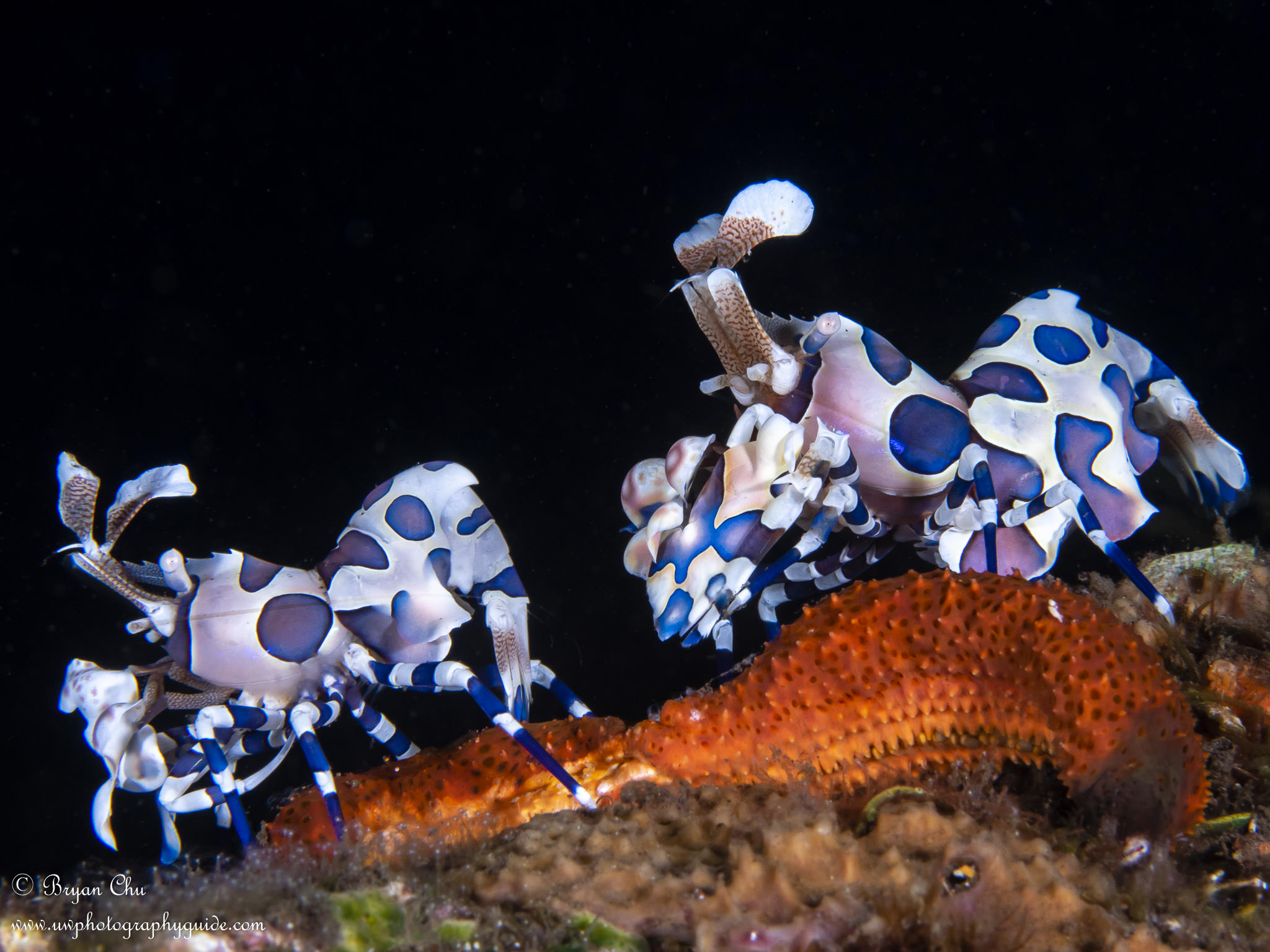
Harlequin Shrimp. F32, 1/250th, ISO 200


Komodo Marine Park

Day 3 and we had arrived at the famous Komodo Marine Park where we were to spend the next 5 days diving around Komodo and Rinca islands. The first 2 dives were at Castle and Crystal rock large pinnacles rising up from the depths with clear water. There was more current but loads of wide-angle opportunities. We witnessed a small reef shark gathering for about 15 minutes before drifting around the backside of the pinnacle to explore. Hawksbill turtles seemed fairly abundant as well as large schools of Jacks, Fusiliers, Large Cod, the occasional Napoleon Wrasse, White tip Reefies being cleaned, Schools of Batfish, Harlequin Sweetlips, Dogtooth Tuna,Titan Triggerfish, Humphead Wrasse, Moorish Idols and an amazingly diverse selection of hard and soft coral. Dive 3 and 4 were at sites called Tawawa Besar and Wai Nilo(night) where we found so many Nudis I actually didn't have time to shoot them all. Cuttles, more Frogfish, Decorator Crabs, Orangutan Crabs, Porcelain Crabs, Bobtail Squid, and Spearing Mantis Shrimp rounded out the critter sightings.


Komodo Dragon on Rinca Island.


Rinca Island

Day 4 consisted of a walk on Rinca Island to see one of Mother Nature's wonders in the Komodo Dragon. After a short briefing from a small man with a big stick, we set about on a walker's trail witnessing several Dragons including a female which was nesting. Back at the ranger station we were surrounded by several Komodo Dragons, although being quite early in the morning they were more intent on warming their blood than seeking out food. The two dives for the afternoon/night were Torpedo Alley, and the famous Cannibal Rock; regarded by many as one of the world's top 10 reef dives. Cannibal Rock is a pinnacle coming up to within 3 meters of the surface and was named by European explorers when they climbed one of the surrounding hills and witnessed a Komodo Dragon feasting on another Komodo Dragon. Cannibal Rock is rugged, untamed, and beautiful and provided two Rhinopias, a Weedy and Paddleflap, as well as Pygmy Seahorses, Large Green Turtles, two beautiful Yellow Ridged Ceratosoma (my new favorite Nudi), a very pregnant Giant Frogfish, Candy Crabs, Octopus, loads of different Nudis, as well as a very healthy population of fish species. Torpedo Alley was a night dive and subjects that stand out in my mind were a tiny Hairy Frogfish, boxfish, Bobtail Squid, Stargazers and many Skeleton Shrimp which brought me much amusement watching their complex behavior


Manta Alley

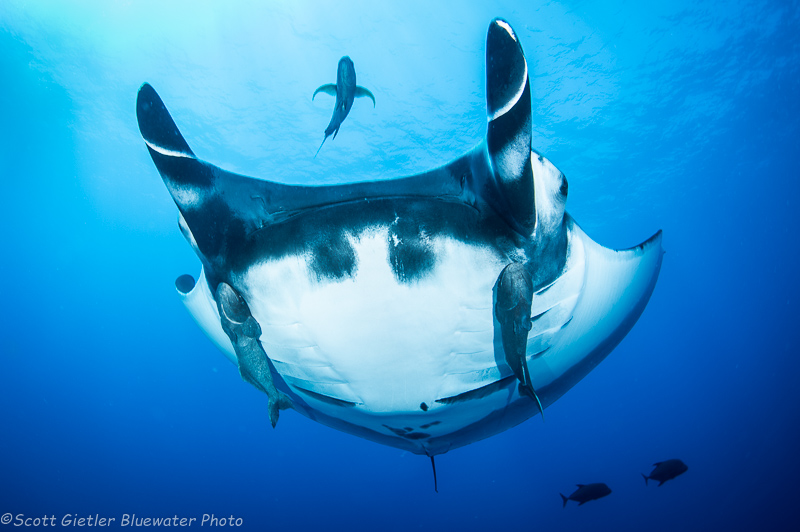
Manta Alley is located in Tora Langkoi Bay along the south coast of Komodo. It is in fact a rock islet forming part of a chain that barely pierces the ocean’s surface. As can be guessed from its name, many manta rays are known to frequent this site and it is the most popular one in Komodo for spotting them.


Manta. F13, 1/320th, ISO 560


Castle and Crystal Rock

Castle Rock is another submerged mound situated a kilometer further north from Crystal Rock. Its exposed location means strong currents but experienced divers will love the thrills to be had on this dive. In fact, the main action comes from watching the staggering amount of fish such as groupers, midnight snappers and impressive schools whipping past.


Sangeang Volcano

Back to black sand and small critters in the shadow of Sangeang Volcano for 3 dives at Hot Rocks and Lighthouse. Hot Rocks was a truly unique experience with heated water and bubbles rising up through the water column, which kind of reminded me of what it would be like in a fish tank. Lots of Nudis, Leaf Scorpionfish, Pygmy Seahorse, Commensal Shrimp, Xeno Crabs, and Zanzibar Shrimp.


Weedy Scorpionfish. F19, 1/60th, ISO 200


Lighthouse

Lighthouse was a fantastic muck dive where we saw Ornate and Robust Ghostpipefish (juveniles and carrying eggs), Boxer Crabs, Warty Frogfish, Painted Frogfish, some very rare Nudis, Grass Squid with eggs, Crinoid shrimp, Waspfish, Ambon Scorpionfish, Spotfin Frogfish, Spiny Devilfish, White V octopus, and a Pipefish species that is so rare (Spotted Xenia-Pipefish, Siokunichthys herrei) that apparently I am only the second ever underwater photographer to have pictures of it in the wild (my favorite days diving)!


More underwater photography

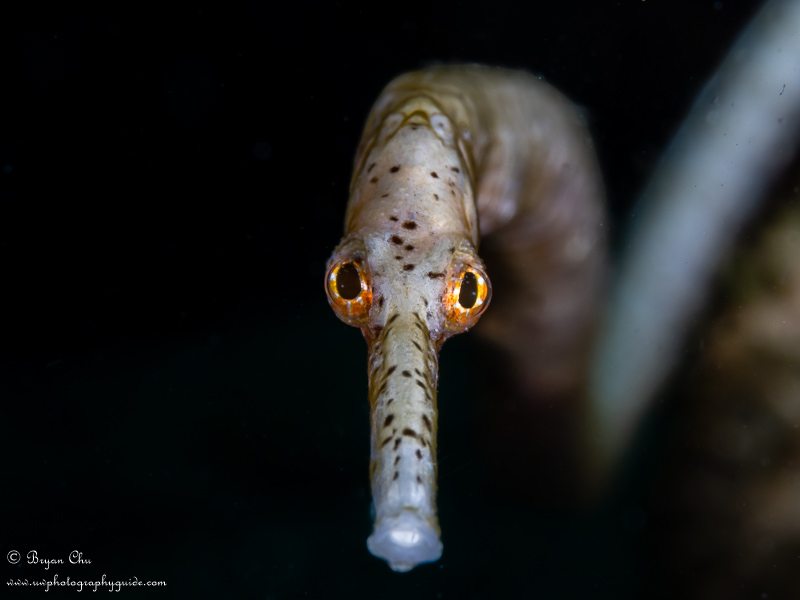
Rare pipefish, commonly known as a Spotted Xenia-Pipefish, Siokunichthys herrei (Herald 1953). F45, 1/320th, ISO 400


Boxer Crab. F45, 1/250th, ISO 400


Grass Squid. F45, 1/250th, ISO 200


Hairy Frogfish. F27, 1/125th, ISO 200


Skeleton Shrimp. F45, 1/250th, ISO 560


The one huge bonus which I haven't mentioned yet was the privilege of meeting and diving with the amazing underwater photographer William Tan and his dive guide, Noldy. William was very generous with his time and knowledge, and I learned more in 11 days than I have in 5 years of taking pictures.


Arenui liveaboard


The Arenui

My first impression of the Arenui was what a beautiful and well maintained vessel she was as we made our way across to her in small boats.

Jerry, Debby (our hosts and divemasters), and crew were quick to greet us with warm friendly smiles and a nice cool drink before giving us all a run down on the boat and showing us to our rooms.


All rooms had their own bathroom as well as a desk for computers and chargers as well as ample storage space for 2 people. The food was "to die for" with 5 courses a day starting with a light breakfast before the morning dive, then a big breakfast which you pretty much ordered anything you liked.  Lunch following closely after dive 2. Dive 3 ended with fruit and snacks and usually after the night dive. Dinner rounded off the day. I was surprised to find options for dinner which included 2 choices for entree and main as well as dessert. Vegetarian options were also available.

The last evening we enjoyed a sing along with the crew after an amazing dinner which capped of the best diving experience of have had to date. With 22 crew to 12 guests we were pampered beyond belief, The Arenui truly lived up to it’s claim as “The Boutique Liveaboard." I honestly had high expectations of the Arenui, and rate it 10/10.


About the author

Matthew placed 1st in the 2010 Ocean Art Photo Contest in the Marine Behavior category, and 3rd in Compact Wide-Angle.  To see more of Matthew's fantastic images, please visit his online gallery at http://www.redbubble.com/people/matttworkowski.


Further reading


Support the Underwater Photography Guide

Please support the Underwater Photography Guide by purchasing your underwater photography gear through our sister site, Bluewater Photo and Video. Click, or call them at (310) 633-5052 for expert advice!


Dive Adventure: Sea of Cortez

Marli Wakeling
Marli shares her experience of diving the Northern Sea of Cortez aboard the M/V Rocio del Mar.

Journey to the Midriff Islands

Diving the Northern Sea of Cortez aboard the M/V Rocio del Mar

Text and Photos by Marli Wakeling


SHARE THIS STORY

In my quest for a short summer trip, I heard about a relative newcomer to the diving scene of Baja called the Rocio del Mar. In summer, they explore the Northern Sea of Cortez; specifically a group of desolate islets, rocks and pinnacles called the Midriff Islands.


Diving Conditions

I brought a 5mm suit, and was glad that I did. Temperatures varied from mid-70’s to low 80’s. Occasional colder upwellings were chilling. Currents could be ripping or absent. Visibility varied from 15 to 70 feet. I soon realized that in the Sea of Cortez, diversity was low, while numbers were high. In other words, I saw a lot of a few different species.


La Vela. Nikon D5000, 18-200mm VR lens at 35mm, ISO 200, F13, 1/100th.


Brown Booby. Nikon D5000, 18-200mm VR lens at 200mm, ISO 200, F7.1, 1/60th.


Dive Sites

La Vela

Jutting like an iceberg out of the sea, sea lions rest on the base of La Vela, our next site. The white is guano from a lot of Brown booby birds. These comical creatures with perpetual crossed eyes invaded the boat most afternoons. Our dive at La Vela featured a strong current, but the reward was finding several species of colorful nudibranchs, juvenile Highhats, and a droll looking Bay blenny.


Browncheek blenny, Acanthemblemaria crockeri. Nikon D200, 105mm macro lens, 5x SubSee, ISO 100, F22, 1/125th. Sea & Sea YS90DX Strobes.


That afternoon, I spotted some dolphins along the shoreline. Marty and I convinced the crew to take us out in the inflatable. Dozens of Bottlenose dolphins, including babies, frolicked around us in the waves.


Common dolphins. Nikon D5000, 18-200mm VR lens at 200mm, ISO 200, F5.6, 1/400th.


Angél de la Guardia

The site is a beautiful wall with gorgonian corals and fields of Yellow polyp black coral. Large Cortez and King angelfish seemed unafraid of us and we found several species of nudibranchs as well. Although I usually shoot a 105mm macro lens with a 5X SubSee, the 60mm was my go-to lens for most dives. It gave me the versatility that I needed for subjects of varying sizes, ranging from Triplefins to Scorpionfish and Green morays.


The Wall at El Arrollo. Nikon D200, Sigma 15mm FE. ISO 200, F8, 1/60th. Sea & Sea YS90DX Strobes.


Las Vidoras

The water was a bracing 70 degrees. Angelfish and purple juvenile Cortez damselfish abounded, and I heard the sound of barking California sea lions. All over the islands are colonies of brooding females, babies and a few huge males. We headed south that night to Isla San Pedro Matir under a star filled sky and calm seas.


Juvenile King Angelfish, Holacanthus passer. 105mm macro lens, ISO 100, F25, 1/100th. Sea & Sea YS90DX Strobes.


El Arrollo

The water was a blissful 84 degrees, and there is a steep wall with yellow polyp black coral. Several large male sea lions came by to check me out. The goofy boobies were overhead at my safety stop. They scattered in panic as I got close.

In the afternoon, we went into the shallows to photograph sea lions. The surge made it difficult to stay put. The moms and babies showed off their nimble swimming skills. At the end of our 70 minutes we were rewarded with a large school of baitfish.

As the ship left the area, we were approached by several Sperm whales.


California Sea Lions and baitfish. Sigma 15mm FE, ISO 200, F6.3, 1/100th. Sea & Sea YS90DX Strobes.


Isla Cormorad

We dived around a large pinnacle with surge and light current.  A big grouper appeared, and I found a cooperative Vergara octopus that came out of its den.  A Jeweled moray was out hunting, and Brown Cheeked blennies posed for my Subsee.

That afternoon, we actually tried to snorkel with Sperm whales! These beautiful giants spook easily, and although our group was not successful, other guests did get to swim briefly with one of the leviathans.


El Lavadera

This site was used for our night dive. The water was 72 degrees, but tiny arrow crabs perched on gorgonians, pink ghost shrimp and a tiny red Player scorpionfish made it worth the chill. Beautiful pink sand anemones had emerged at night to feed. In the morning, we returned to improved conditions. There were lots of damsels, hogfish, groupers and fields of the black coral. An electric ray swam by. I found a Pacific seahorse to the delight of my buddies. That evening, we had small Humboldt squid feeding off the stern of the ship.


Sal Si Puedes: Los Cuervos

A steep pinnacle rises from the sand. At its base, we found both blue spotted and Giant jawfish. A cave filled with colorful gorgonians held huge lobster. A pike blenny darted in and out of its tube home. In the shallows, I found a colorful spotted nudibranch. The afternoon held another surface surprise: Rizzo’s dolphins, which get whiter as they age. We again took the skiff to photograph sea lions on the rocks. The next morning, hundreds of common dolphins frolicked in the bow wake and around the ship.


Norris’ Chromodoris, Chromodoris norrisi. Nikon D200, 60mm macro lens. ISO 100, F22, 1/100th. Sea & Sea YS90DX Strobes.


El Pescador

This site was comprised of large boulders with blennies, octopus and black cup coral. While looking at a scorpionfish in a hole, my buddy realized that we were beside a camouflaged frogfish.  As well, there were comical staghorn hermit crabs that reminded me of Smurfs.


Flabellina marcusorum. Nikon D200, 105mm macro lens. ISO 100, F25, 1/125th, Sea & Sea YS90DX Strobes.


Giant jawfish, Opistognathus rhomaleus. Nikon D200, 60mm macro lens. ISO 100, F25, 1/125th. Sea & Sea YS90DX Strobes.


Roughjaw frogfish, Antennarius avonlonis. Nikon D200, 60mm macro lens. ISO 100, F20, 1/60th. Sea & Sea YS90DX Strobes.


Bahia Los Angeles

In our quest for more surface encounters we sailed into the bay where whale sharks are sighted at this time of the year. We searched in vain for a long time, and were about to head back when we spotted one, then another. Although the visibility was poor, to see these creatures first hand was thrilling. They were so fast, yet looked so graceful.


Whaleshark at Bahia Los Angeles. Nikon D200, Sigma 15mm FE, ISO 200, F7.1, 1/250th.


Getting there

A shuttle picks you up at the airport or your hotel in Phoenix, Arizona, and transports you through the Sonoran Desert to the ship. I met my roomie, Kathy and photographer Marty Snyderman, who were joining us for the week. The journey takes about three and one-half hours, and our driver gave a running commentary as we drove through sand, humongous cactus, and incredible temperatures.


M/V Rocio Del Mar.  Photo courtesy of Rocio Del Mar.


The Ship

The Rocio del Mar was built by divers for divers. The Sandovals built, own and run the ship, a 110 foot all steel vessel. The ship departs from Puerto Penasco. On board, eight air conditioned cabins sport two single beds, while two others have full beds with a single bunk above. All have private bathrooms, full size windows, and plenty of storage.

The dining was excellent, with varied meals and lots of choices. There is a lounge in which to relax and watch movies or play back images from the day’s diving, and a large sundeck. The dive deck was well organized, with stations for each diver. Your gear gets set up once, and that’s it for the week. Diving is from two inflatables. The camera table was adequate; I preferred to work on my camera in my cabin.

The variety of experiences and photographic opportunities, both underwater and on the surface make for a great journey. The Rocio del Mar’s crew is fantastic, from the divemasters and skiff operators to the chef. I had the opportunity to dive with the Sandovals; they truly know, as divers, what divers want. I booked to go back on the Rocio del Mar within a few weeks of returning; this time to their other destination, the Socorro Islands.


About the Author

Marli Wakeling has been taking underwater photos since 1995. She resides in New Westminster, on the outskirts of Vancouver, B.C. where she teaches art, photography, and graphic design. She uses Nikon cameras, Sea & Sea Strobes, and an Aquatica housing. Marli’s images and articles have been featured in magazines, textbooks, and numerous dive related publications. You can see more of her work at www.marliwakeling.com.


Further reading


Support the Underwater Photography Guide

Please support the Underwater Photography Guide by purchasing your underwater photography gear through our sister site, Bluewater Photo & Video. Click, or call them at (310) 633-5052 for expert advice!


Diving with Great White Sharks

Todd Winner
Todd shares his adventure of diving and underwater photography with Great White sharks aboard Nautilus Explorer.

Great White Shark Diving Aboard Nautilus Explorer

Includes underwater photography tips to help you get great shots

By Todd Winner


SHARE THIS STORY

Whether you have just started shooting underwater images or have been shooting for decades, at some point most of us get the shark bug.  And if you want images of sharks, you probably want great white sharks.  People just want to see images of great white sharks when you tell them you are an underwater photographer.  Besides pleasing your audience there is something awe inspiring about seeing a white shark up close and personal.  They are just so much bigger and powerful than any other sharks you have seen before.  One of the best destinations to see these magnificent creatures is Guadalupe Island.


Join the UWPG Great white shark trip on September 7th 2012 with Todd Winner


Guadalupe Island, Mexico is a small volcanic island located in the Pacific about 150 miles off the west coast of Mexico’s Baja California peninsula.


Canon 7D with Tokina 10-17mm FE lens. F6.3, 1/100th, ISO 160 @ 14mm.


Cage Diving

All the diving at Guadalupe is done from cages on surface supplied air.  There are 2 cages that are tied to the stern of the ship, one at the surface and one 15 feet below the surface that are available for divers any time there is a open space.  They both hold up to 3 divers at a time.  They have 2 submersible cages off the sides of the stern, one that holds up to 4 divers and the other holds 2.  They both drop down to 40 feet.  Depending on the conditions you can even get up on top of the cage for a more exciting dive.  I found this not to be the best place for getting good images.  The sharks just seem to spend more time down near the bottom of the cage.  Also, if there are other divers in the cage, their exhaust bubbles can be a nuisance.  There is also a lot of cables and hoses to contend with.  Typically you will have the opportunity to make 3 or more submersible dives a day.  Water temps are in the high 60's to low 70's with visibility up to 100 feet or better.  I typically bring my dry suit (they have hoses so you can add some air to your suit at depth), but a 6mm or 7mm suit would also keep you warm.  Since you are not swimming around you tend to get cold faster.


Nikon D2x with Tokina 10-17mm FE lens.  F8, 1/250th, ISO 200 @ 17mm.


Underwater Photography Tips

The most important thing at Guadalupe is being ready for the shot.  Most of the images are ambient light shots with a little strobe to pop some color.  I like to use manual camera and strobe settings but many photographers prefer to use aperture or shutter priority for this kind of shooting.  Either way I suggest using a big memory card and shooting in a continuous shutter mode.  A fast shutter speed will help freeze the action.  Don't be afraid to turn your strobes off completely for some silhouettes and ambient shots. 

Diving with the white sharks in Guadalupe is an adrenaline filled adventure.  I have made three trips with Nautilus Explorer and I hope to make some more.  I am always amazed after seeing the white sharks up close, and I am sure you will be too.


Underwater Photos from the Great White Shark Adventure

Nikon D2x with Tokina 10-17mm FE lens.  F6.3, 1/125th, ISO 100 @ 10mm.


Nikon D2x with Tokina 10-17mm FE lens.  F8, 1/160th, ISO 200 @ 10mm.


Canon 7D with Tokina 10-17mm FE lens.  F7.1, 1/250th, ISO 320 @ 17mm.


Canon 7D with Tokina 10-17mm FE lens. F6.3, 1/1000th, ISO 320 @ 17mm.


Canon 7D with Tokina 10-17mm FE lens.  F9, 1/125, ISO 320 @ 17mm.


The Ship

Nautilus Explorer is a 116' long, 27' wide steel ship.  She has 9 staterooms below deck and 3 premium suites on the hot tub deck.  The crew is top notch and there is always plenty to eat with up to four meals a day and snacks always baking in the kitchen.  When you are done diving for the day they have an extensive collection of wines, beers, and spirits for purchase.  Most Guadalupe trips are 5 nights long.  It takes a day to get out to the island and a day to get back so that leaves 3 full days of diving with the white sharks. 


Nautilus Explorer at Guadalupe Island.


About the author

Todd Winner is well-known for his amazing wide-angle underwater photography, and his book, Shipwrecks of Truk. To see more of Todd's underwater photography, please visit his website at www.toddwinner.com.


Support the Underwater Photography Guide

Please support the Underwater Photography Guide by purchasing your underwater photography gear through our sister site, Bluewater Photo & Video. Click, or call them at (310) 633-5052 for expert advice!


Dive Adventure: Diving the Arctic

Kevin Lee
Underwater photographer Kevin Lee shares his stories and photos from a recent dive adventure to the Arctic.

Dive Adventure: Braving the Arctic

Scuba diving and underwater photography near the North Pole

By Kevin Lee


SHARE THIS STORY

“Diving in Arctic waters will be warmer than when we dived in the Antarctic," my buddy said, “because the warm Atlantic Gulf Stream current travels far north and warms the polar region."  That prospect sounded inviting so I signed up for the adventure.  True enough, it was warmer diving in the Arctic, but only by 2 degrees, as my dive computer registered 30 degrees in Svalbard, Norway, an archipelago of islands far above the Arctic Circle, about 600 miles from the North Pole.


Perry, Kevin Lee, Jeff Bozanic, and John Lee.  Photo courtesy of Debbie Smerker.


Scuba tanks, filled and ready for use. All tanks had two independent primary valves for separate regulators. Insurance in case one uncontrollably free-flowed.


Diving and underwater photography in the Arctic

In six days, I completed 8 dives. Water temps varied from 29 to 41 degrees and visibility ranged anywhere from 5 feet to 50 feet.   As in the Antarctic, dive duration was limited, not by the amount of air in our 80cf steel tanks, but by our capacity to endure increasing pain, from the frigid waters, which first accost the hands and then the feet.  My longest dive was 61 minutes.  A few brave souls utilized wet gloves and were usually the first out of the water.  Some, with dry gloves, experienced leaks and had to call their dive within minutes. Having dived both Polar regions, I must applaud the Dive Concepts and similar dry glove systems.  Knock on wood, of course, but these dry gloves have not failed a single time in hundreds of dives.  They are so easy to snap on and off, I cannot see why others struggle with other less functional glove systems that continually fail and produce great frustration.


Dense undergrowth of kelp was common at most dive sites.


At most dive sites, there was a surprising thicket of kelp, among which flourished amphipods, stars, snails, tunicates, anemones, crabs and other crustaceans and a few fish, the largest a dark sculpin-like fish at 8 inches long.  We did one bottomless, open-water dive at the edge of an ice sheet, where buoyancy was difficult to control due to the constant mixing of fresh and salt waters of differing densities.  Here, ctenophores were plentiful, many like the Beroe which resemble inverts back home in California.  Of particular interest was the pelagic opisthobranch, yes, a sea slug, Clione limacine, that lives in the water column.  Its common name, Sea Angel, is apt as it has two wing like appendages that makes it appear to “fly."


Clione limacina, aka Sea Angel, approx. 1.5 inches.


Limacina helicina, aka Sea Butterfly, approx. 3/4 inch.  This is the prey of the Sea Angel, which is pictured above.


Underwater photography tips

Kevin used a Nikon D300, with 60mm macro lens and 1.4x tele-converter which worked well for macro shots. Visibility was generally good enough for wide-angle underwater photography, though macro opportunities are more prevalent. A Sea & Sea housing was used, with dual YS-110a strobes. Some think camera gear should be kept outside to minimize condensation. This is not necessary and the author does not recommend this. The air is so arid condensation is not a problem, as long as there is good ventilation inside your room. After each dive, change batteries in both the camera and strobes, as batteries have significantly shorter lives in cold temperatures. Dry gloves are best, with medium inner gloves, providing enough dexterity to operate housing buttons.


Special diving tips for Arctic diving

Take care to use a double tank valves, with two independent primary regulators, both having sealed primary stages. Redundancy is de rigueur in case a system ices up and fails. De-tuning regulators may be required to minimize free flows. Likewise, make sure all electronic devices have fresh batteries, since low battery electronics often fail to operate in such cold temperatures. 
 
It is imperative that divers be very familiar with the operation and use of the drysuit to expertly control buoyancy. A 12mm hood is recommended, with enough face material to overlap the mask skirt, so the only direct water exposure is around the lips. Dry gloves are strongly suggested since most dives, which typically last 30-40 minutes, are limited not by one’s air supply, but by the amount of pain that can be tolerated. The hands, then the feet, are the first body parts that become numb and painful. Once plunging in the water, any exposed skin will sting briefly, but quickly become numb and insensitive. Diving within recreational limits (60 feet or above) is advised as to minimize DCS potential, due to the remote location and lack of emergency aid.


Chiton.


Dendronotus sp. nudibranch


Sculpin-like fish.  ID Unknown.


Benthic Jelly.


Arctic nudibranch, ID unknown.


Memorable adventure under the ice

One dive is most memorable as it was potentially the most dangerous. My buddy, Jeff Bozanic, and I were the last two divers blowing bubbles, as others had already surfaced. We were both engrossed in collecting echinoderms for the Los Angeles County Museum of Natural History (we had the requisite Norwegian permits) and we were covered with a thick carpet of kelp, which lay horizontal from a constant, pesky current.  Occasionally I would look up to see only Jeff’s long legs sticking out of the kelp, as his face was stuck underneath, poking around for critters.  Sometimes we’d accidentally whack the other in the head with our fins, assuring each other that we were “together."  At 500 psi, I decided to head for more shallow water and indicated my intention to Jeff, who gave me the "ok" sign.  I followed the steep contour of the rocky slope up to 15 feet, all the while still searching for echinoderms and opisthobranchs.


Limacina helicina, aka Sea Butterfly.
Approx. 3/4 inch. Algae background. 10' fsw.


With my safety stop completed, I looked around and behind to find a suitable place to surface but was stunned to see a massive sheet of ice, 25 feet deep and extending as far as I could see both directions, moving toward me.  My heart pounded against my rib cage.  What to do? With my air reserve depleted at 200 psi it was not an inviting option to duck under the ice and risk running out of air, trying to swim out from under the huge ice floe.  Also, I considered going down to Jeff and warning him of the threat but he was well under the oncoming ice and in a safe zone as long as he had sufficient air.

It would be perilous for me to stay in place as the monstrous ice would crush me like an ant against the vertical rocky wall.  By this time, I decided to surface and could see Henrik, alone in our Zodiac, about  100 yards down current, frantically trying to push the ice away with the craft, though it made no impact whatsoever against the inertia of the football field sized ice sheet, inexorably approaching.  If needed, I prepared to ditch all my gear and scramble on top of the oncoming ice, though this maneuver would be fraught with its own dangers.  Pressed for a decision, I peered down in the water a final time to assess the situation and noticed that the base of the ice floe would soon contact an outcropping of rocks twenty feet at the bottom.  It did with explosive power and sent large chunks of ice showering upward.  This momentarily arrested the movement of the ice and gave me a tiny window of time to fin like hell and scramble onto the Zodiac, which zipped away just in time to avoid the crushing ice.  Thankfully, Jeff appeared on the opposite, safe side of the ice floe and we picked him up.

It was certainly a dive to remember!


Wildlife

Wildlife was plentiful with frequent sightings of polar bears, walruses, foxes, seals, whales, and thousands of birds fluttering around breeding cliffs, swarming like bees around a hive.  Oddly there, are no penguins in the Arctic and no polar bears in the Antarctic.  Every zodiac is armed with flares and a rifle to warn, ward off and, if needed, subdue any menace from polar bears as Svalbard, Norway is home to the largest population in the world of these magnificent creatures.  In one incident years ago, a diver was pursued by a polar bear, forcing the diver to descend to 60 feet, at which time the bear gave up the chase.  Thankfully, we had no such traumatic encounter with the wild beasts.


Zodiacs and MV Plancius, our floating base camp.


Mother Polar Bear checking on her cubs.


Getting There

Using connecting flights through London and Oslo, I reached Svalbard’s largest town, Longyearbyen, home to about 2500 inhabitants, which is on Spitsbergen, the major island of the archipelago.  Coincidentally, the town is named after an American, John Longyear, who was the main shareholder of a company that mined coal from 1905.  Coal reserves are dwindling and tourism contributes much to the town’s economy.  By the way, high on a hill, near the Longyearbyen Airport, one can see a drab concrete structure which appears to be some sort of an entrance. Indeed, this is the site of the Svalbard Global Seed Vault, where millions of the world’s seeds are stored in permanent deep freeze as protection against natural and human disasters.

MV Plancius, operated by Oceanwide Expeditions


Two dive buddies, Evan and his father Jeff Bozanic, joined me from California, a few days before our ship’s departure, and we decided to commemorate the summer solstice by hiking up to an old defunct Coal Mine #2B.  We commenced at 23:00 and, crawling up a steep incline over huge boulders, snow fields and gurgling streamlets, reached our destination at midnight, with the sun shining brightly overhead, in an azure sky.  At this time of year sun doesn’t set, hence the “midnight sun”.  Of course, the opposite is true during the winter where the night is perpetual.  However, the locals told me that the lunar light reflects so brightly off pure white snow that it rarely gets truly dark.  The town counts more snowmobiles than people.

We boarded the modernized MV Plancius, operated by Oceanwide Expeditions, along with a hundred other passengers for one week of exploration among the many Svalbard islands.  Fifteen of us paid extra to scuba dive.  Unlike the 20-foot swells we experienced crossing the Drake Passage, from the tip of Argentina to the Antarctic Peninsula, our Arctic foray was like plying the waters of a placid lake.


About the author

Kevin Lee has traveled to all seven continents, and was recently the OCUPS underwater photographer of the year. He resides in Fullerton, California and is an enthusiastic traveler, diver and nudiphile. Kevin's images have been featured in magazines, newspapers, academic literature, and numerous dive related publications. For more of his excellent photography and dive travel stories, please visit his website at http://www.diverkevin.com/.


Further reading


Support the Underwater Photography Guide

Please support the Underwater Photography Guide by purchasing your underwater photography gear through our sister site, Bluewater Photo & Video. Click, or call them at (310) 633-5052 for expert advice!


Diving KBR Resort Lembeh

Takako Uno & Stephen Wong
Takako and Stephen share their underwater adventure of diving the "Critter Capital" of the world.

A Lembeh Strait Adventure

Underwater photography in Lembeh at KBR Resort

By Takako Uno & Stephen Wong


SHARE THIS STORY

Divers can somewhat be daunted by their first glance of the underwater topography of this North Sulawesi hot-spot as the surging tides can be nauseating.  Visibility here is usually less than 30 feet, 20 being the average.  The already turbid water conditions easily deteriorate with the mindless kick of a fin, which raises clouds of fine black silt that never seems to settle.  Terrestrial and man-made objects alike – tree trunks, coconut shells, glass bottles, tin cans, linen sacks – add to the unique backdrop of the ocean floor.  Memorably, we once found a radio cassette player, rather new, with large stereo speakers still attached.  Not to forget that the gradually sloping bottom usually has no coral – it’s just plain old muck. 


The ever-popular blue ringed octopus.


Diving Lembeh Strait - a macro paradise

Yet, some refer to the Lembeh Strait as the ‘Weird Critter Capital of the World’ – and you can be sure it lives up to its reputation.  Don’t let the presence of litter or the absence of coral turn you off.  Any hesitation will soon vanish when a zipper-mouthed Stargazer reveals itself beneath the black sand, when a Mimic Octopus emerges from its lair, or when a Flamboyant Cuttlefish does it curious elephant walk.  This is a macro paradise, just waiting for you to discover it.  And, Lembeh Strait never fails to disappoint.  In fact, if anything, it always manages to exceed expectations.


Flamboyant cuttlefish feeding.


Our adventure at KBR Resort Lembeh

On our first dive there recently, we saw the spiky Tiger Shrimp, an Ambon Scorpionfish, an unidentified Phyllodesium nudibranch, and a variety of frogfishes.  At one point, our divemaster, Liberty, located a minute Gnathophylloides mineri Shrimp on a sea urchin.  The cigar-shaped crustacean was like a speck of dust dangling on the host urchin’s spine.  It was barely half a centimeter long.  We were amazed that anybody could find anything as tiny as that.


Kalinga ornata nudibranch.


Dive Sites at KBR Resort Lembeh

Lettuce-Surprise-U

Our second dive was a night dive at ‘Lettuce-Surprise-U’.  This was known as ‘Mandarinfish City’ some years ago, but due to the numerous diver’s visits, the Mandarinfish had since disappeared.  But luck was on our side.  The Mandarinfish were finally back, we were told, and we boated over just before sundown.  Not only did we see more than a dozen of these cartoon-like fish, we saw Bobtail Squids, Porcupine Pufferfish, Olivia Shrimp and Pea Crabs.  The Lettuce Coral colony that the site was named after was growing profusely as well. 


Mating Mandarinfish.


Diving Police Pier

Then there was ‘Police Pier’ where we did many dive, both days and nights.  The pier is always rewarding, especially if you are an octopus lover.  Though it is hard to find the White-V Octopus and Wunderpus elsewhere in the Straits, they popped up frequently around the pier.  On one dive we ran into a group of divers who, to our envy, informed us of a juvenile Blue-ringed Octopus they found near a jetty pylon.  This is also a nice spot to locate the night Red Luteus Octopus.  We also observed some papa Banggai Cardinalfish with hatched babies in their mouths.  The Banggai Cardinalfish father is one of the most dedicated parents in the animal kingdom, as they devotedly mouthbrood the fertilized eggs.  Even after the fry hatch, the males still play the protective paternal role.  They collect all their offspring, should danger become imminent.


Mimic octopus.


White V octopus.


Hairball and Jahir

We managed to fit a number of dives at our favorite sites, ‘Hairball’ and ‘Jahir’.  The former’s name is descriptive: for camouflaging purposes, its critters sport massive hair-like growth, such as moss and other appendages.  There, the frogfish, seahorse, ghostpipefish, scorpionfish, filefish and other hirsute species are easily found.  We remember staring in puzzlement for a long time at a hairy rock a divemaster kept pointing to, only to realize we were staring at a Striated Frogfish when it suddenly unreeled its fishing pole.  We were also blessed with a variety of fish species and a diverse assortment of weird-looking nudibranchs - it was here that we chanced upon the hatching of a baby Flamboyant Cuttlefish and a Hispid Frogfish feeding on a Panther Sole.


Striated frogfish.


Thorny seahorse.


Ambon Scorpionfish. 


Goby-A-Crab

Divers who spend a week or two at the Straits will not have to dive the same site often, nor will they get bored of the diving, as Lembeh contains over 50 dive sites.  Apart from the rewarding muck dives, the Lembeh Straits has lush coral gardens pulsating with a vast diversity of marine life.  Exuberant gorgonian seafans and plate corals can be seen at some dive sites like ‘Goby-A-Crab’, ‘Batu Sandar’, and ‘Serena Kecil North’.  To add more flavor to the diving, there are a couple of shipwrecks in the neighborhood - the ‘Rinas Wreck’ and the ‘Mawali Wreck’ are abounded with colorful soft coral and enormous black coral trees.  The Barramundi Cod and rolling balls of Catfish are easily found on these sunken ships.  Tozeuma Shrimps can be found on the black coral bushes on the side of the hulls.

The Strait has a deep channel over hundreds of meters deep, and whales, Whale Shark, Manta, and even Dugongs have been observed passing through the channel.  Because of its geography, currents can sometimes be rather strong, which is both a blessing and a curse.  ‘Angel’s Window’, for example, is a pinnacle rising from the deep, which nearly breaks the surface.  It has a ripping current, which sometimes results in canceled dives.  But the upwelling of nutrients means that it is absolutely teeming with fish.


Underwater Photography at Lembeh Strait

All of our underwater photographs in this article were taken with a Nikonos RS (film camera) and Nikonos 50mm macro lens, or a Nikon D80, Nikon D90 or Nikon D3, with either 105mm or 60mm macro lens. 

For lighting we prefer our strobes to be Nikonos SB104, Sea&Sea YS120 + YS30 and INON Z240.


Lembeh dragon. 


Harlequin shrimp.


Robust ghostpipefish. 


Longhorned cowfish.


Metallic shrimp gobies. 


Rhinopia eschmeyeri


Spike-finned goby. 


Staying at KBR Resort Lembeh

If you find yourself all dived out or in search of terrestrial entertainment, KBR Resort Lembeh here also organizes trips to the 22,000-acre Tangkoko-Batuangus Dua Saudara Reserve.  It holds lots of wonderful creatures, including Hornbills, Crested Macaques, endangered Melo Birds, Black Monkeys and the endearing endemic Tarsiers (a tiny primate that is sized as your palm and with huge eyes).  Or, you could opt for highland tours to the volcanoes and hot springs on horsebacks.  It is clear to see that Lembeh Strait possesses many wonders to satisfy all nature lovers.  Looking at the great variety of animals in Lembeh, in the sea and on the land, is like looking into a kaleidoscope of colors – and catching a glimpse of Heaven.

Honestly, we don’t remember how many times we have stayed at KBR (guessing 10 times).  Coming to KBR always feels like ‘home away from home’, and we may soon re-visit again.  Looking forward to that!


About the authors

Takako Uno has been an avid diver since mid-80s, and is an award-winning underwater photographer.  She has traveled to numerous marine locations worldwide and her underwater photographs have appeared in many magazines, books, and other publications worldwide. Please visit her website at www.TakakoUno.com.

Stephen Wong has been a full-time marine-related photojournalist since 1997, now based in Hong Kong.  His award-winning underwater photographs have appeared in many publications worldwide, and has been a judge in several international underwater photography competitions.  Please visit his website at www.StephenWong.com.


Further reading


Diving with Whale Sharks: Isla Mujeres, Mexico

Stanley Bysshe
Join Stanley Bysshe as he shares his adventure of diving with whale sharks off Mexico's Yucatan Peninsula.

Diving with Whale Sharks: Isla Mujeres, Mexico

Tips and suggestions for underwater photography and travel

Text and Photos by Stanley Bysshe

 
SHARE THIS STORY

If you want to know what it is like to be in the water with the whale sharks off of Mexico’s Yucatan Peninsula, stand in the middle of the street while 30 school buses (with their hoods up) come at you from all directions. For the past decade there has been a growing awareness of whale shark congregations during the summer months around the Yucatan.

Originally reported by fisherman from Isla Holbox, the shallow water feeding area quickly became a remote tourist destination. A second congregation has been found in the deeper waters of the Gulf about 20 to 30 miles out from Isla Mujeres just northeast of Cancun. Locally called the “Afuera” (outside), this grouping of whale sharks appears to gather to feed on huge patches of fish eggs from spawning Little Tunny/ Bonito (small Atlantic Tuna). In fact, the surface water of the ocean can become almost milky with fish eggs and the whale sharks converge on these nutrient-rich patches.


With the ability to filter 1,500 gallons an hour, the whale sharks gorge themselves on the fish eggs. Nikon D2xs, Tokina 10-17mm at 10mm, F8, 1/160th.


From May to September, whale sharks supply a significant tourist attraction for Mexico.
Boats from Playa del Carmen, Cancun, and Isla Mujeres travel the 1-3 hour distance on a daily basis so that tourists can snorkel with these animals. In order to protect the sharks, the Mexican government in coordination with local biologists, has set up specific viewing regulations.


Whale sharks - when to go, rules to follow

This year the season runs from June 1 to September 15. Any tours outside these dates are illegal. Boats have to have guides with regulated numbers of snorkelers per boat. Flotation devices have to be worn; a wet suit is considered a flotation device. No scuba is allowed. Underwater photography without flash is permitted. Obviously touching the animals is prohibited. The rules are pretty well adhered to as a license is a livelihood for a boat captain and the areas are patrolled by the regulating bodies. However, you cannot walk five feet on the island without getting accosted by a boat tour hawker, and there were days on the water where we counted over forty other boats.  Given the density of sharks that we saw, I would say that it would be pretty hard to go out and not see any animals. However the trips are weather dependent and all boats can be grounded due to high seas. This actually occurred one of our days as we arrived on the back end of Tropical storm Don.


Calm waters here do not mean calm seas 20 miles out. Cancun is on the horizon.


Underwater photography with the whale sharks

As far as underwater photography is concerned, this is a “light” trip. First of all you don’t need full scuba gear. Fins, mask, snorkel and wet suit (with hood, see below) are all you need pack. Underwater, you will only be shooting wide-angle, and the wider the better. Do not take strobes, arms, spotting lights etc, as you can’t use them. For SLR shooters, just a dome port and one or two lenses are all that's needed. All my images were taken with a Nikon D2xs (cropped sensor) and a Tokina 10-17mm fisheye lens or Nikon 10-24mm AF-S DX lens. Don’t forget appropriate extension rings and diopter filters for your dome port. For compact shooters a wide-angle port would be a must. For instance the Canon G11 with the dry mount wide-angle port should work quite well. You will need to disable the internal flash.


Using natural light

All images are with available (natural) light and this takes some trial and error. Bobbing on the surface with the shark moving below you makes using the viewfinder or live view challenging. Free diving can help eliminate some motion (you will need to add weight to compensate for the wet suit buoyancy). Sunny days allowed for shutter speeds in the 1/125th to 1/200th range while keeping the f-stop (aperture) around F8 to F13 (shooting with an ISO of 100-200). However there can be a lot of backscatter on bright days, especially with a lot of eggs in the water. Keep the sun to your back. Easier said than done when whale sharks are coming at you from all angles. Slightly overcast days seem to be the best. The water is darker and the colors are amazing. One particularly dark day was a challenge for my camera. Wide-open f-stops, slow shutter speeds, and pushed ISOs just didn’t produce acceptable images. Some of the newer high ISO sensors would help in this situation. Nonetheless, getting close to the animal is the key. Silhouette shots are also possible with free diving.


Tokina 10-17mm at 10mm, F8, 1/200th.


Close-up of a whale shark's massive mouth.  Nikon AF-S 10-24mm lens at 10mm, F8, 1/125th.


Whale sharks are said to travel at about 3 mph. It seems like these 30 (+) foot animals are traveling 20 mph. If you spend your time chasing, you will end up exhausted. It is best to let them come to you. There are so many in the water that you can be concentrating on one animal and get bumped from behind by another. As they swim right at you some will veer off but others will just keep coming! Towards the afternoon the animals seem to slow down as they are so full and underwater photography is easier. When it is cloudy or the seas are rough the sharks tend to stay deeper.


Large female. Tokina 10-17mm at 12mm, F8, 1/125th


Remora on the back of a passing whale shark.  Nikon AF-S 10-24mm DX at 24mm, F8, 1/125th.


If you are right in front of the shark they may not see you, with eyes on the side of their head. Like all sharks they do sense electrical current but they still may move ahead. The large animals have mouths four feet across. Sharks propel themselves using their entire body. This puts a lot of force in the tail. WATCH OUT FOR THE TAIL. It may look slow but it can deliver a blow. You will want a good lanyard for your camera.

The animals seem to pass in waves. Our boat captain was very good about moving us around to keep in the peek action. However, floating around with no land in sight, there was always something happening. We saw mantas, sailfish, cownose rays, mobula rays in large schools and Bonito tuna. So between whale shark runs, keep your eyes down.


A pair of lone remoras passing below in between waves of whale sharks. Tokina 10-17mm at 10mm, F9, 1/160th.


My accommodations

The tourist boats are not well suited for photography. They are crowded, have limited time in the water and you are surrounded by one hundred pairs of legs dangling in your line of site. I wanted a trip dedicated to photographing whale sharks. Isla Mujeres has the shortest travel distance out to the sharks, not an insignificant consideration in 3-6 foot seas. Traveling to the island is not difficult. Many US cities have direct flights to Cancun or you fly thru Miami. A thirty-minute cab ride gets you to the ferry; the crossing to Isla Mujeres is a comfortable 20-minute air-conditioned trip. My research of Isla Mujeres found only one boat company that caters to photographing whale sharks.

Pro underwater photographers who charter one-week trips occupy the company most of the season. The owner did say that he has some open spaces that can be rented by independent groups. I signed up with Mauricio Handler who I have traveled with before. Once you hit the island, everything else is pretty much taken care of. The boat captain owns the hotel.  Breakfast and lunch/drinks (on the boat) are included as well as a very knowledgeable and helpful crew. We had ten photographers and spent four days bobbing on the high seas photographing to our hearts content. The boat left before the snorkel trips and stayed for a while after they went to shore. If it got crowded in the water the captain would pick up our group and find a more isolated spot. The 36 foot boat made the trip out and back in “relative” comfort.


Lilly M photo boat.


“Swim with the Sharks”


More tips for your whale shark trip

The sun can be brutal, especially reflecting off the water and frying your face. You may be in the water for four hours a day. Sunscreen just doesn’t cut it. Hair challenged men can get the scalp cooked. The best solution seems to be a full hood. It protects your scalp, ears and most of your face.

Seasickness can ruin your trip. Unless you are Captain Ahab, bring something that works for you. There is as much motion in the water as on the boat. I used Scopolamine patches for the whole trip and my spares were eagerly passed around to people who “never” got seasick.

When the usually solitary whale sharks aggregate in one spot, by the hundreds, it is an amazing natural event. To be able to witness the sight and photograph these animals is an equally amazing experience. Below are some further links to help with planning a photographic trip to Isla Mujeres and the Afuera.


Isla Mujeres


About the Author

Now retired, I have tried to dedicate more time to becoming a better photographer. Certified more than 30 years ago, I have always been fascinated by coral reef ecology and creating underwater images. My wife and I moved to Curacao N.A. to start our retirement so working underwater has become almost a daily exercise. My first underwater camera was a Nikonos I, but the digital age certainly allows for a faster learning curve. My land photography also gravitates to the natural world and I hope to add some shots from our travels as well. To date I have not been very happy with scanned 35mm images so the folders of slides continue to gather dust!

You can also visit Stanley Bysshe's Photography Website.


Additional Resources


Further Reading

Diving the Bay Islands of Honduras

Edwar Herreno
Edwar, who placed 3rd in the 2010 Ocean Art contest for wide-angle, shares his experience on the Utila Aggressor II.

Diving the Bay Islands of Honduras

2010 Ocean Art winner shares his experience aboard the Utila Aggressor II

By Edwar Herreno

 
SHARE THIS STORY

Underwater photographer Edwar Herreno won this trip aboard the Utila Aggressor II by placing third in the wide-angle category in Underwater Photography Guide's 2010 Ocean Art Photo Contest.  Here is his story.

The Bay Islands of Honduras are located at the southern end of the Belize Barrier Reef. Made up of three distinctly different islands, the Bay Islands have something for everyone. Roatan is a large island surrounded by beautiful white sandy beaches, and features legendary shark diving. Guanaja is an exclusive resort paradise that few can afford to experience. Utila, on the other hand, is considered the "Mecca” for divers; an island purely devoted to diving and partying that manages to attract both frugal backpackers and all-inclusive vacationers.


Caribbean reef sharks.  Nikon D300 in a Sea & Sea Housing (MDX D300), Sea & Sea 250 strobes with a diffuser, and a Tokina 10-17mm fisheye lens.  F7.1, 1/160, ISO 200 @ 10mm.


Day One of my underwater photography adventure

Guests arriving on the charter flight from San Pedro Sula or Roatan are greeted at Utila Airport and transferred to the Utila Aggressor II. The friendly crew was waiting to assist them in any way possible, as they marveled at the grand beauty before them. Everyone had plenty of time to get settled in their luxurious rooms, and organize their dive gear in their spacious personal lockers. After a delicious dinner, the cruise director gave a briefing, which outlined the safety procedures and the week’s exciting schedule. Later, the crew hosted a "welcome aboard" champagne party which starts onboard and ended at Utila’s bars in town.


Caribbean reef squid. Nikon D300 with a Nikon 60mm macro lens. F13, 1/125, ISO 200.


The diving adventure begins

After a delicious home-cooked breakfast, the week started with a fabulous dive around Utila. The nice, warm (83 F) Caribbean waters had very good visibility (90 – 120 ft) and were full of colors and small critters. There was a huge hermit crab crawling around in the sand, some beautiful flamingo tongues on the fan coral, and a juvenile spotted drum fish and a smooth trunk fish. All dives were made from the large swim platform of the mother ship. Most of the guests enjoyed up to five dives each day, only stopping for one of the many delicious meals, snacks or a nap. Night dives are offered every night after dinner.


Flamingo tongue snail, captured with a Nikon 60mm macro lens.  F25, 1/125, ISO 200.


Arrow crab.  F9, 1/250, ISO 200.


The best of Roatan

As the warm Caribbean sun shone down on the divers as they awoke, the Utila Aggressor II headed to Roatan. This is a fabulous place to enjoy a few dives on the spectacular walls. We dove with big groupers, hawksbill turtles, and eagle rays. The reef was filled with crabs, cleaner shrimp, sea horses, star fish, lobsters, reef squid and unfortunately, lots of lion fish. We also dove at “El Aguila," a big wreck sunk in 1997, which was full of well-fed gigantic Nassau groupers. The highlight of our experience at Roatan, however, was to dive with dolphins and Caribbean reef sharks.


Nikon D300 with Tokina 10-17mm fisheye lens.  F11, 1/100, ISO 200 @ 10mm.


Friendly dolphin in Roatan.  F10, 1/100, ISO 200 @ 10mm.


Caribbean reef shark.  F8, 1/100, ISO 200 @ 10mm.


Diving remote sea mounts and sheer walls

The boat headed to Coco’s sea mounts, where the ocean floor rises from hundreds of feet to only 40 feet from the surface. These sea mounts are far from Utila and Roatan; therefore, they are rarely visited by day-boat divers. The reef is in excellent condition since there is less fishing impact, therefore more fish including the lionfish. The locals dive operators are trying to control the population of lionfish by fishing with spearguns. Andy, our chef, made a delicious meals including a nice a very taste lionfish ceviche. The Coco's sea mount is a good place to encounter pelagics like rays, turtles, and jacks.


Our DM and a lionfish.  F16, 1/250, ISO 200 @ 10mm.


Diving Cannery Bank, Utila

The final dives of the week were at Cannery Bank. After a nice and relaxing dive it was time to pack our dive gear, download our underwater photos, and explore Utila’s night life.

We were very lucky to have Troy Bodden (Utila Aggressor II's owner) as our captain. He was such a nice person full of experience and good stories. Our chef, Anders Svensson, did an spectacular job! He has a passion to create extraordinary cuisine. Our DMs Pete, Saby, and Juju showed us the best of this area and spoiled us with a good stories and great service during the trip. I was very impressed with the Utila Aggressor II, the crew, and the quality of the service.


Edwar's thoughts on capturing the shark and dolphin underwater photographs

I captured those images using my camera on full manual mode.  I would set the exposure using the camera's internal light meter, and prepare to compose the shot. I also use the strobes manually so I can play with the light to create the effect I'm looking for. 

For the action shots, I shot single-frame capture, as I have yet to experiment with rapid fire mode. I prefer to wait for the right moment and then...click!


Edwar's 3rd place photograph from the 2010 Ocean Art in the Wide-Angle category, "Hammerheads of Cocos."  CLICK HERE to learn more about the 2011 Ocean Art Photo Competition, with over $75,000 worth of prizes.


Further Reading

Diving Southeast Sulawesi, Indonesia

Michael Zeigler & Jim Lyle
Jim Lyle and Michael Zeigler put together a guide to diving one of the most pristine reefs in the coral triangle.

Dive Destination: Southeast Sulawesi

An Underwater Photography Paradise in Indonesia

Trip review by Jim Lyle with photos by Jim Lyle & Randy Harwood


SHARE THIS STORY

Southeast Sulawesi is considered to have some of the most pristine reefs in Asia, and is located right in the center of the "Golden Triangle", famous for the diversity of fish and coral. Many people consider this area a "must do" at least once for all serious underwater photographers.


Marine Life

The reefs in Southeast Sulawesi are very healthy, with huge coral formations, sponges and many schools of fish.  Southeast Sulawesi is not the place for large pelagics, and although we did see two eagle rays and one black tip shark during our week stay, there were lots of schools of medium/small size fish to enjoy.  Many species of nudibranchs, unusual inverts and two species of pygmy seahorses added spice to an already satisfying fish stew! Frogfish, lionfish, sweetlips, jacks, angelfish, leaf scorpionfish, eels, cuttlefish, several kinds of anemonefish, and a zillion little tropicals were a delight.


Wakatobi

Large seafan.  Photo by Randy Harwood


Wakatobi

Green Sea Turtle.  Photo by Jim Lyle


The Diving

Diving is done from four, large traditional Indonesian boats, each carrying two or three dive groups of six divers and the DMs. It has been said, "the heaviest thing you have to lift at Wakatobi, is your fork."  The hard-working crew transfers all of your dive gear and tanks to and from the dive boat.  All you have to do is walk off and on. Entries are a giant stride from the side of the boat.

The dive boats go to different dive sites each day, so there is never more than one boat on a reef. The only divers you will see are those in your group.


Wakatobi

Boats lined up, ready for a great day of diving.  Photo by Randy Harwood.


Typically, boat dives are at 8:00, 11:00, and 2:30.  Once a week, each boat does a night dive in place of the afternoon dive.  All boats have loads of room, snacks, water, beverages, and towels.  There is plenty of room for cameras and the boat carries an ample supply of camera rinse water.

Optional dives can be made on the house reef at 6:30 AM to 10:30PM.  The house reef at Wakatobi is easily the best house reef at any resort we have been to.  The reef is comparable to the other dive sites and is sometimes done as one of the boat dives.  A taxi-boat is available for those divers wishing to drop on the wall farther from the resort or up current for a drift back. The staff will willingly carry your dive gear to the water's edge and someone will meet you on your exit to take your tank from the "easiest shore dive in the World."
 

The dives were limited to seventy minutes.  "What??Photo by Jim Lyle

Yes, you read that right; every dive was seventy minutes of fantastic, multi-level diving - more than ample bottom time for most divers.  None of the return-to-the-boat-after-thirty-minutes-with-1,500-psi-remaining-in-your-tank dives that you get at many places!  I loved it!

Dive masters were assigned to groups of five to six divers.  These young men and women were wonderful and pointed out lots of interesting critters that we would have missed if left up to our own devices.  The dives were evenly divided between drift dives and ones where the dive boat was moored. The dive sites were carefully chosen with the tides in mind to avoid strong currents.


Wakatobi

Camera room at Wakatobi Dive Resort


The majority of the divers at Wakatobi were underwater photographers. The camera rooms had ample space for all the camera gear, with lots of 110 & 220 volt charging stations.  Plug adapters are not needed; the power strips will take standard American two-prong plugs.


Best time to dive

In Wakatobi you can enjoy diving 365 days a year.  There is no period or season unsuitable for diving, and the resort has skipped only 4 dives in the last 10 years.  The climate is drier than in other parts of Indonesia, and the location is quite protected by the surrounding reefs and islands.

Wakatobi

Wakatobi Dive Resort.  Photo by Jim Lyle.


On the water temperature front, the warmest water in Wakatobi is found in the upper water layer around late October, when temps may reach a maximum of 30 degrees Celsius (86 degrees Fahrenheit). The coolest time falls in the latter half of August with a minimum temperature of almost 26 degrees Celsius (78 degrees Fahrenheit).

From March until May the temperature averages 28 degrees Celsius (82.4 degrees Fahrenheit), June averages 27 C (80.6 F), July 26 C (78.8 F), September is between 26 - 27 C (78 - 81 F), October 28 to 30 C (82 - 86 F). From November until March the temperature averages 28 - 29 C (82.4 F- 85 F).

The water temperature range is ideal for coral growth and there is no coral bleaching in Wakatobi.


Where to Stay

Wakatobi Dive ResortWakatobi Diving Resort is beautifully situated on the beach of a small island, and is truly a vision of tropical paradise.  It consists of 21 bungalows; a long house containing the kitchen, restaurant, camera rooms, a gift shop, and various support buildings.  A couple of additional bungalows are planned, with an ultimate, maximum capacity of only 45 guests.  Each of the bungalows is roughly 400 square-feet with en suite bathrooms and A/C. The fresh water is desalinated, plentiful, and drinkable.

Internet access is available, both in the long house and individual bungalows, for a fee. The connection is slow, but adequate to send email to the folks back home.


Wakatobi

Wakatobi bungalow.  Photo by Jim Lyle


The bungalows are spacious, with en suite baths, and A/C. Some of the units have been being remodeled with outdoor baths.  The water is desalinated and drinkable.

Ah yes, the food - second only to diving in the hearts of scuba divers!  Breakfast, lunch, and dinner were served buffet-style.  The menu was varied and tasty enough to satisfy anyone - from traditional American fare to Indonesian dishes. Plus, there were three kinds of dessert at lunch and dinner!  Considering that everything has to be brought in from Bali, the food was unbelievable. (Note: beverages other than coffee/tea were not included in the price, but were reasonably priced.)

Pelagian Liveaboard

In addition to the Wakatobi Beach Resort, you can also choose to do liveaboard diving with the Pelagian - Wakatobi's luxury liveaboard.  The Pelagian will take you to the region's outer islands for access to new and varied dive sites. Perfect for the first time visitor or the returning diver looking for more.

Pelagian Master Suite


(photo by Didi Lotze)

“A trip of a life time. Incredible diving with experienced and friendly guides. The Pelagian is a Yacht of comfort, a crew that is always helpful and the good food of a 5-star restaurant. In one word –“Awesome!” – Paul Yeomans

The Master suite spans the entire width of Pelagian’s beam and boasts a king bed, large flat screen television with Blu-ray DVD player, comfortable sofa and spacious bathroom with rainforest shower.


Pelagian’s Outdoor Dining

(photo by Didi Lotze)

"The most beautiful and relaxing cruise / dive trip ever. The crew is extraordinary, the divemasters are terrific. You have achieved that wonderful feeling of care and perfection." - Tia Millman and John Madsen, April 2012


Getting to Southeast Sulawesi

You will need to make an international flight from your gateway city to Bali Indonesia. Several airlines operate convenient flights from both the East and West coast of the US and Europe. In most cases, your flight to Bali will involve a full day of travel and the crossing the international date line (if traveling from the US).

In Bali, we did a day tour of the shops; saw a traditional dance performance; and visited an ancient temple, the rice fields, and the volcano.  Handmade crafts are big in Bali and there are shops along every road.  We were warmly greeted everywhere we went and thanked for coming to Bali.

The next morning, we flew two-and-a-half hours on a chartered Dash-8 turboprop to the airstrip on Sulawesi; there, we were transported by minibuses to the shore for a twenty-minute boat ride to the resort.

Wakatobi

Commuter plane from Bali.  Photo by Jim Lyle

From the landing strip, we were taken by minivans to the nearby town, where we were taken on board one of the dive boats for the twenty-minute ride to the resort.  On arrival, we ate lunch, had a briefing before everyone jumped in the water for a "welcome" dive.


Underwater Photos from Southeast Sulawesi

Wakatobi

Photo by Randy Harwood.


Wakatobi

Anemonefish.  Photo by Jim Lyle.


Wakatobi

Anthias.  Photo by Jim Lyle.


Wakatobi

Cuttlefish.  Photo by Jim Lyle.


Wakatobi

Emperor Angelfish.  Photo by Jim Lyle.


Wakatobi

Pygmy Seahorse.  Photo by Jim Lyle.


Further Reading

Big Animal Encounter: Humpback Whales

Marianne Kehr

Humpback Whales at the Socorro Islands

An amazing underwater photography encounter with the giants of the sea

Text and Underwater Photos by Marianne C. Kehr


SHARE THIS STORY

It was early April when I packed my bags for the trip from my home in Bucks County, PA.  My destination: Cabo San Lucas, Mexico.  Specifically, the Revillagigedos Archipelago, commonly known as the Socorro Islands, which are located in the eastern Pacific Ocean at the tip of the Baja peninsula.  The archipelago consists of four islands; Socorro, San Benedicto, Clarion, and Roca Partida.  These islands have been compared to the Galapagos Islands in Ecuador or Cocos Island in Costa Rica because of the big animal encounters they provide.


This is where I hoped to have my very own big animal encounter, and see the majestic humpback whales in all their glory!  To add to the adventure, this would be my first trip on a live aboard: the Solmar V.  The trip was part of an Underwater Photography Workshop on the Solmar V that is held annually with Bonnie Pelnar.


Mother and her calf.  Olympus E520 in an Ikelite housing, with a 11-22 mm lens, F3.5, 1/125, ISO 200


The crew greeted everyone with heart-warming smiles, and I knew I was going to be in very good hands.  The crew was professional and assisted us every step of the way.  The accomodations were very nice, and everyone had plenty of room.  The meals were wonderful, and I thought the after-dinner dessert was especially delicious!


Up-close and personal with a calf.  F5, 1/80, ISO 200


The Dives


The diving was conducted from the stern of the Solmar V and from their zodiacs.  The zodiacs allowed us to get as close as possible to the whales without disturbing them.  We prepped our cameras for the whale encounters, which involved removing our strobes, since the flashes would startle the whales.  Therefore, all of my humpback whale underwater photos were shot in ambient light near the surface.


The whales stayed with us for two days, which allowed us to get amazing shots, like this one.


The mothers stay close to their calves and keep a watchful eye on them while they gain strength.


My Settings for the Underwater Photography

I shot primarily in Aperture Priority.  This allowed me to focus on getting the depth of field I wanted, while letting the camera do the rest. 

My images were all shot in RAW instead of JPG, to give me the maximum amount of post-processing freedom.

I loved my 11-22 mm lens for this experience because it was wide enough to capture the scene, no matter what focal length I set. Publishers note: 11-22mm on an Olympus E520 is equivalent to 14-28mm on a cropped sensor dSLR, or 22-44mm on a full-frame dSLR - Scott.


Snorkellers position themselves to get "the shot" while swimming with the giants.


A calf breaches after watching her mother.  Mothers will teach their newborns this, and other valuable lessons before heading back to the Alaskan waters.  F11, 1/250, ISO 200


A mother and her calf glide off into the blue.  It was a wonderful experience!


Best time to go

Typically late January through early April is the optimal time to see them as the humpbacks migrate from Alaskan waters to the Socorro Islands to calve and breed.


Further Reading


Syndicate content